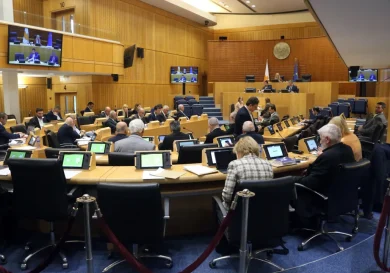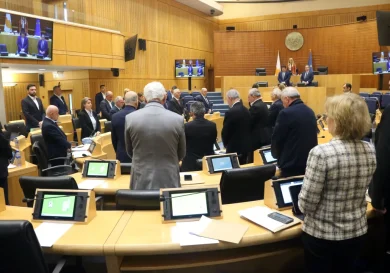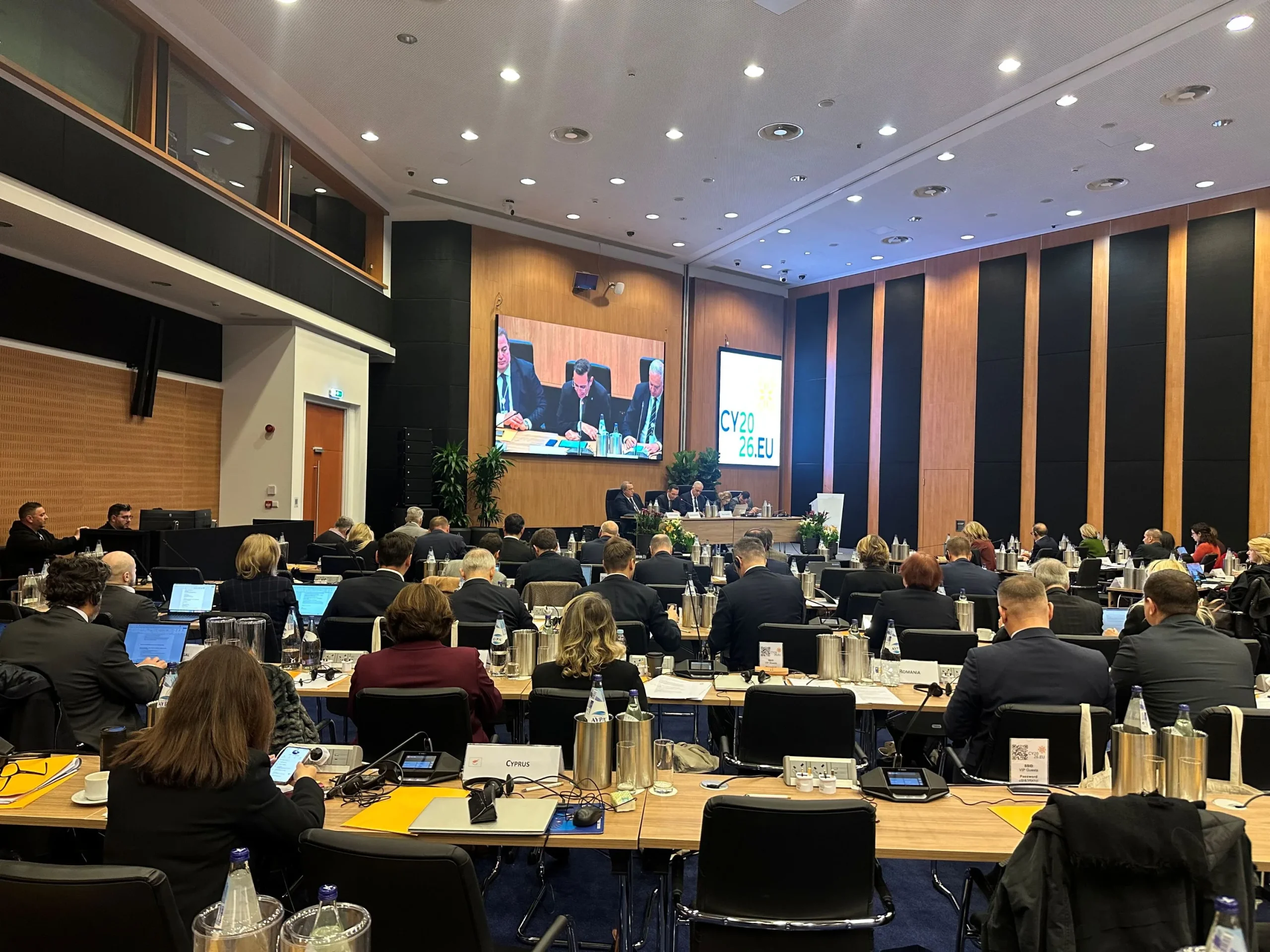
Nicosia, Cyprus. European Commissioner Michael McGrath said the European Commission will promote a digital fairness act later this year to strengthen consumer protection online, including against dark patterns, addictive design and deceptive marketing. He spoke during an interparliamentary conference on AI held in Nicosia within the framework of Cyprus’ EU Presidency.
Digital fairness act and child protection
McGrath said the planned digital fairness act would focus on consumer protection in the online environment, including misleading practices such as “dark patterns”, addictive designs and deceptive marketing. He said the initiative would also pay particular attention to protecting children online.
EU framework on AI risks and potential benefits
The democracy, justice, rule of law and consumer protection commissioner outlined the EU’s digital framework for addressing risks linked to AI. He also pointed to areas where AI systems could support consumers and public administration, including comparing prices, identifying scams, assisting courts with document analysis and case management, and helping to detect disinformation and foreign information manipulation.
Disinformation pressures and democratic risks
McGrath said public policy needed to account for situations where AI could be used in ways that undermine democratic processes and public trust. He said the information environment faced increased pressure from attempts to spread disinformation, manipulate public debate and interfere in elections, with generative AI enabling new techniques.
He cited “hyper-realistic deepfakes” and automated, personalised disinformation campaigns as developments that can be deployed quickly and at scale.
Legislation and measures to set guardrails
McGrath said the EU’s approach was to set “guardrails” through legislation and measures aimed at platform accountability and user protection, including the General Data Protection Regulation (GDPR), the Digital Services Act (DSA), the Code of Conduct on Disinformation, the Political Advertising Regulation and the European Media Freedom Act.
He added that the European Democracy Shield, presented in November, was organised around priorities that include safeguarding the integrity of the information space, supporting democratic institutions and elections, and strengthening societal resilience and public engagement.
European Centre for Democratic Resilience
McGrath said plans were in place for a European Centre for Democratic Resilience to pool expertise, share information and improve coordination when disinformation or foreign information manipulation arises. He said work was underway to launch the centre in cooperation with the Cypriot EU presidency.
Call for rules and safeguards
House president Annita Demetriou said there was a clear political responsibility to set rules, boundaries and safeguards to guarantee transparency, accountability and the protection of fundamental rights so that AI served the public interest alone.
What measures do you think should be prioritised to protect consumers and children online?