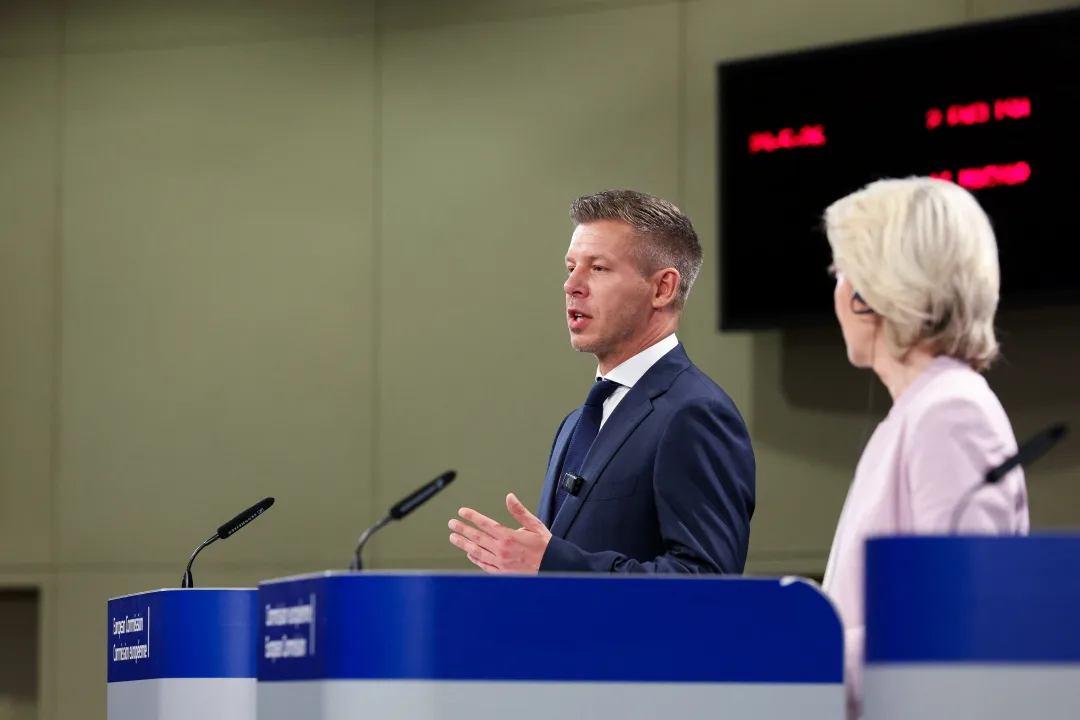
Brussels, Belgium. The European Commission said Hungary’s progress on reforms under its new government will allow it to unlock €16.4 billion in previously frozen EU recovery and cohesion funds. Commission President Ursula von der Leyen made the announcement after meeting Hungarian Prime Minister Peter Magyar.
Funds to be released in stages
Von der Leyen said the EU would release €10 billion from the recovery fund known as Next Generation EU and €4.2 billion in cohesion funds, with a further €2.2 billion to follow as reforms are completed.
“I can confirm that it is €10 billion that have been unfrozen or will be unfrozen from Next Generation EU, then the €4.2 billion from the cohesion conditionality and 2.2 billion for the academic freedom, which makes it €16.4 billion,” she said.
“That is quite a sum, but …the Hungarian people deserve it. Again, many, many thanks for the outstanding work that has been done,” she added.
Economic context
The EU money is seen as important for supporting the Hungarian economy, which has been close to stagnation for three years.
Hungary’s new government inherited a widening budget deficit that the Commission says could reach 6.2% of GDP in 2026 after heavy pre-election spending by former Prime Minister Viktor Orban, who was ousted in an election last month.
On May 26, Hungary’s central bank kept its base rate unchanged at 6.25%, as expected, after higher global energy prices and domestic fiscal risks, while also pointing to a significant improvement in the inflation outlook amid gains in the forint. The currency has been supported by expectations that EU funds would be released.
Magyar on reform and anti-corruption measures
Magyar said the money would help rebuild Hungary, support the economy, restore and develop public services, and strengthen the competitiveness of Hungarian companies and small and medium-sized enterprises.
He said the agreement showed that his government’s anti-corruption measures were working. Fighting corruption, which the EU said was widespread under the Orban government, was one of the main conditions for unfreezing the funds.