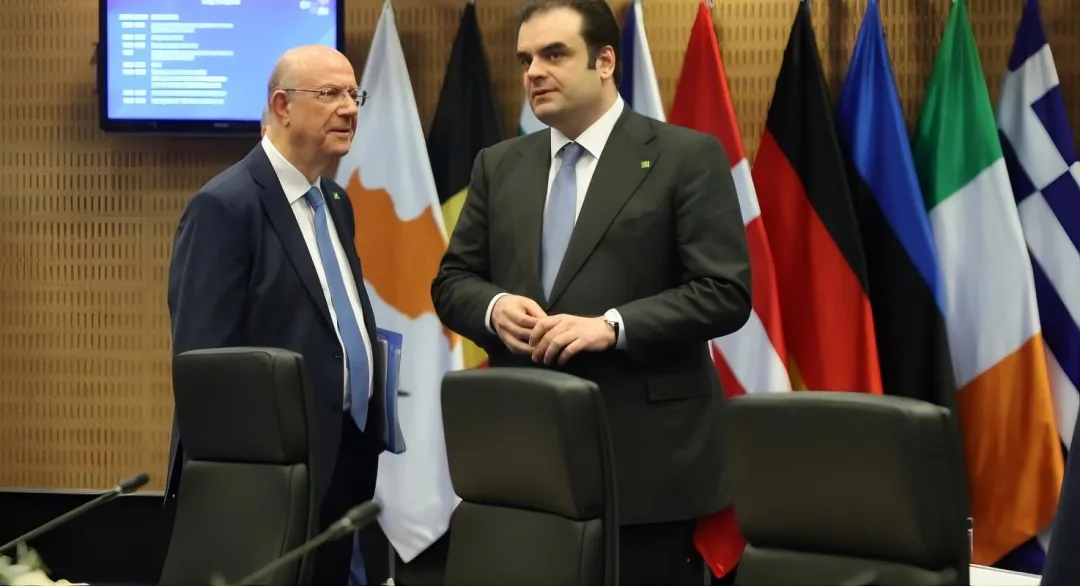
Nicosia, Cyprus. Eurozone finance ministers and central bankers said the Middle East crisis requires targeted and temporary support for households and businesses, warning against broad fiscal intervention as a new energy shock weighs on Europe’s economy. Officials said disruptions in energy markets are already affecting households, companies and public finances.
Call for targeted support
The message from the Eurogroup gathering in Nicosia reflected growing concern that the economic fallout from the conflict could prove more persistent than initially expected. Officials warned that energy market disruptions are feeding through to households, companies and state budgets.
European Commission outlook
European Commissioner for Economy Valdis Dombrovskis said recent developments have significantly altered the EU’s economic outlook, adding that the conflict has triggered a new energy shock affecting inflation, growth and public finances across the EU.
According to the European Commission’s Spring Economic Forecasts, inflation in the EU is expected to rise to 3.1 per cent in 2026 before easing to 2.4 per cent in 2027. Growth is projected at 1.1 per cent in 2026 and 1.4 per cent in 2027.
Budget deficits projected to rise
Fiscal pressures are expected to intensify, with average EU budget deficits forecast to increase from 3.1 per cent of GDP in 2025 to 3.5 per cent in 2026 and 3.6 per cent in 2027. The number of member states breaching the 3 per cent threshold is set to rise from ten to thirteen.
Officials stress resilience
Despite weaker projections, officials said the situation remains distinct from the energy crisis that followed Russia’s invasion of Ukraine in 2022. Eurogroup president Kyriakos Pierrakakis said updated forecasts still point to resilience rather than recession in the euro area economy, adding that officials are “clearly far from a recession scenario.”
What should governments prioritise to support households and businesses while avoiding broad fiscal intervention?