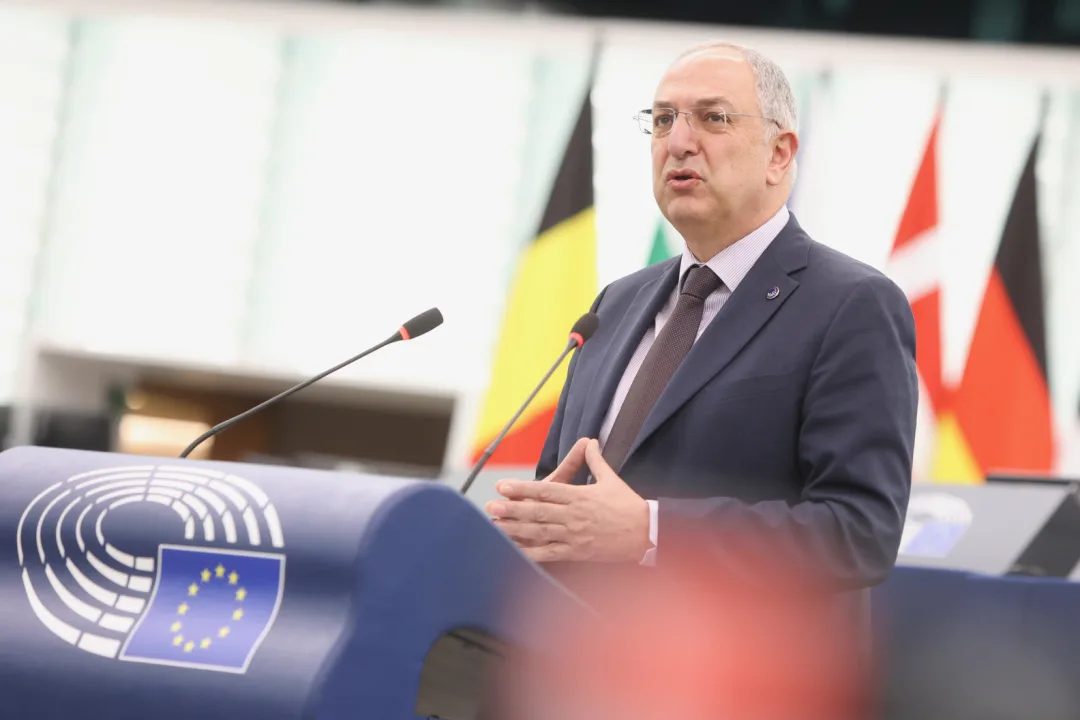
Brussels, Belgium. The European Commission on Wednesday unveiled OceanEye, a new initiative aimed at strengthening Europe’s role in global ocean monitoring. Fisheries and Oceans Commissioner Costas Kadis said the announcement comes at a crucial moment as the United States retreats from key international scientific programmes.
Commission outlines need for initiative
Speaking at the launch, Kadis referred to what he described as “extremely worrying signals from across the Atlantic regarding the dismantling of ocean observation systems”. He said that in the current circumstances, “for the EU to become a leader in ocean observation is not an objective in itself, but a necessity”.
According to reports, the US administration is moving to shut down the Ocean Observatories Initiative, a deep-sea monitoring network valued at around €320 million that has served as a major source of global climate data over the past decade.
EU seeks to address funding and data gap
Kadis said OceanEye was announced at a timely moment, adding that the United States was no longer placing emphasis on such activities and that the initiative would seek to cover part of the resulting gap.
He said efforts to build international backing would begin immediately, with plans to attract support from third countries, like-minded nations, international organisations and philanthropies for what he described as an international alliance.
Kadis said that by covering at least part of the gap created by the US approach, the ocean becomes even more valuable in the current geopolitical context.
Criticism of US policy shift
Kadis also criticised Washington’s decision to scale back ocean monitoring programmes, saying he regretted the move. He noted that the network’s annual budget of €48 million was small compared with the value of the data it generated and described the decision as part of a broader withdrawal by the United States from international scientific cooperation.
Research commissioner sees opportunity
Research Commissioner Ekaterina Zaharieva said she viewed the development not only as a challenge but also as “a huge opportunity for the European Union to lead”. She said Europe “can lead in technology” and help create companies worth trillions of euros.