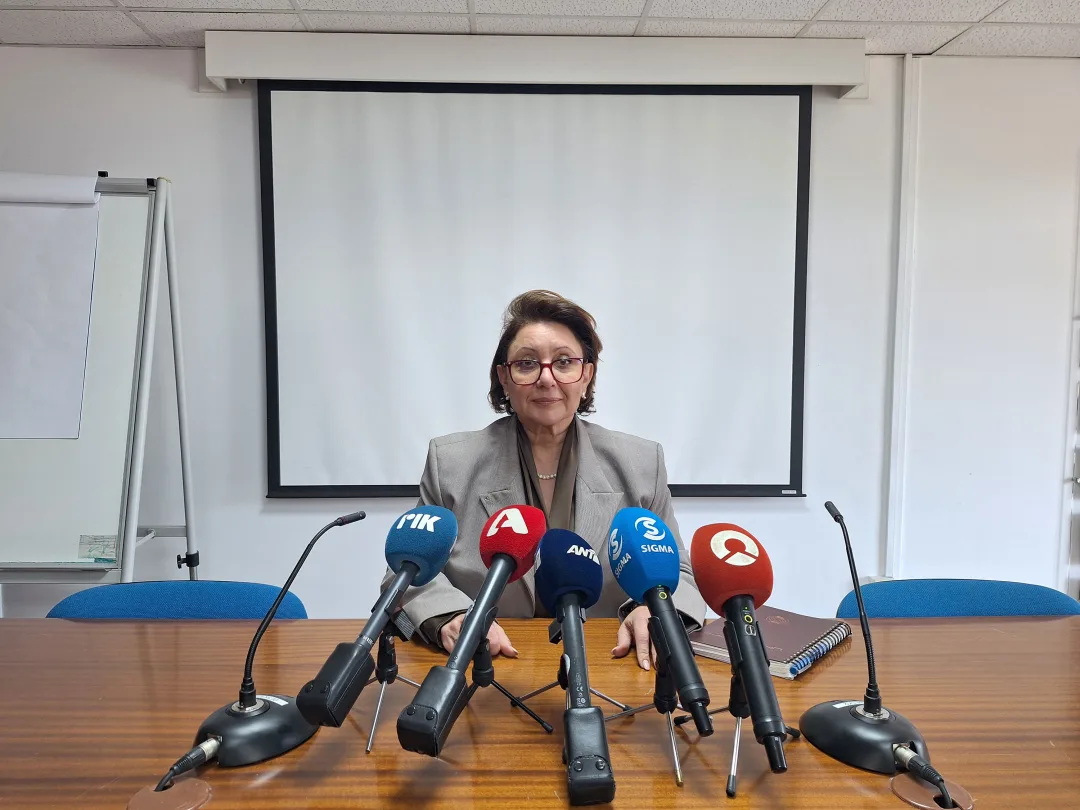
Nicosia, Cyprus. Veterinary services department spokeswoman Sotiria Georgiadou said culling animals infected with foot-and-mouth disease is necessary, citing the virus’s high transmissibility and EU rules governing response measures.
EU rules and mandatory measures
Speaking at a press conference on Thursday, Georgiadou described foot-and-mouth disease as “one of the most contagious viral infections which affect animals” and said its treatment is governed by European legislation. She said the rules stipulate that if one animal in a livestock unit is found to have the disease, the entire unit must be slaughtered.
Georgiadou said European legislation provides specific measures due to the virus’s extremely high transmissibility, including mandatory culling on infected farms, movement restrictions, and procedures for burial or cremation of animals.
Vaccination approach and cited impacts
Georgiadou said some countries outside the European Union have used a strategy of preserving infected animals through vaccination, but she said this can lead to further spread of the virus and a significant reduction in animal productivity.
She said keeping asymptomatically infected animals alive has been shown to reduce reproductive capacity and production by 25 to 50 per cent and to have serious impacts on trade.
Rationale for culling and risk of spread
Georgiadou said culling aims to drastically reduce the viral load to stop circulation of the virus. She said that once the virus starts circulating it cannot be controlled, is transmitted from animal to animal, and carries a risk of spreading throughout the island.
She added that animals without symptoms can also transmit the virus, which she said makes it necessary to cull them in infected units.
Long-term production and economic considerations
Georgiadou said that if such animals are preserved, they will not be able to return to prior production levels in the long term, affecting both the quantity and quality of milk and meat.
She said these effects must be weighed against implications for trade and the economy, and reiterated the necessity of culling.
What impact do you think mandatory culling measures have on farmers and the wider economy?