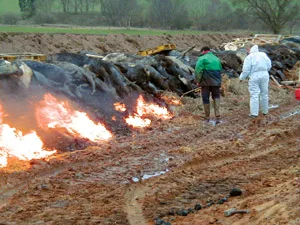
Larnaca, Cyprus. Foot and mouth disease (FMD) was confirmed on a number of livestock units in the Larnaca region on February 20. The date coincides with February 20, 2001, when FMD was confirmed in pigs at an English abattoir in Essex.
Scale and impact of the 2001 UK epidemic
The UK confirmation in 2001 marked the first case of an epidemic that over the next 11 months cleared more than 9,000 British farms of livestock and resulted in the deaths of millions of animals, including cattle, sheep, pigs, goats and deer.
Direct costs to the British government were reported at £8 billion. Losses to rural and tourism businesses affected by restrictions and disruption were not calculated, and many small businesses did not survive.
Lessons highlighted from 2001
The 2001 outbreak underlined how the FMD virus can persist and travel, remaining hidden for long periods in multiple locations, including mobile ones. The UK experience is presented as potentially relevant to efforts in Cyprus to contain and eradicate the virus.
Virus strain and survival conditions
The FMD virus in Britain was the pan-Asiatic type ‘O’ strain, described as able to survive for considerable lengths of time in meat, frozen lymph nodes, bone marrow, internal organs, salted and cured meats, and non-pasteurised dairy products.
The virus can also survive in slurry for six months, on hay or straw for 20 weeks and in water for up to 50 days.
What measures are you following to help prevent the spread of foot and mouth disease in your area?