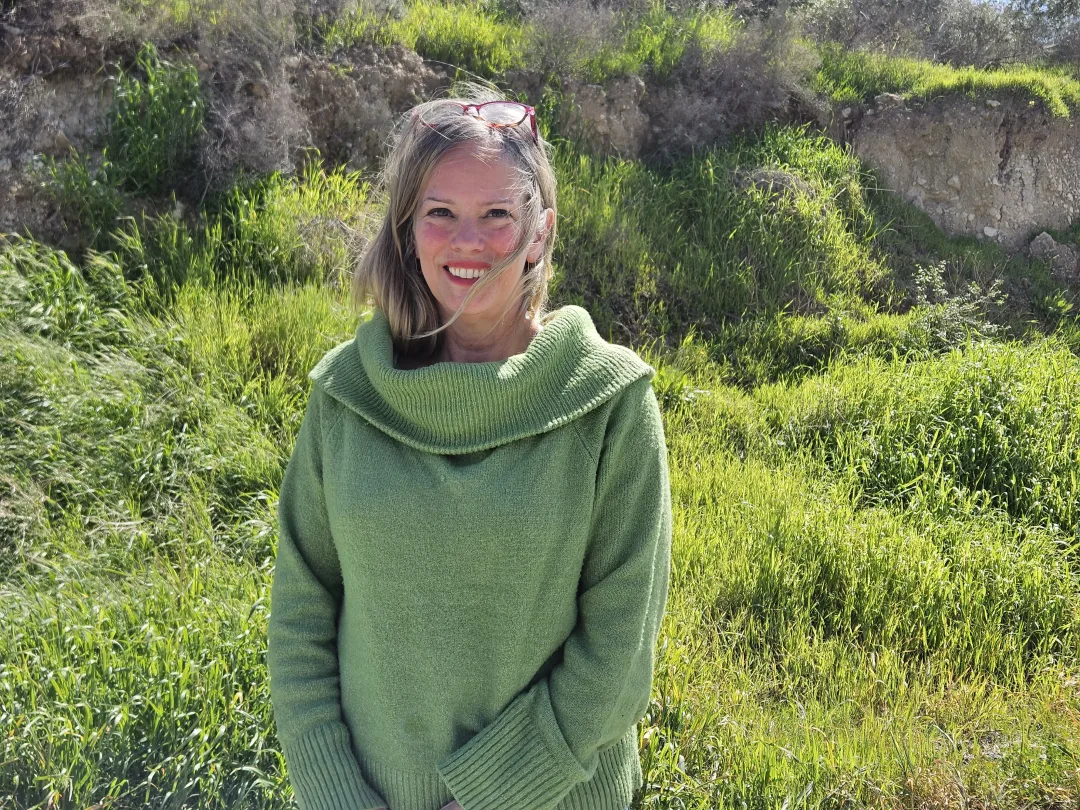
Pareklisia, Cyprus. Amateur forager Katie Richards joined a small group walk on a hillside near Limassol, using an AI app to help identify plants and discussing traditional uses and potential risks.
Using an AI app to confirm plant identifications
Richards pointed out various plants, including mastic, mustard, sea squill, agave, cistus and meadow crane’s-bill, and initially identified a thin leafy plant as chickweed. She used an AI-powered app, PictureThis, described online as identifying over 400,000 plant species with over 98 per cent accuracy, but the app identified the plant as dog’s cabbage (Theligonum cynocrambe). Richards said she had never heard of dog’s cabbage and laughed at the result.
Foraging outside her usual area
Richards, 57, said she is not a scientist and described herself as an amateur with a passion for herbs and foraging and for learning. She lives with her partner in Argaka near Polis, but the walk took place in Pareklisia, outside Limassol. She said she had not really foraged in that area and expected to encounter plants she was not sure about. The group consisted of four people and two dogs.
Plant diversity and common species
Richards said Cyprus has abundant plant variety and that it is possible to find many different plants within a short distance. She pointed to calendula, the common marigold, which she said, along with mallow and mustard, covers fields at this time of year. She described a method for making a balm by picking flower heads, placing them in a jar, macerating them with a mortar and pestle, filling the jar with olive oil, infusing it for a few weeks, adding beeswax, and pouring the mixture into small tins.
Helichrysum and app-based information
Richards also identified helichrysum, known as the “immortal flower,” and said its essential oil is among the most expensive for some reason, while noting it grows prolifically on the island. During the walk, the group periodically consulted the app for information including toxicity and medicinal uses, as well as different names for each plant.
Sea squill and wood sorrel cautions
Richards said sea squill is toxic to eat but has a diuretic effect and has traditionally been used for respiratory conditions including asthma and bronchitis, adding that the app indicated very small quantities such as one drop, which she linked to its potency and toxicity. She also discussed wood sorrel, also known as Bermuda buttercup, saying some of her Cypriot friends chew the sour stalk for vitamin C, but she cautioned it contains oxalic acid, which can aggravate gout and rheumatoid arthritis, and said she would not eat it although some people do.
Have you used an app like PictureThis to identify plants while foraging?