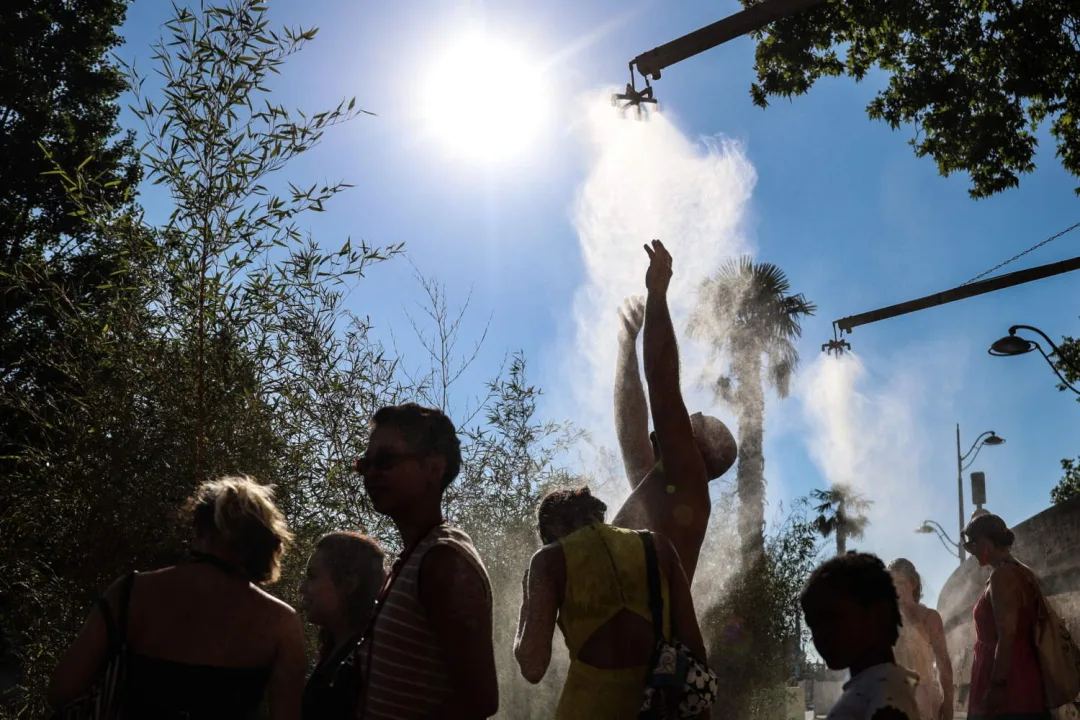
Orléans, France. A record-breaking late-June heatwave brought a surge in deaths that overwhelmed funeral services in parts of France, with preliminary data showing 2,025 excess deaths nationwide.
Funeral homes under pressure
Gautier Caton, a fifth-generation funeral director with nearly 25 years of experience, rented five refrigerated containers as bodies arrived at up to three times the normal rate at his funeral homes in Orléans.
Caton joined his family business weeks after the 2003 heatwave, which contributed to nearly 15,000 excess deaths in France. This year, his company received four bodies from overstretched funeral firms in Paris, about two hours away.
“The Paris region was hit extremely hard, they were in crisis,” Caton said. “And then it spread to us in Orléans, where our funeral facilities became severely overcrowded. It hit us with full force.”
Preliminary death toll
France’s summer of 2026 has been marked by historic temperatures, wildfires near Paris, school closures and pressure on hospitals. The heatwave also affected vulnerable older people living in poorly ventilated homes and care facilities.
Temperatures reached 43.8 degrees Celsius during the late-June heatwave. Deaths rose by nearly 65% in Paris and almost 50% in the Centre-Val de Loire region, where Caton’s business operates.
The 2,025 excess deaths announced by France are preliminary figures based on about 60% of all deaths recorded during the period and are expected to rise as more complete data becomes available.
Calls for long-term adaptation
Francois Bourdillon, who led France’s public-health agency from 2016 to 2019, said the country had made progress since 2003, when authorities were caught unprepared.
The 2003 heatwave led to an alert system using forecasts, public warnings and protections for vulnerable people. However, Bourdillon said France had not addressed structural weaknesses in cities, hospitals, schools and care homes.
He called for a multi-year strategy overseen by the prime minister’s office to transform the country’s ability to respond to what he described as “heat epidemics.”
Bourdillon said the issue was illustrated when his sister-in-law underwent heart surgery at a leading Paris hospital without air conditioning, where his brother brought her a fan.