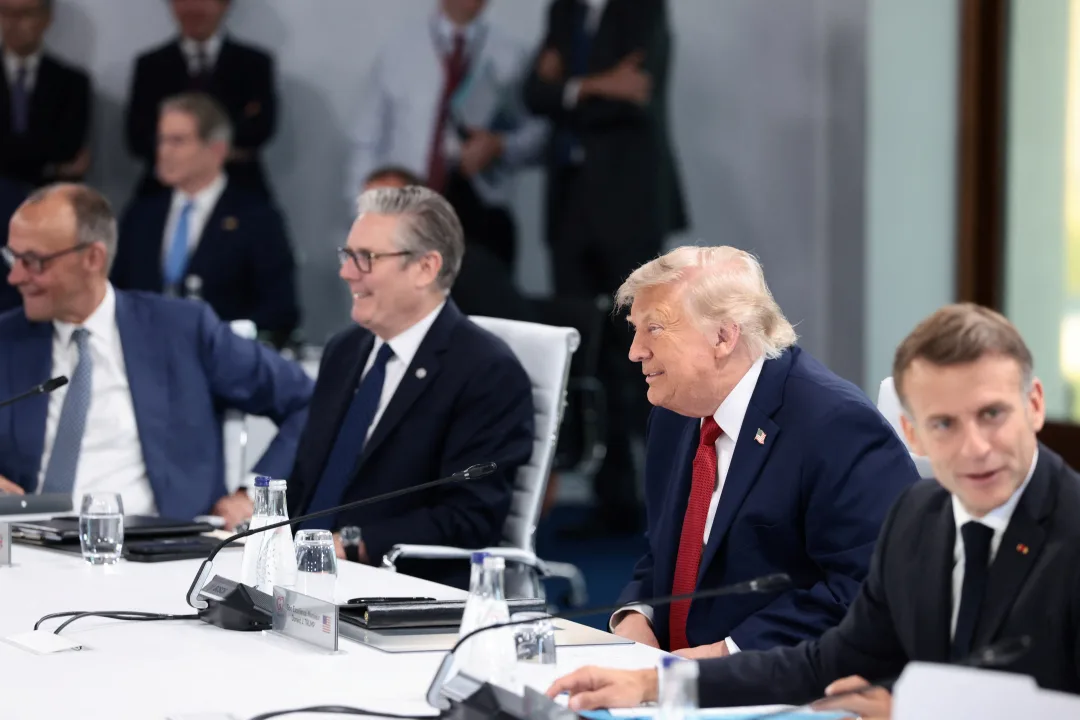
Evian-les-Bains, France. Leaders of the G7 countries on Wednesday demanded a ceasefire in Lebanon and said they would diversify energy supply routes to reduce dependence on the Strait of Hormuz in response to the war in Iran. They also welcomed an interim agreement between the United States and Iran aimed at ending the conflict.
Summit and interim agreement
The leaders met for a summit in the French town of Evian-les-Bains on Lake Geneva as details of the U.S.-Iran ceasefire agreement emerged from Washington and Tehran ahead of its formal unveiling, expected on Friday across the nearby Swiss border.
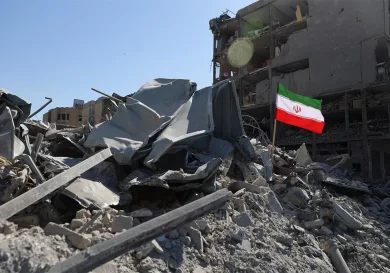
The agreement is expected to begin negotiations toward a final settlement to end the war, which has killed more than 7,000 people, mostly in Iran and Lebanon.
G7 statement on Iran
In a statement, the leaders said: “We underline the need for the negotiation … to address the threats posed by Iran in the region and beyond and ensure that they never obtain a nuclear weapon.”
The summit gave U.S. President Donald Trump an opportunity to present his agreement with Iran to the leaders of Britain, Canada, France, Germany, Italy and Japan.
Allied concerns and shipping security
The other G7 members largely share Washington’s concerns about Iran’s nuclear programme and other issues, but they had not endorsed Trump’s decision to go to war. They are also concerned that Tehran gained leverage by withstanding the conflict and asserting control over the strait.
The leaders said they were ready to contribute to implementing the accord, with a coalition led by Britain and France set to help secure shipping once the Strait of Hormuz reopens, as expected on Friday.
Terms and remaining issues
The memorandum of understanding signed by Washington and Tehran this week, though not yet public, extends a ceasefire announced in April by another 60 days to allow negotiations on a permanent truce.
Trump said the agreement states that Iran will not have a nuclear weapon, restating Iran’s official position since the 1970s. U.S. officials said further discussions would lead to the removal or destruction of Iran’s stockpile of enriched uranium.
The article said Iran’s government remains in place, its stockpile of highly enriched uranium has not been surrendered, its ballistic missile capabilities have not been destroyed and it has not ended support for anti-Israel militias such as Hezbollah in Lebanon.