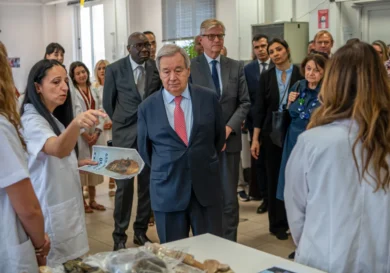
Nicosia, Cyprus. Greece’s foreign ministry welcomed United Nations Secretary-General Antonio Guterres’ support for efforts to resolve the Cyprus problem following his visit to the island and a tripartite meeting with President Nikos Christodoulides and Turkish Cypriot leader Tufan Erhurman.
Greek ministry statement
The Greek foreign ministry said Guterres remains firmly committed to his good offices mission to find a comprehensive, just and sustainable solution to the Cyprus problem within United Nations parameters.
It also welcomed his announcement of an informal enlarged meeting aimed at restarting talks on the basis of the agreed framework and under UN auspices.
Greece said it stands in solidarity with the Republic of Cyprus and remains ready to contribute constructively to a successful informal meeting, recognising the importance of maintaining momentum built on the Cyprus issue over the past two and a half years.
The ministry said it would encourage efforts and initiatives to build trust, which it described as a necessary condition for the resumption of talks.
It added that resolving the Cyprus problem within the parameters set by the UN Security Council and reunifying the island remain firm objectives.
Conditions for new meeting
Guterres announced plans for a new enlarged meeting on the Cyprus problem to be convened after adequate progress is made on confidence-building measures, the meeting’s methodology and the substance of the talks.
He said there was consensus among the two sides and the island’s three guarantor powers — Greece, Turkey and the United Kingdom — for such a meeting to take place.
The UN, he said, does not want another enlarged meeting to end without result.
Call for compromise
Guterres said Cypriots want their leaders to make compromises and take the final steps towards a settlement, as well as a future defined by cooperation, opportunity and peace rather than division.
He said a solution in Cyprus is crucial for the island’s people and for regional stability, warning that the absence of a solution leaves Cyprus more vulnerable in an increasingly unstable region.