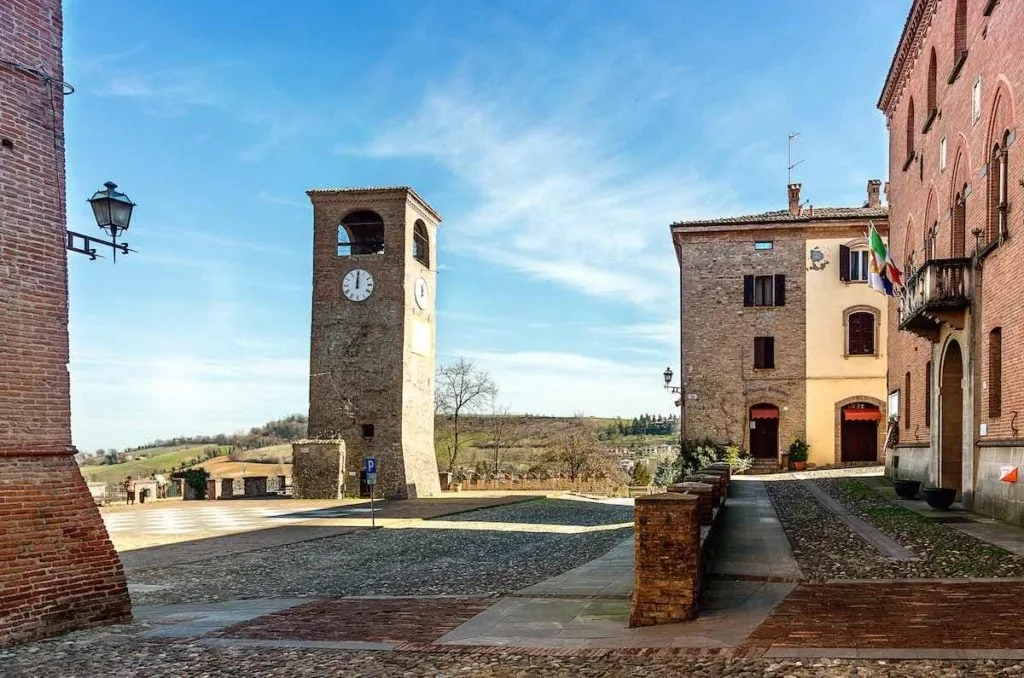
Parma, Italy. Heatwaves in Italy’s Emilia-Romagna region are reducing milk output and increasing energy costs for producers of Parmigiano Reggiano, whose production depends on locally fed cattle.
Farmers are keeping barn windows open around the clock and installing additional cooling systems as temperatures exceed 40 degrees Celsius.
Impact on dairy farms
Fifty years ago, farmers in Emilia-Romagna typically opened barn windows during summer nights to keep cattle cool. Today, the windows remain open throughout the day as extreme heat affects cows and milk production.
“Extreme heat impacts milk’s quality and quantity,” said Nicola Bertinelli, president of the Parmigiano Reggiano Consortium and owner of a dairy farm founded by his family in 1895 outside Parma.
When temperatures rise above 40 degrees Celsius, cows spend more time lying down, eat less and produce up to 10% less milk, according to Bertinelli. Milk is one of only three ingredients in Parmigiano Reggiano, alongside salt and rennet.
Dependence on local feed
Authentic Parmigiano Reggiano can only be produced in five provinces, mainly in Emilia-Romagna. The cows used for production must be fed exclusively with grass and hay grown in the region.
“If it doesn’t rain, grass doesn’t grow, hay cannot be produced and it’s impossible to obtain the milk needed to make the cheese,” Bertinelli said.
Farmers have added fans and water-mist systems to cool cattle, but the measures have increased energy bills.
Warehouse energy use
Higher electricity costs are also affecting facilities where cheese wheels are stored for ageing periods of at least 12 months and, in some cases, three years or longer.
More than 500,000 wheels of Parmigiano Reggiano, valued at more than €300 million, are held in two warehouses operated by Credito Emiliano EMBI.MI unit Magazzini Generali delle Tagliate in the provinces of Reggio Emilia and Modena.
During the year’s peak heatwaves, daily energy consumption at the warehouses rose by about 30%, MGT director Giancarlo Ravanetti said.