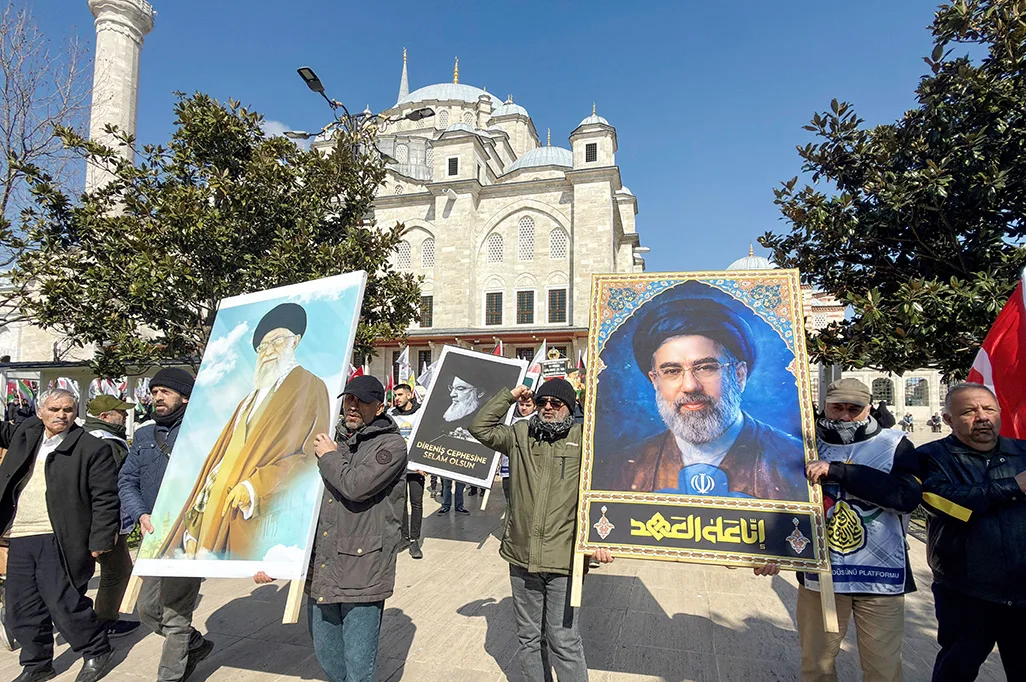
Washington, United States. U.S. Defense Secretary Pete Hegseth said on Friday that Iran’s new Supreme Leader Mojtaba Khamenei is wounded and likely disfigured, raising questions about his ability to govern after nearly two weeks of U.S. and Israeli attacks on Iran.
Claims about Khamenei’s condition and public appearances
Hegseth said Khamenei issued a written statement on Thursday but provided no voice or video. “We know the new so-called not so supreme leader is wounded and likely disfigured,” Hegseth told a briefing, calling the statement “a weak one.”
No images have been released of Khamenei since an Israeli strike at the start of the war that killed much of his family, including his father and wife.
An Iranian official told Reuters on Wednesday that the newly appointed supreme leader was lightly injured but continuing to operate, after state television described him as war-wounded.
Threats in Khamenei’s statement
In the statement read out by a television presenter on Thursday, Khamenei vowed to keep the Strait of Hormuz shut and called on neighboring countries to close U.S. bases on their territory or risk Iran targeting them.
U.S. briefing on military operations and regional drone activity
Hegseth was joined by General Dan Caine, the chairman of the Joint Chiefs of Staff, at the briefing where they emphasized U.S. military strikes aimed at knocking out Iran’s missile and drone capabilities and its navy.
Despite the U.S. attacks on Iran, more Iranian drones were reported flying into Kuwait, Iraq, the UAE, Bahrain and Oman.
U.S. military crash and troop death toll
Four U.S. service members were killed on Friday when a U.S. military refueling aircraft crashed in western Iraq. The U.S. said the incident involved another aircraft but was not the result of hostile or friendly fire.
Since the U.S. and Israel started carrying out strikes against Iran on February 28, 11 U.S. troops have been killed.
What impact do you think the continued strikes will have on regional security?