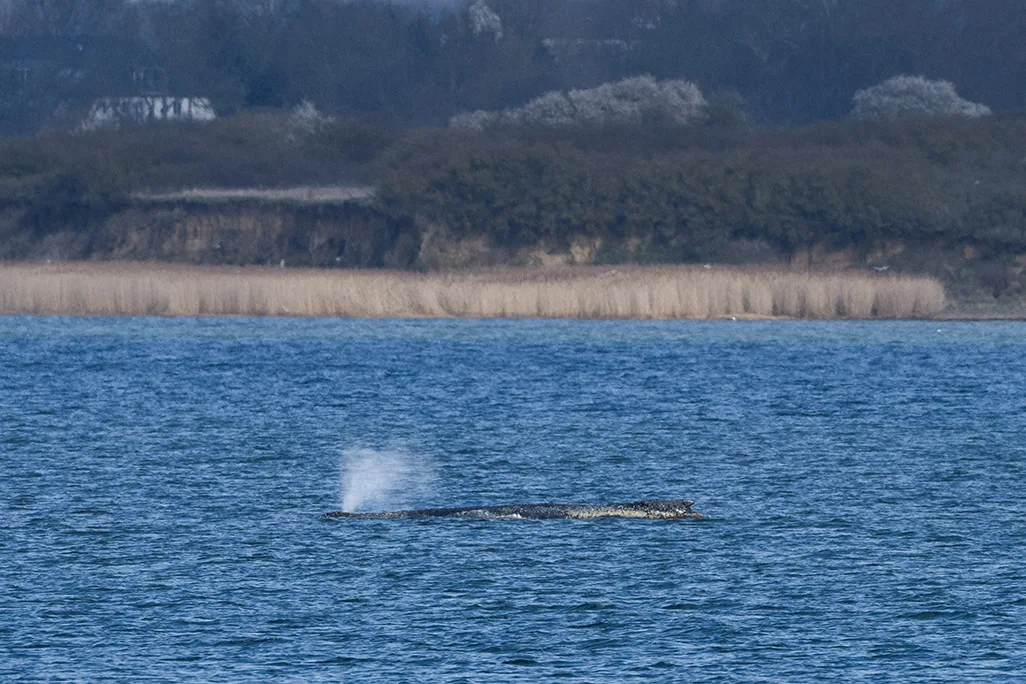
Timmendorfer, Germany. Hopes are fading for the survival of a humpback whale stranded off Germany’s Baltic coast for a week, after its breathing frequency slowed over the weekend. Experts said the animal’s chances of surviving the stranding are diminishing as its condition worsens.
Rescue efforts and warnings
“The whale must be freed very quickly now if it is to have any chance at all,” Greenpeace marine biologist Thilo Maack told the German Press Agency on Sunday. The whale freed itself twice over the weekend but became stranded again despite several rescue attempts.
Condition and reported injuries
The whale, named “Timmy” after the Timmendorfer beach where it was first found, is about 15 metres long and is estimated to weigh 30 tonnes. Greenpeace, which participated in rescue efforts, documented the animal’s deteriorating condition and distress, and said it suffered from skin irritation and had fishing equipment ensnared in its mouth.
Humpback whales and the Baltic Sea
Humpback whales are found in all oceans but are not native to the Baltic Sea. They have the longest migrations of any mammal, with some travelling vast distances, and can reach lengths of up to 19 metres and weights of up to 40 tonnes, with females typically larger than males.
What do you think should be prioritised in rescue efforts for stranded marine animals?