Washington, United States. The U.S.-Israeli war on Iran has triggered a severe disruption to global energy supply, halting shipping through the Strait of Hormuz and forcing production stoppages across the Gulf. The developments have prompted warnings of catastrophic consequences for oil markets worldwide.
Strait of Hormuz closure and attacks
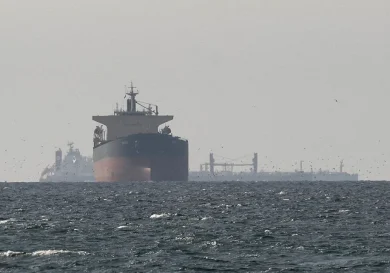
The Strait of Hormuz, through which roughly 20% of global oil and liquefied natural gas passes, has largely ceased to function as a shipping lane since Iran declared it closed on 2 March. Iran threatened to fire on vessels attempting to transit and warned markets to “get ready for oil at $200 a barrel.”
UK Maritime Trade Operations said about a dozen ships have been attacked in recent days, including three on 11 March.
IEA reserve release and market warnings
The Paris-based International Energy Agency on Wednesday ordered the release of 400 million barrels from global reserves, the largest such action in its history. The move has so far done little to slow rising prices.
Saudi oil giant Aramco warned of looming “catastrophic consequences” for the market.
Production stoppages across the Gulf
Iraq’s output from its main southern oilfields has fallen 70%, from 4.3 million barrels per day to 1.3 million. Qatar halted operations at its LNG facilities on 2 March, affecting plants that together supply around 20% of global LNG, and declared force majeure on shipments two days later. Kuwait Petroleum Corporation declared force majeure on 7 March.
Saudi Arabia cut output marginally to around 9.8 million barrels per day, suspended operations at its 550,000-bpd Ras Tanura refinery after it was struck again on 4 March, and rerouted crude loadings to the Red Sea port of Yanbu.
In the UAE, ADNOC shut the 922,000-bpd Ruwais refinery after a drone strike caused a fire, and a separate blaze broke out at the Fujairah port, a key global oil storage hub. Bahrain’s Bapco Energies declared force majeure after an attack on its Sitra refinery.
Middle East refiners have collectively cut 1.9 million barrels per day of crude refining capacity as a direct result of the conflict, according to consultants IIR.
Impacts on Iran’s export infrastructure
Israeli strikes hit multiple Iranian fuel depots and Kharg Island, Tehran’s main oil export outlet. The full extent of the damage remains unclear.
Insurance cancellations and shipping risks
Major marine insurers are cancelling war-risk coverage for vessels operating in Iranian, Gulf and adjacent waters. President Donald Trump has repeatedly said the U.S. Navy could escort tankers through the strait, but the Navy has declined industry requests, citing excessive risk.
Trump directed a U.S. government finance body to provide political-risk insurance and financial guarantees for Gulf shipping, though shipowners and analysts have expressed doubt the measure will be sufficient. Bunker costs at key Asian ports have surged to record highs, leaving some vessels struggling to refuel.
Broader effects and government responses
Asian refineries have cut throughput or declared force majeure due to shortages of feedstocks including naphtha. India, the world’s second-largest importer of liquefied petroleum gas, on Wednesday urged consumers not to panic and to conserve energy.
South Korea said it would cap domestic fuel prices to curb spikes and discourage panic buying. Bangladesh said it would close universities from Monday and bring forward Eid al-Fitr holidays to save electricity. Vietnam plans to suspend fuel import tariffs until the end of April, while European Commission President Ursula von der Leyen said the bloc was considering capping gas prices for consumers.
How is the disruption to shipping through the Strait of Hormuz affecting energy prices and supplies where you live?