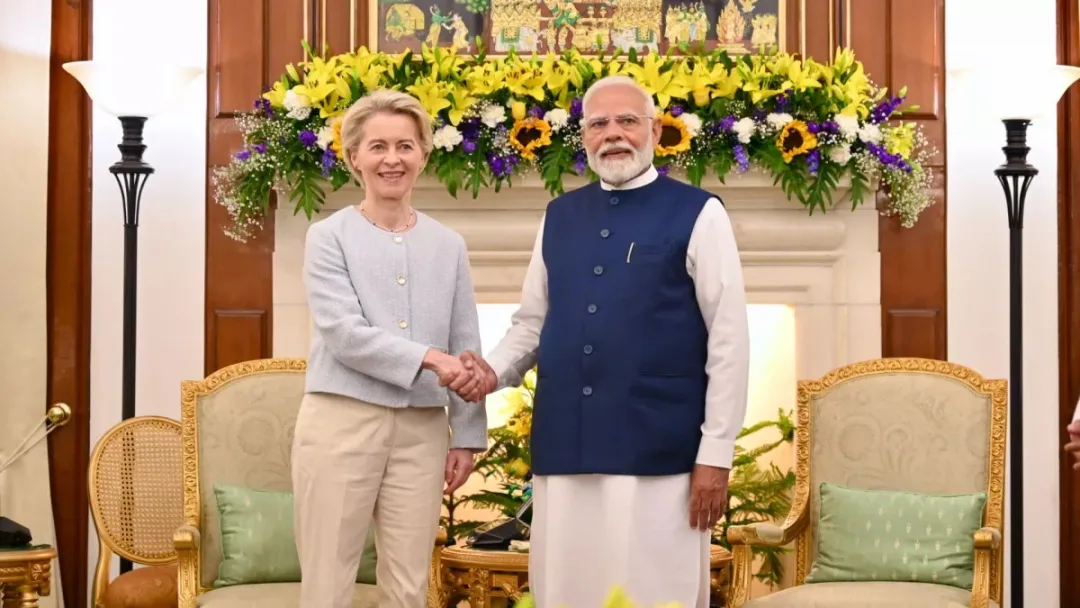
New Delhi, India. India and the European Union announced on Tuesday that they have concluded a trade agreement that will eliminate tariffs on nearly all traded goods. The agreement comes as global powers seek alternatives to increasingly unpredictable American trade relations.
Scope of tariff reductions
The accord, described by Indian Prime Minister Narendra Modi as “the mother of all deals”, is projected to double EU exports to India by 2032 while cutting tariffs on 96.6% of traded goods by value, potentially saving European companies 4 billion euros in duties.
The EU will reduce tariffs on 99.5% of goods traded over seven years, India’s trade ministry said, with tariffs eliminated entirely on Indian marine goods, leather and textile products, chemicals, rubber, base metals and gems and jewellery.
Statements from leaders
“Yesterday, a big agreement was signed between the European Union and India,” Modi said. “People around the world are calling this the mother of all deals. This agreement will bring major opportunities for the 1.4 billion people of India and the millions of people in Europe.”
European Commission President Ursula von der Leyen said in a post on social media: “Europe and India are making history today. This is only the beginning.”
Market access and sector impacts
The agreement would open India’s heavily protected market, with New Delhi slashing tariffs on cars to 10% over five years from as high as 110%, according to an EU statement. The EU said this would benefit European automotive manufacturers including Volkswagen, Renault, Mercedes-Benz and BMW.
India is also reducing tariffs on alcoholic beverages including wines to 75% immediately from 150%, which would be lowered to 20% gradually, the EU said. Tariffs on spirits will be reduced to 40%, according to the EU.
The deal will also cut tariffs on a range of EU goods entering India, including machinery, electrical equipment, chemicals and iron and steel, the EU said.
Trade levels and implementation timeline
Trade between India and the EU stood at $136.5 billion in the fiscal year through March 2025.
An Indian government official said the formal signing would take place after legal vetting expected to last five to six months, adding: “We expect the deal to be implemented within a year.”
What impact do you think the agreement will have on prices and product availability in your market?