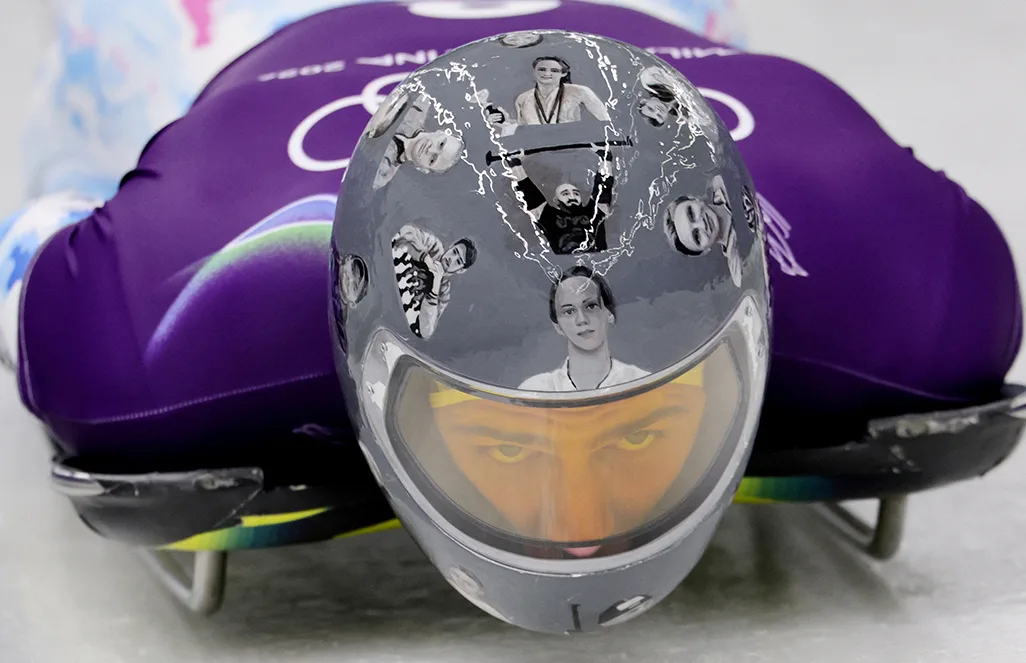
Milan, Italy. Ukrainian skeleton athlete Vladyslav Heraskevych said a helmet he used in training at the Milano Cortina Games with images of Ukrainians killed in the war cannot be used in Olympic competition after the IOC said it violates rules on political statements.
IOC communication on Rule 50
Heraskevych said the helmet, which depicts several athletes killed in the war, including some of his friends, will likely have to be shelved following a visit from an IOC representative.
He said Toshio Tsurunaga, the International Olympic Committee representative in charge of communications between athletes, national Olympic committees and the IOC, went to the Athletes’ Village to inform him.
“He said it’s because of Rule 50,” Heraskevych told Reuters. Rule 50.2 of the Olympic Charter states that “no kind of demonstration or political, religious or racial propaganda is permitted in any Olympic sites, venues or other areas.”
Zelenskiy praises decision to wear helmet in training
The decision to wear the helmet in Milan earned praise from Ukraine President Volodymyr Zelenskiy.
Writing on Telegram, Zelenskiy thanked Heraskevych “for reminding the world of the price of our struggle.”
“This truth cannot be inconvenient, inappropriate, or called a ‘political act at a sporting event’. It is a reminder to the whole world of what modern Russia is,” Zelenskiy said.
“And it is precisely this that reminds everyone of the global role of sports and the historic mission of the Olympic movement – it’s all about peace and for the sake of life. Ukraine remains faithful to this. Russia proves otherwise.”
IOC says no official request received for competition use
Earlier on Monday, the IOC said it had not received any official request from the Ukrainian Olympic Committee to use the helmet in competition, which starts on February 12.
“To date, the IOC has not received any request from the NOC (National Olympic Committee) for the athlete to wear the helmet in the competition,” an IOC spokesperson said. “Once a submission is made, the IOC will look at the request.”
Individuals depicted and previous protest
Heraskevych told Reuters the helmet depicted teenage weightlifter Alina Perehudova, boxer Pavlo Ischenko, ice hockey player Oleksiy Loginov, actor and athlete Ivan Kononenko, diver and coach Mykyta Kozubenko, shooter Oleksiy Habarov and dancer Daria Kurdel.
Heraskevych, who held up a “No War in Ukraine” sign at the Beijing 2022 Olympics days before Russia’s invasion, said he intended to respect Olympic rules prohibiting political demonstrations at venues while still ensuring Ukraine’s plight remained visible during the Games.
What do you think the IOC’s Rule 50 should allow athletes to display during competition?