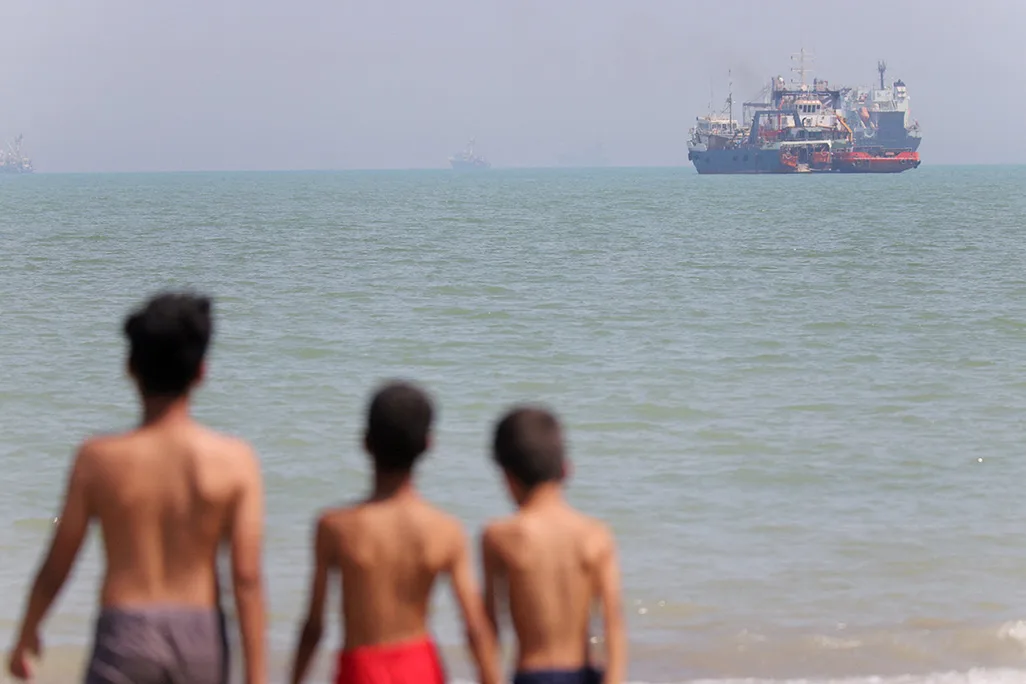
Tehran, Iran. Iran said on Friday that it retained the right to help govern shipping through the Strait of Hormuz and warned Gulf states against supporting the United States, after a joint U.S.-GCC statement rejected tolls and attempts to assert control over the waterway.
Response to U.S.-GCC statement
Tehran said it was responding to what it described as an “interventionist, irresponsible and provocative” joint statement by the United States and six Gulf states. The statement rejected Iran’s position that it could charge tolls on vessels transiting the strait.
Deputy Foreign Minister Kazem Gharibabadi said on X that safe passage through the Strait of Hormuz could not be guaranteed under “ambiguous arrangements, parallel routes or decision-making” that did not take Iran’s role as a coastal state into account.
Regional tensions and shipping
Iran’s comments came a day after an attack on a ship near Oman drew attention to the fragility of a preliminary deal aimed at ending the Iran war.
Oil prices fell further on Friday despite conflicting interpretations of last week’s interim deal between Iran and the United States and a slowdown in traffic through the strait, through which about a fifth of global oil and liquefied natural gas supplies typically passes.
Shipping data showed that Saudi Aramco resumed crude loadings on Friday at its Ras Tanura terminal in the Gulf, the world’s biggest oil port, after a nearly four-month halt.
U.S. and GCC position
U.S. Secretary of State Marco Rubio, concluding a tour of the Gulf intended to reassure regional allies about the interim pact, told reporters on Thursday that if Iran threatened or blocked ships in the strait, “we’re going to have a problem.”
In their joint statement, Rubio and the Gulf Cooperation Council called for “free, unconditional, and unrestricted navigation” in the Strait of Hormuz without tolls or “attempts to assert control”. They also said that a lasting peace must address Iran’s ballistic missiles, drones and support for proxy groups.
Iranian warning
Iran’s foreign ministry said on Friday that the U.S. military presence in the Gulf was the source of regional insecurity and division. It said the strait should be governed by Tehran and Oman in line with the terms of the interim deal.
“We warn against the continuation of hostile and interventionist policies in the region,” the ministry said.