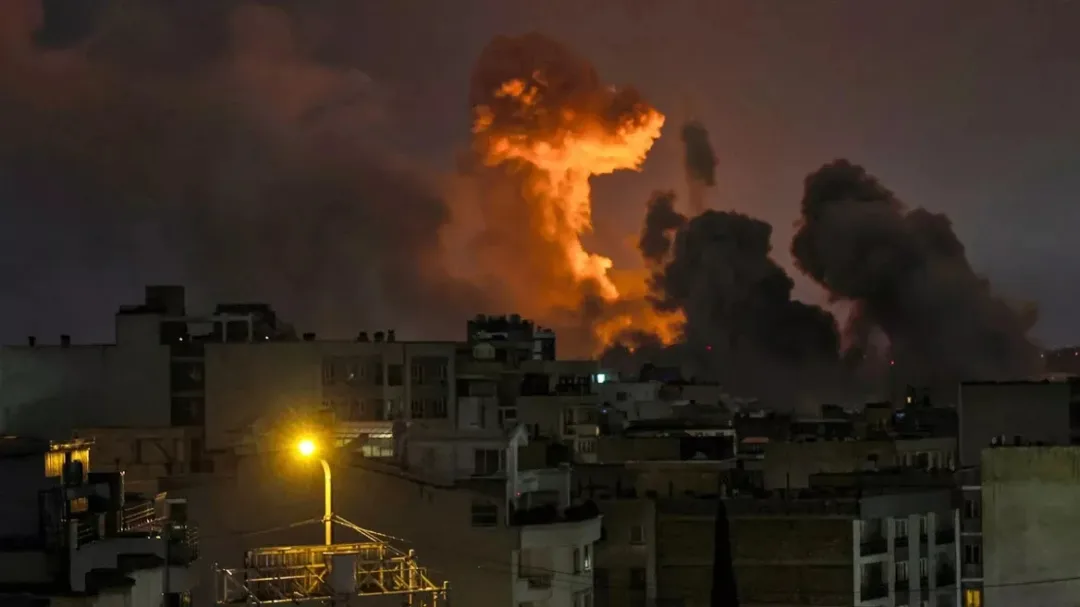
Washington, United States. Iran’s Revolutionary Guard said on Thursday that it had struck a US airbase after American forces carried out strikes targeting an Iranian drone operation near the Strait of Hormuz. The escalation threatened a fragile ceasefire between the two sides and pushed oil prices sharply higher.
US strikes on Iranian drones
A US official, speaking anonymously to discuss military operations, told Reuters that American forces had shot down four Iranian attack drones and struck a ground control station in the port city of Bandar Abbas that was about to launch a fifth. The official said the actions were “measured, purely defensive and intended to maintain the ceasefire.”
Iranian response and regional alerts
The Islamic Revolutionary Guard Corps said it responded by targeting the US airbase from which the Bandar Abbas strike was launched, according to Tasnim news agency. Kuwait, which hosts a large US military base, said it was responding to missile and drone attacks without specifying their origin. Israel also reported sirens related to hostile aircraft activity in northern Israel, where it has been fighting Iran-backed Hezbollah militants.
Markets react
Oil prices, which had fallen more than 5% on Wednesday, rebounded sharply after news of the escalation. US crude futures gained more than 3%, while stocks fell and the dollar rose.
Trump rejects reported draft agreement
The flare-up came hours after Trump rejected an Iranian state TV report that said an unofficial draft agreement had been reached to restore commercial shipping through the strait to pre-war levels within a month, with Iran and Oman jointly managing traffic.
At a cabinet meeting on Wednesday, Trump said no single country would control the waterway and issued a warning to Oman, a country with which the US has decades-long military and economic ties. “Nobody’s going to control the strait. It’s international waters and Oman will behave just like everybody else or we’ll have to blow them up. They understand that, they’ll be fine,” Trump said.
Iran, Oman and sanctions
Trump said he was not yet satisfied with a deal with Iran and that the US was not discussing easing sanctions. The White House dismissed the Iranian TV report as a “complete fabrication.” Tehran did not comment. The White House and Oman’s embassy in Washington did not immediately respond to requests for comment.
The Iranian TV report had also said the US would lift its blockade of Iranian ports and withdraw military forces from Iran’s vicinity. It made no mention of Iran’s nuclear programme, which Washington wants dismantled.
Ebrahim Azizi, head of the Iranian parliament’s national security committee, said Trump’s remarks would not force Iran to abandon its demands to enrich uranium, exercise authority over the strait and have sanctions lifted. “It is obvious Trump, seeking a way out of this strategic deadlock, alternates between issuing threats and appealing for an agreement,” Azizi wrote on X.
The US Treasury Department added the Persian Gulf Strait Authority, the Iranian body established to manage passage through the waterway, to its list of sanctioned entities posing threats to US national security.