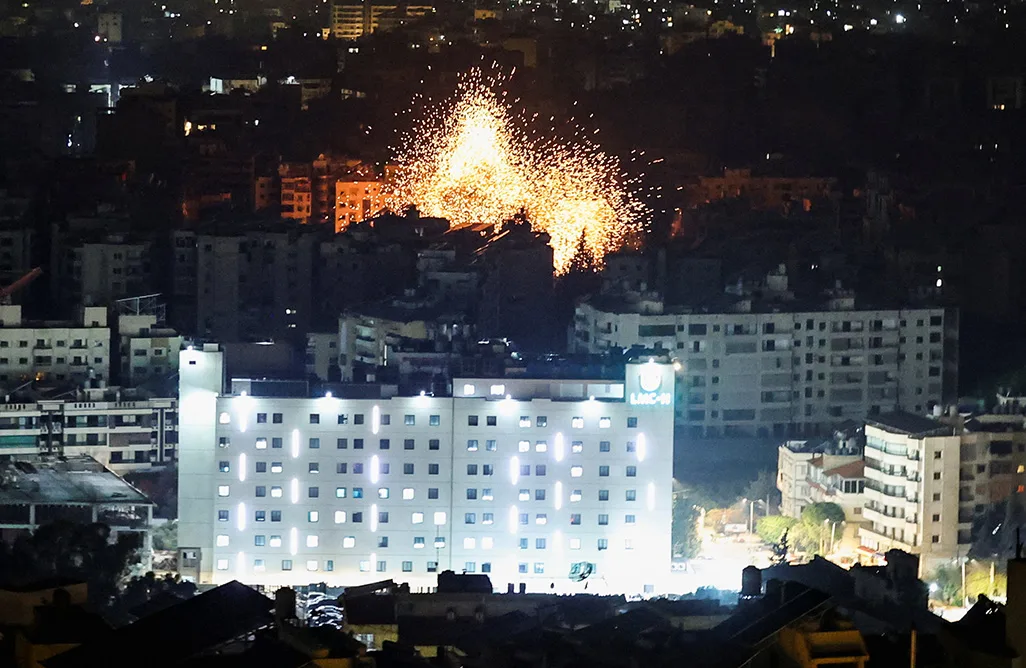
Beirut, Lebanon. Israel destroyed a bridge in southern Lebanon on Friday and dropped leaflets in Beirut threatening Gaza-scale devastation as it deployed more troops to fight Iran-backed Hezbollah and warned of further attacks on infrastructure.
Strikes and displacement
Israeli warplanes carried out air strikes on Beirut’s suburbs, while Lebanon’s interior minister said authorities were unable to accommodate the hundreds of thousands of people who have sought refuge in the capital.
Background to the offensive
Israel launched its offensive against Hezbollah after it opened fire on March 2 to avenge the killing of Iran’s supreme leader at the start of the U.S.-Israeli war on Iran. Lebanese authorities said Israeli strikes have killed nearly 700 people and uprooted 800,000 more.
UN seeks emergency funding
During a visit to Lebanon on Friday, United Nations Secretary-General Antonio Guterres said he was seeking $325 million in emergency funding to help authorities manage the humanitarian fallout.
“Solidarity in words must be matched by solidarity in action,” Guterres said.
Israel cites bridge strike and warns of further costs
Israel’s military said it struck the Zrarieh Bridge spanning the Litani River early on Friday, claiming it was being used by Hezbollah militants to move between Lebanon’s north and south, and provided no evidence for the claim.
It appeared to be the first time Israel had acknowledged attacking civilian infrastructure during its current military campaign in Lebanon.
“The Lebanese government … will pay increasing costs through damage to infrastructure and loss of territory” until Hezbollah is disarmed, Defence Minister Israel Katz said in a statement.
Legal context
International law generally prohibits militaries from attacking civilian infrastructure, though it can be permitted in some instances if it is being used for military purposes.
How do you think Lebanon’s authorities can respond to the humanitarian needs amid continued strikes?