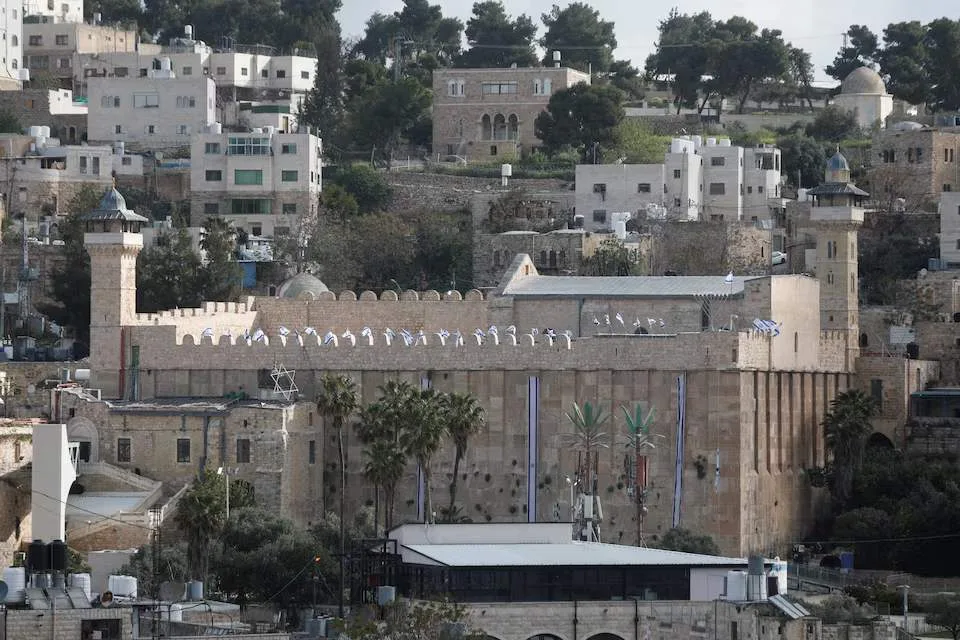
Hebron, West Bank. Israel has transferred planning and construction powers at a Jewish and Muslim shrine in the occupied West Bank from the Palestinian Authority to Israeli authorities, ending an arrangement in place since the 1990s, Finance Minister Bezalel Smotrich said on Tuesday. The move affects the Tomb of the Patriarchs and the adjoining Ibrahimi Mosque, as well as the nearby Jewish settlement.
Transfer of authority
Under the 1997 Hebron Agreement, Palestinians controlled planning and construction across the city, including at the religious site. Smotrich said he gave final approval late on Monday for the transfer of those powers to Israeli authorities.
Palestinian response
The office of Palestinian President Mahmoud Abbas said the move was an infringement on the political and legal status of Hebron and a violation of international law.
Political context
In a speech marking the establishment of a new Israeli settlement near Hebron, Smotrich described the decision as a historic step that would deepen Israeli sovereignty in the West Bank, which Palestinians seek as the core of a future independent state.
Israel is due to call an election by the end of October. Smotrich, a settler, has long advocated annexation of the West Bank, and his party draws much of its support from settlers who regard the territory as their biblical heartland.
Wider settlement policy
The decision to transfer the powers was taken by Prime Minister Benjamin Netanyahu’s security cabinet in February as part of a series of measures intended to make it easier for settlers to buy land and to give Israeli authorities more enforcement powers in the territory.
Smotrich has played a central role in the rapid expansion of Israeli settlements in the West Bank, which has been accompanied by a rise in violence. Hebron has at times been a flashpoint for Israeli-Palestinian violence. In 1994, a Jewish settler killed 29 Muslims praying at the shrine.
International position
Israel captured the West Bank in the 1967 Middle East War. Its right to control the territory is not recognised internationally.
U.N. bodies and most countries consider Israeli settlements in the West Bank illegal. Israel disputes that view, citing biblical and historical ties as well as security needs.