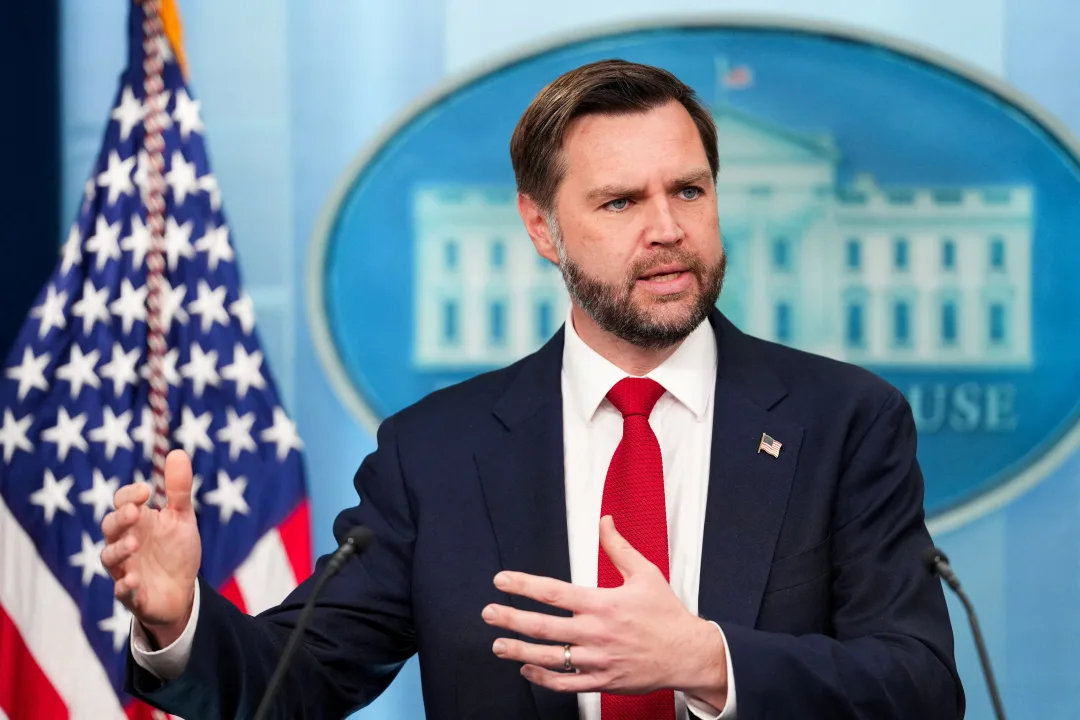
Washington, United States. U.S. Vice President JD Vance has withdrawn from a planned trip to Switzerland for talks with Iranian negotiators on implementing the 14-point agreement reached by Tehran and Washington to end their war, according to a White House spokesperson. The move added to uncertainty over the next phase of diplomacy after conflicting signals from both sides over a formal signing ceremony and the start of technical discussions.
Trip cancellation and talks uncertainty
U.S. officials said earlier this week that a formal signing ceremony for the U.S.-Iran agreement would be held in Geneva. Iran’s foreign ministry, however, questioned the need for such a ceremony, saying it was unnecessary after the presidents of both countries signed the agreement on Wednesday.
Iran had said it was prepared to begin technical talks after the two sides extended a fragile ceasefire by at least 60 days under the accord. But the semi-official Tasnim news agency reported earlier on Thursday, before Vance’s withdrawal was announced, that Iranian negotiators wanted to see signs that the United States was implementing the interim agreement before further peace talks could begin. The report also said there was no confirmation that Iran’s delegation would travel to Geneva.
White House statement
The White House spokesperson said in a statement on Thursday night that Vance and the U.S. delegation had been ready to depart once plans for the talks were finalized.
“But the logistics of these negotiations have never been simple or predictable,” the statement said.
There was no immediate response from Iran’s government.
Regional and market concerns
The diplomatic dispute over the proposed ceremony and photo opportunity has increased uncertainty over whether a lasting truce can be achieved in a regional war that has killed at least 7,000 people, driven energy prices higher and unsettled global markets.
Israel, which was not part of the peace talks and has distanced itself from the U.S.-Iran accord, continued fighting against the Iranian-allied Hezbollah militant group in Lebanon. That has also raised questions about whether the agreement can be sustained.
Political pressure in Washington and Tehran
In Washington, some Republican allies of U.S. President Donald Trump in Congress questioned whether he had conceded too much to end the conflict, which the article said is unpopular with most Americans.
Trump had previously written that he would end the war with Iran only with its “UNCONDITIONAL SURRENDER,” but the memorandum he signed with Iran instead provides economic sanctions relief, unfreezes assets worth tens of billions of dollars and immediately grants U.S. waivers for Iran to export oil.
Iran’s Supreme Leader Ayatollah Mojtaba Khamenei said Trump had signed the deal “out of desperation” and indicated that upcoming negotiations over Iran’s nuclear program would be difficult.
“If the American side wants to be too demanding, we will not accept it,” he said in a written message.
Terms of the agreement
The agreement gives negotiators 60 days to reach a deal on the status of Iran’s nuclear program unless both sides agree to an extension. It also establishes a $300 billion reconstruction fund for Iran and other financial incentives.
Vance said Washington would also seek to limit Iran’s long-range missiles.