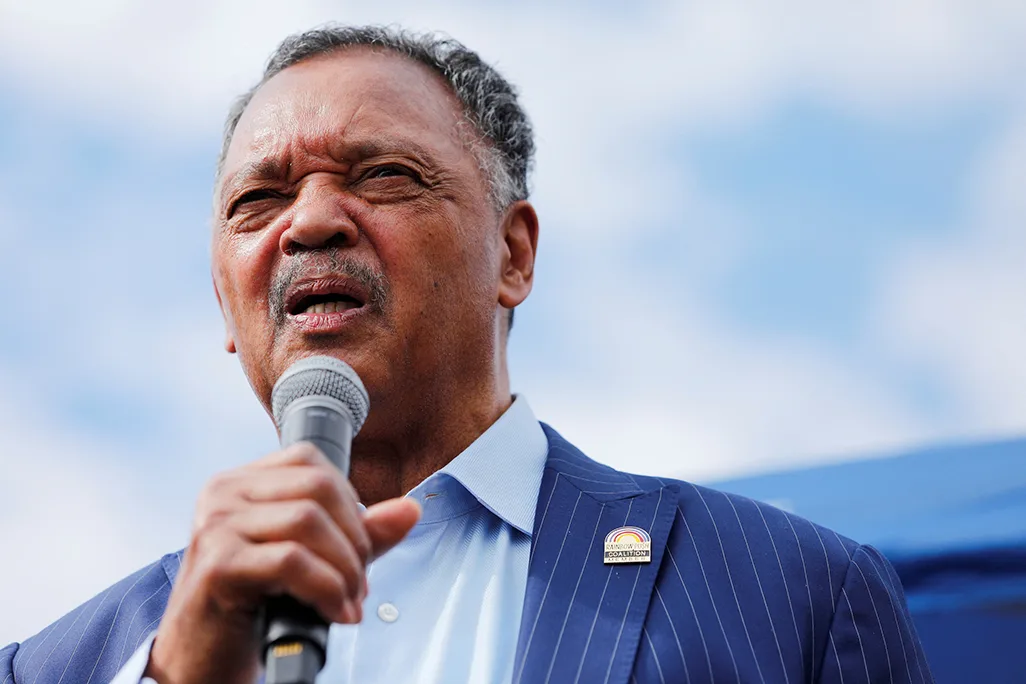
Chicago, United States. Jesse Jackson, a prominent U.S. civil rights leader, Baptist minister and former associate of Martin Luther King Jr who twice sought the Democratic presidential nomination, has died at age 84, his family said on Tuesday.
Family statement and health
The Jackson family said in a statement that he was “a servant leader – not only to our family, but to the oppressed, the voiceless, and the overlooked around the world.” Jackson was diagnosed with Parkinson’s disease in 2017.
Civil rights leadership and public role
Jackson advocated for the rights of Black Americans and other marginalized communities, emerging from the civil rights movement of the 1960s led by King. He remained a leading civil rights figure for decades despite controversies.
Presidential campaigns
Jackson ran for the Democratic presidential nomination in 1984 and 1988, drawing support from Black voters and many white liberals, but fell short of becoming the first Black major-party presidential nominee. He never held elective office.
In 1984, Jackson won 3.3 million votes in Democratic nominating contests, about 18% of those cast, and finished third behind Walter Mondale and Gary Hart for the right to face Republican incumbent Ronald Reagan. His candidacy lost momentum after it became public that Jackson had privately called Jewish people “Hymies” and New York “Hymietown.”
Organizations and diplomacy
Jackson founded the Chicago-based civil rights groups Operation PUSH and the National Rainbow Coalition. He served as Democratic President Bill Clinton’s special envoy to Africa in the 1990s and played a role in securing the release of Americans and others held overseas in places including Syria, Cuba, Iraq and Serbia.
Political context at the time of his death
Jackson’s death comes as the administration of Donald Trump has targeted U.S. institutions, from museums to monuments to national parks, to remove what the president calls “anti-American” ideology, moves that civil rights advocates say could reverse decades of social progress.
What do you think Jackson’s legacy will be in U.S. politics and civil rights?