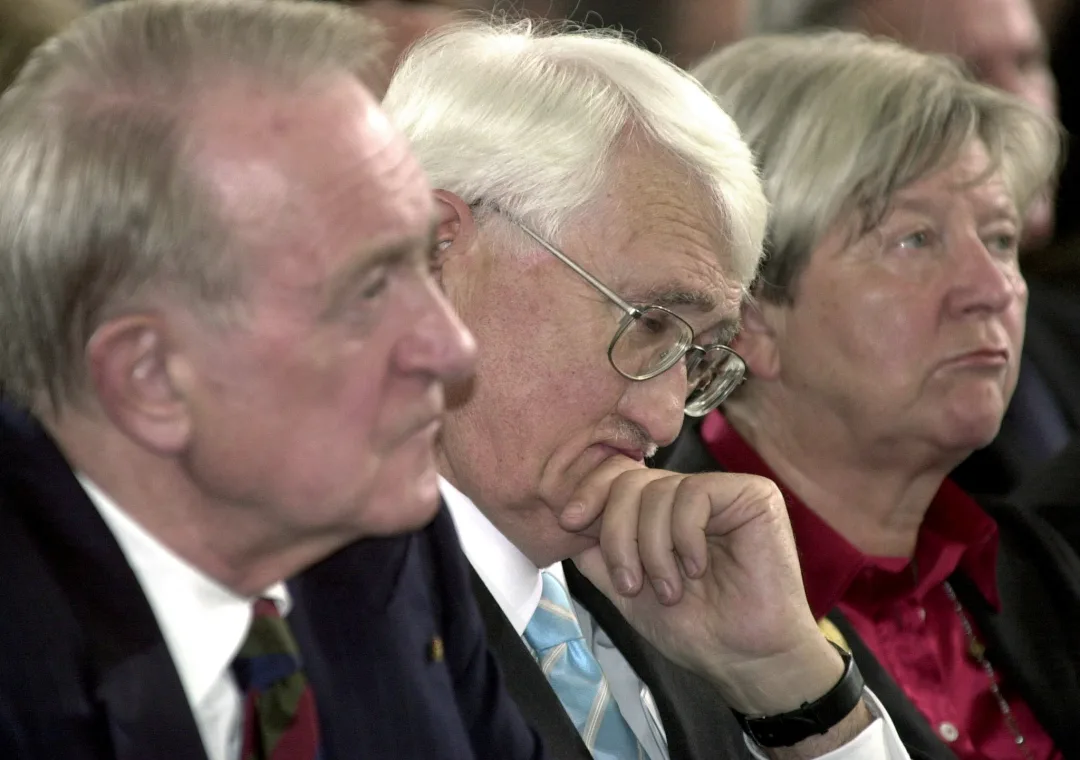
Starnberg, Germany. Juergen Habermas, widely known for his theory of political consensus-building and his influence on post-war German discourse, has died at the age of 96, publisher Suhrkamp said.
Death and public role
Suhrkamp said Habermas died on Saturday in Starnberg, Germany. Over seven decades, his public interventions ranged from critiques of fascist thought in the 1950s to later warnings about resurgent militarism and nationalism in Germany.
Renewed relevance in current politics
His ideas have drawn renewed attention as post-war pacifism wanes in Germany and the far-right Alternative for Germany (AfD) has become the second-strongest party in parliament.
Early life and wartime experiences
Habermas was born on June 18, 1929, in Dusseldorf to a bourgeois family and underwent two surgeries after birth and in early childhood for a cleft palate. A resulting speech impediment has often been cited as influencing his work on communication. He was raised in a staunchly Protestant household, and his father, an economist, joined the Nazi party in 1933, though Habermas later described him as no more than a “passive sympathiser.” Habermas joined the Hitler Youth, as did most German boys, and at 15 avoided being drafted into the Wehrmacht by hiding from military police as the war neared its end.
Family
While studying at the University of Bonn, Habermas became close to fellow student Ute Wesselhoeft, sharing interests in modern art, cinema and literature. They married in 1955. Wesselhoeft died last year. Their children Tilmann and Judith survive them, while their third child, Rebekka, a modern historian, died in 2023.
Academic work and influence
Habermas rose to prominence as a journalist and academic in the 1950s, influenced by the Frankfurt School and Marxist thinkers including Theodor Adorno and Max Horkheimer. In his habilitation thesis, he traced the development of the public sphere from 18th-century bourgeois salons in Europe to its 20th-century transformation into an arena shaped by mass media. The argument resonated with post-war West Germans learning to discuss politics freely after liberation from Nazi dictatorship, amid a conservative government described as having little tolerance for dissent.
How do you think Habermas’s ideas about communication and the public sphere apply to politics shaped by mass media today?