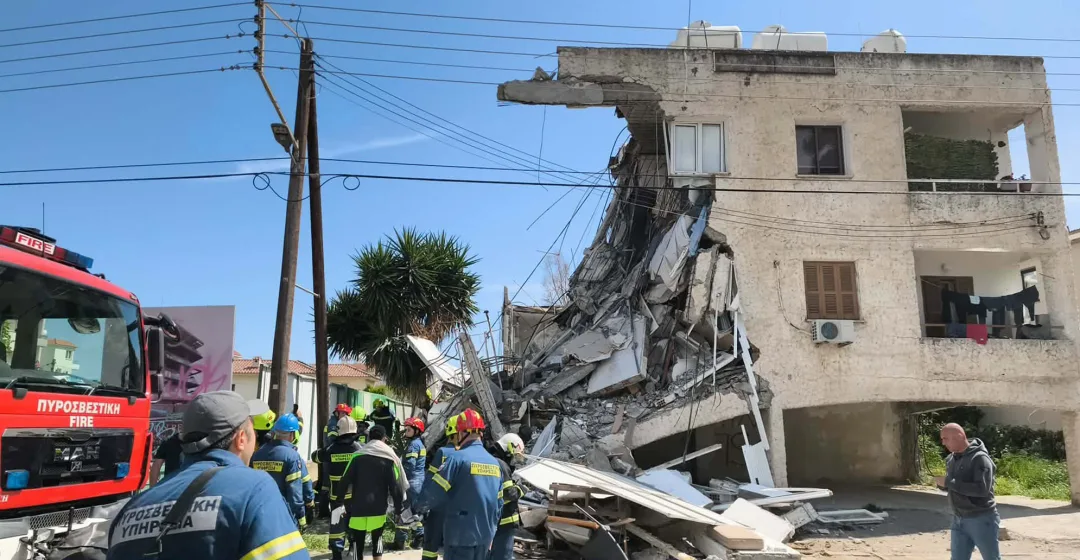
Limassol, Cyprus. The collapse of a building in Limassol that killed two people has exposed serious and long-standing weaknesses in Cyprus’ framework for managing co-owned buildings, according to Mersina Isidorou, general manager of the Cyprus Property Developers Association.
Framework concerns
Isidorou said the incident confirmed that the existing institutional framework does not meet modern needs and does not sufficiently ensure risk prevention. She said the absence of substantial and timely interventions had created an accumulated problem that can no longer be ignored and requires immediate action.
Long-standing issue
According to Isidorou, the issue is not new but a long-standing challenge that has become more intense over time, turning the management of co-owned buildings into a matter of public safety. She said recent events and the public debate that followed had confirmed the extent and criticality of the situation.
Management gaps
At the centre of the problem, Isidorou said, is the absence of a modern, functional and applicable framework for communal buildings. She said this creates serious gaps in management, particularly in the operation of many management committees, which often do not have the necessary tools or responsibilities to meet their obligations.
Impact on buildings
In practice, she said, this leads to delays in basic maintenance work, slow action on necessary interventions and difficulties in collecting common expenses from non-compliant owners. The result, according to Isidorou, is the gradual deterioration of buildings, the accumulation of problems and conditions that can develop into serious risks for tenants and citizens.