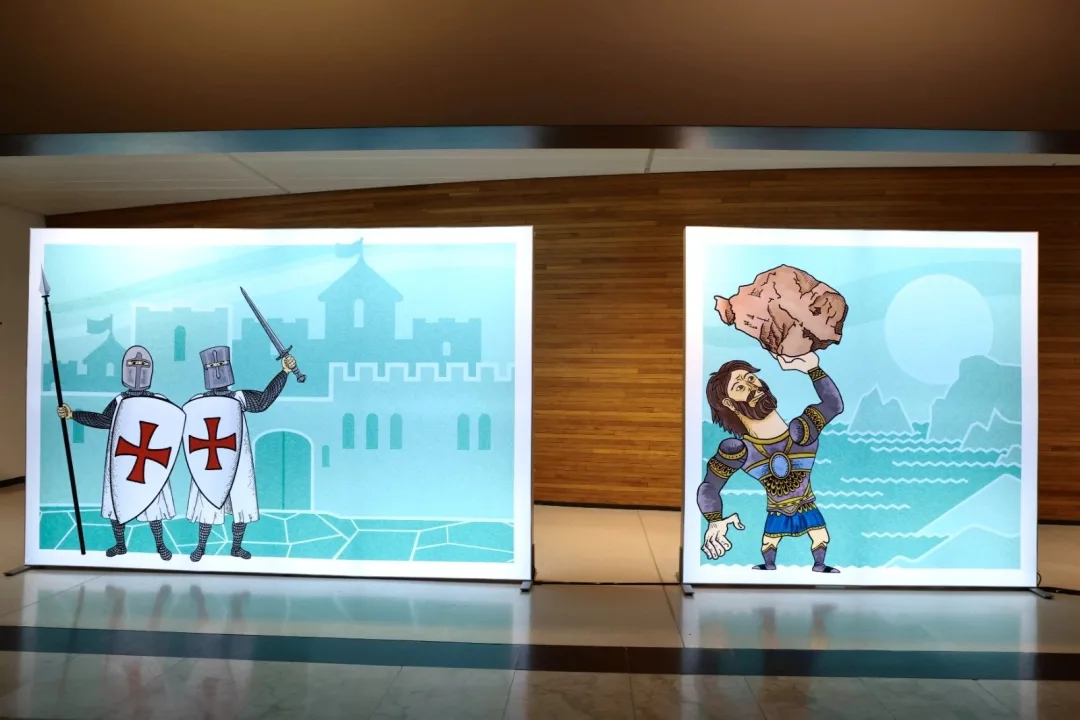
Strasbourg, France. The Myths and Tales of Cyprus exhibition opened at the European Parliament in Strasbourg to mark the start of Cyprus’ presidency of the EU Council. In her opening speech, Director of the Press and Information Office Aliki Stylianou explained the myths presented in the exhibition.
Exhibition aims and cultural context
Stylianou said the exhibition was chosen as a first introduction to Cyprus because the Myths and Tales of Cyprus series was created to preserve and share knowledge of the country’s cultural heritage. She described mythology as living narratives that connect generations, reflect values and project history, adding that culture is a universal language.
Dragons and the struggle for water
She said the exhibition comprises eight stories, beginning with one about dragons described as enormous beasts symbolising power and fear, which fought for sovereignty of the island on earth and in the sky. One myth refers to a dragon from Paphos and another from the Mesaoria plain, with the two stealing water from humans, a resource described as scarce in Cyprus. Stylianou said the Paphian dragon conquered and dominated the Tillyria area, including villages such as Kato Pyrgos, Pomos and Pachyammos.
She also referred to another dragon story linked to the Dali area and the Cave of Dragons, which according to tradition controlled the island’s most valuable resource, water.
Commandaria and the Wine of Knights
Stylianou said the second story focuses on commandaria, described as Cyprus’ signature wine, named after the area of the great Commandery of Limassol. She said the area is characterised by altitude, limestone-rich soil and two local grape varieties, the white xynisteri and the red kokkino, and added that diluted commandaria was used as medicine.
She said that during the Third Crusade, Richard the Lionheart sold Cyprus to the Knights Templar, who in 1191 became the first European rulers of Cyprus. She said their mission was to protect the Holy Lands and control eastbound trade routes, and that they crafted Commandaria, which travelled to royal courts and palaces and became known as the wine of Kings and Knights.
Digenis Akritas and the stones
Stylianou said the third story refers to the Stones of Digenis Akritas, a legendary hero described as having enormous physical strength. She said his tale comes from the Akritic songs, a collection of Byzantine folk songs dating from the 9th to 11th centuries. She said he was the child of a Muslim general and a Byzantine noblewoman and was known for fighting for good.
According to the story she described, when pirates or invaders approached the island, he would throw boulders at their ships to drive them away. Stylianou said some stones are still standing, including Petra tou Romiou in Paphos, which she said is also the location where Aphrodite emerged from the sea.
Saint Helena, Ayia Eleni and the Holy Cross
Stylianou said the fourth story refers to Saint Helena, Ayia Eleni and the Holy Cross, and is set in the 4th century AD. She said the island had endured 10 years of severe drought, with snakes across the island and 40 demons terrorising the people.
Which of the exhibition’s stories do you want to learn more about?