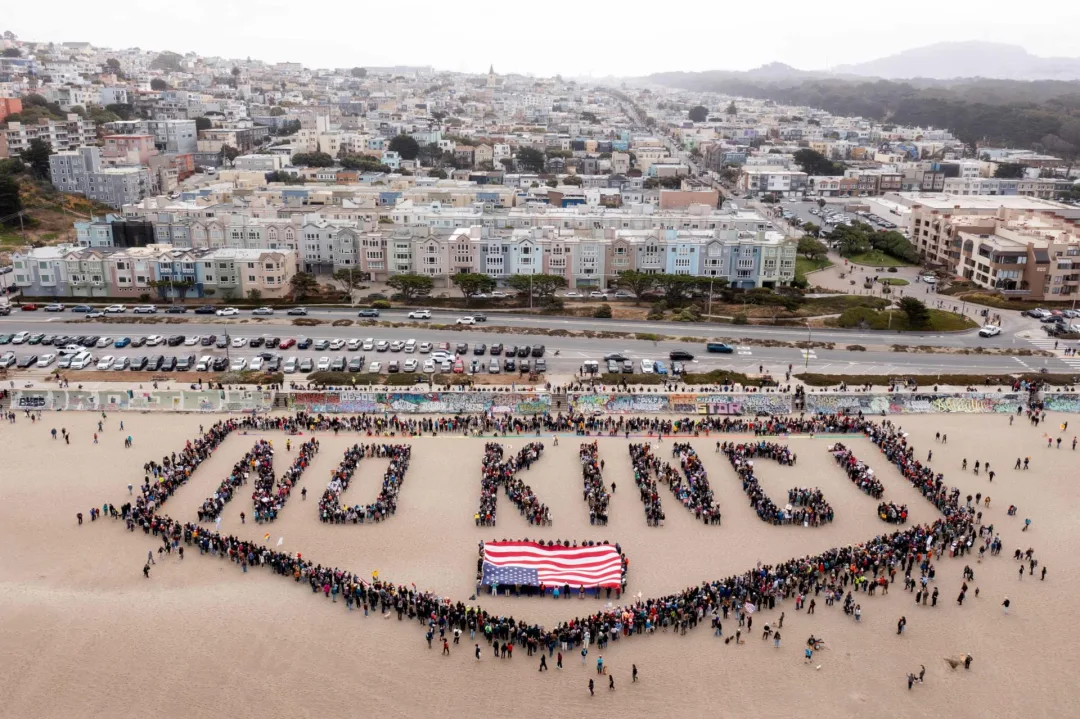
Washington, United States. Demonstrators protesting U.S. President Donald Trump’s aggressive deportation efforts, the war in Iran and other policies held “No Kings” rallies nationwide on Saturday. Organizers said it marked the third round of the events.
Nationwide events and turnout
Organizers said more than 3,200 events were planned across all 50 states, after two previous nationwide events drew millions of participants. Large rallies took place in New York, Dallas, Philadelphia and Washington.
They said about two-thirds of events occurred outside major cities, representing a nearly 40% increase in participation by smaller communities compared with the movement’s first mobilization last June.
Minnesota rally and remarks from officials and performers
In Minnesota, described by organizers as a flashpoint in Trump’s crackdown on illegal immigration, a large rally was held outside the state capitol in Saint Paul. Participants held posters showing photos of Renee Good and Alex Pretti, U.S. citizens who were fatally shot by federal immigration officers in Minneapolis this year.
Minnesota Governor Tim Walz, the Democratic vice presidential nominee in 2024, told the crowd that their resistance to Trump and his policies makes them “the heart and soul” of everything good about the U.S.
“They call us radicals,” Walz said. “You’re damn right we’ve been radicalized – radicalized by compassion, radicalized by decency, radicalized by due process, radicalized by democracy, and radicalized to do all we can to oppose authoritarianism.”
U.S. Senator Bernie Sanders of Vermont, an independent who sought the Democratic presidential nomination in 2016 and 2020, also addressed the Minnesota event. Musician Bruce Springsteen performed his song “Streets of Minneapolis,” described as criticizing Trump’s immigration crackdown and referencing the deaths of Good and Pretti.
“We will not allow this country to descend into authoritarianism or oligarchy in America,” Sanders said. “We, the people, will rule.”
Republican criticism
The National Republican Congressional Committee criticized Democratic politicians and candidates for supporting the rallies.
What do you think the organizers meant by emphasizing the increase in events outside major cities?