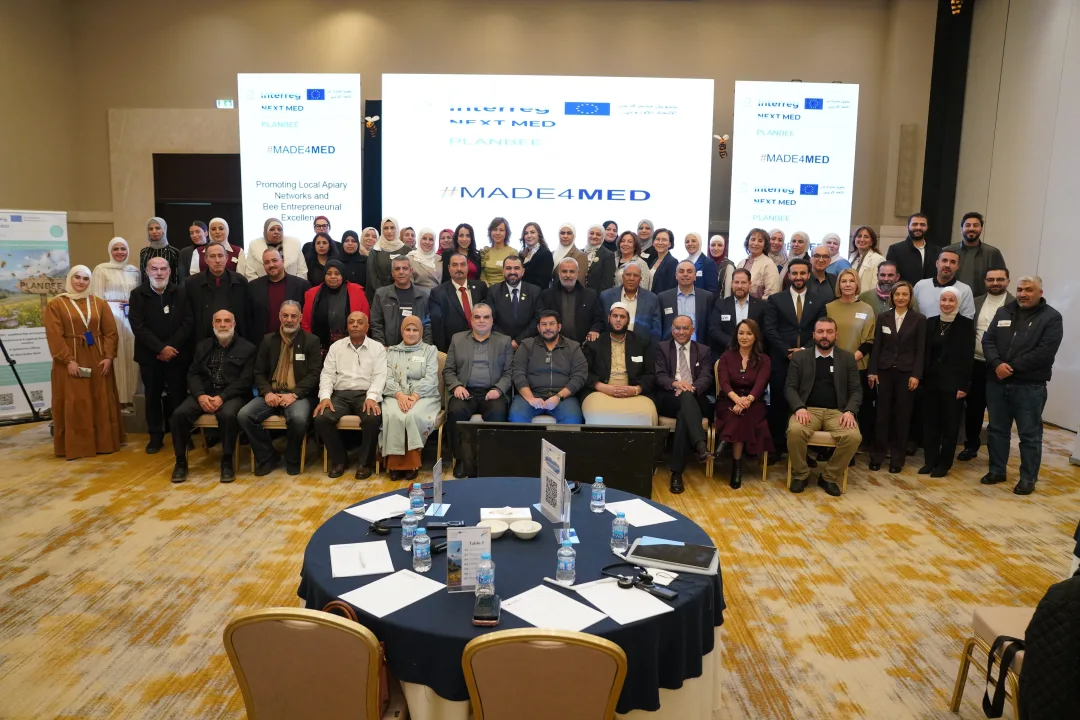
Amman, Jordan. The PLANBEE launch conference in Amman marked the official start of a new Bee Economy movement in Jordan, bringing together regional and European stakeholders under a Cyprus-backed initiative.
Conference and participation
The event, titled “From Hives to Horizons: Building a Sustainable Bee Economy in Jordan,” was organised by the Jordanian foundation Hand in Hand for Economic Empowerment and Entrepreneurship. It attracted more than 300 policymakers, beekeepers, entrepreneurs, researchers, environmental organisations and tourism stakeholders, both in person and online.
Official auspices and focus
The conference, held on January 28, took place under the auspices of Jordan’s Minister of Industry, Trade, and Supply, represented by Yasmeen Khreisat, Assistant Secretary-General for Industrial Development, Trade, and External Affairs. Organisers highlighted the strategic importance of the bee economy for sustainable development and rural resilience in the country.
PLANBEE launch and regional network
The gathering marked both the formal launch of PLANBEE Promoting Local Apiary Networks and Bee Entrepreneurial Excellence and Jordan’s entry into a growing Mediterranean network focused on beekeeping, biodiversity and entrepreneurship as tools for socio-economic growth.
Funding, coordination and partners
PLANBEE is a €2.8 million Mediterranean initiative co-funded at 89 per cent by the European Union under the Interreg NEXT MED Programme and is coordinated by the Cyprus Chamber of Commerce and Industry, widely known as Keve. The project is implemented by seven partners across six Mediterranean regions, including Cyprus, Egypt, Italy, Jordan, Lebanon and Palestine, and builds on experience gained from the earlier MedBEESinessHubs project.
Link to earlier project
While Jordan joins the initiative for the first time, other partner regions draw on foundations laid by MedBEESinessHubs, which introduced community-based approaches to sustainable beekeeping and apitourism across the Mediterranean.
Topics discussed
During the conference, participants explored how responsible beekeeping, flora-based honey differentiation and innovative tourism models can support local economic development while preserving biodiversity. Discussions also focused on the role of women-led entrepreneurship, promoted through the MED Queen Bee concept, as a driver of inclusive growth in rural communities.
How do you see responsible beekeeping and apitourism contributing to rural development in your community?