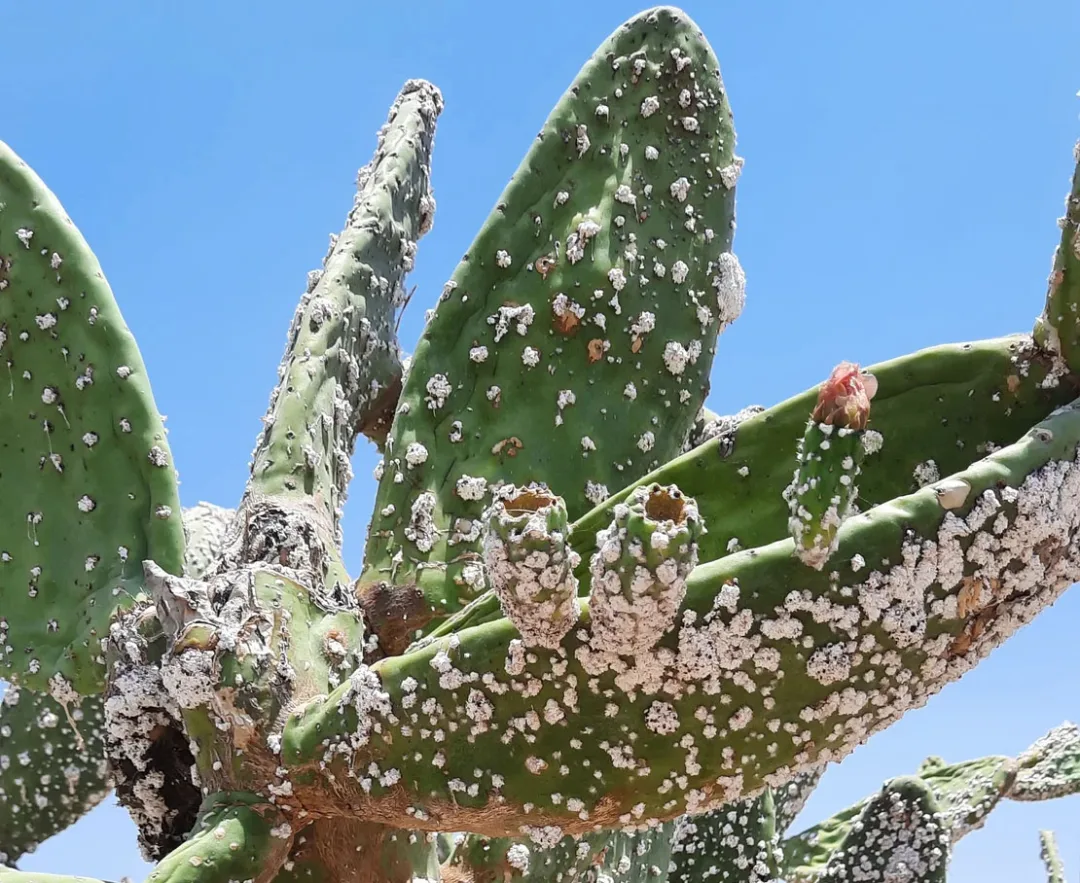
Nicosia, Cyprus. The prickly pear cochineal, Dactylopius opuntiae, has steadily spread across Cyprus over the past decade, damaging prickly pear cacti in several districts. Nearly 10 years after it was first confirmed, questions remain about how far the insect has advanced and whether control measures have slowed its spread.
Spread across districts
The insect was first confirmed in September 2016 on prickly pear plants in the Famagusta district. According to the agriculture ministry, it has since spread into Larnaca district as well as parts of Nicosia and Limassol, causing severe damage to prickly pear populations.
Unanswered questions
The article said it remains unclear how far the insect has spread over the past two years, whether control measures have been effective, and whether the pest could eventually become established across the entire island.
Factors aiding its expansion
According to Lyssandros Lyssandrides, senior agricultural officer and head of plant protection at the agriculture ministry, the scale insect presents an unusually difficult challenge. He said Cyprus’ climate provides favourable conditions for the pest’s survival and reproduction.
Lyssandrides also said the widespread presence of unmanaged prickly pear plants throughout the countryside has contributed to its advance. Individual plants and small clusters act as stepping stones, allowing the insect to move gradually from one area to another.
“Because these plants are not cultivated or cared for, they become easy reservoirs for infestation,” Lyssandrides said.
Limits of control measures
The insect produces a waxy, cotton-like coating that significantly reduces the effectiveness of insecticides. It also secretes carminic acid, a red toxic substance that limits the effectiveness of many natural predators that would normally help control scale insect populations.
The article said that many highly toxic insecticides that might have overcome these defences have been withdrawn from the European Union market.