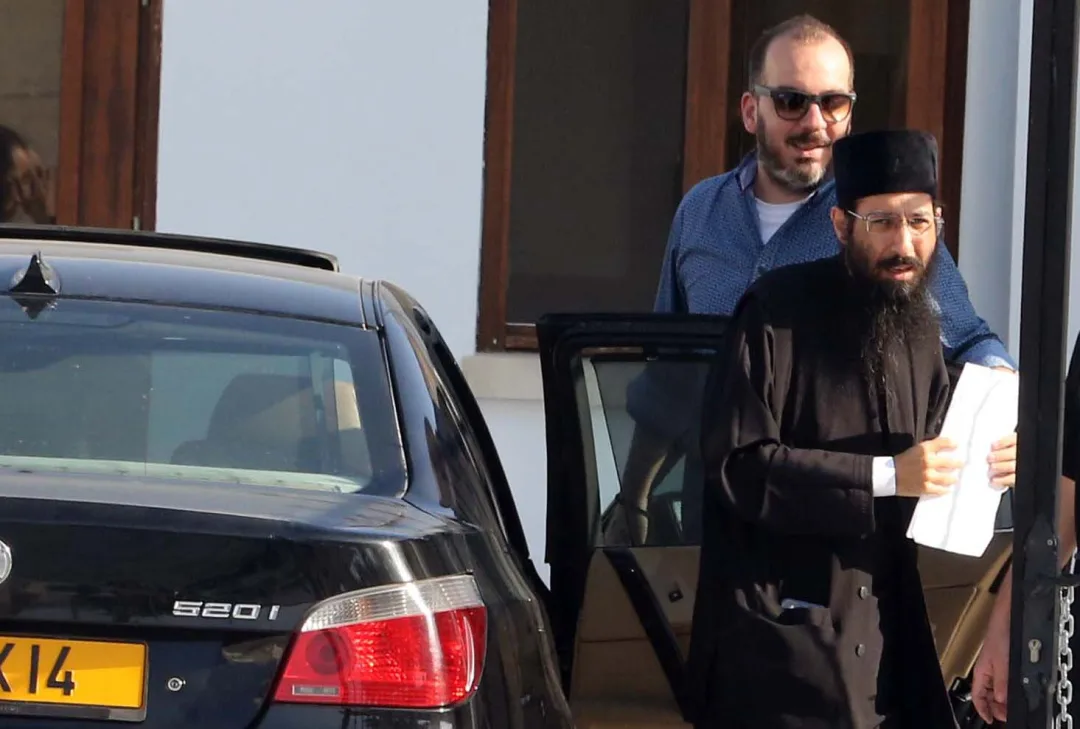
Nicosia, Cyprus. The trial concerning the financial aspect of the scandal surrounding the Holy Monastery of Saint Avakoum began before the Nicosia criminal court on Wednesday with amendments to three counts of the indictment concerning Monk Nektarios. The court approved the prosecution’s request to amend the charges, and Nektarios pleaded not guilty to all three amended counts.
Amendment of charges
The proceedings began with the prosecution representative, Vassilis Bissas, requesting amendments to the details of charges 10, 11 and 13 of the indictment concerning Nektarios so they would correspond to the testimony he intended to present to the court.
Charges 10 and 13 relate to the circulation of false documents in a fraudulent manner, while charge 11 relates to the theft of €20,000.
The court approved the request and issued a decree amending the indictment. Nektarios then entered a not guilty plea to all three amended charges.
Defence request for clarification
The defence for the first accused, represented by Kostis Efstathiou, requested further information on charges 1, 4 and 15 of the indictment.
The defence asked for clarification on the owner of the money that its client is alleged to have illegally held, as well as on the alleged illegal activities forming the basis of the money laundering offence.
First prosecution witness
The first prosecution witness, a constable, appeared before the court and referred to a report he had filed on March 24, 2024 concerning photographs of items he had taken on March 9 and 13, 2024 in the Diocese of Tamasos, Episkopi, as part of the police investigation.
The witness said he had photographed various objects and sums of money linked to the offences under investigation and had copied the material onto two digital discs. He said he had selected a total of 203 photographs and clarified that he had not processed the photographic material himself.
Objection over photographic evidence
When the prosecution sought to present the photographs, the defence for both accused objected, arguing that photographs of objects taken from Avakoum and from the home of the mother of the first accused could not be presented without a search warrant because doing so would violate relevant legal provisions.
The defence also said the photographs in question had not previously been handed to them.
The prosecution said the evidence had been provided to the defence at the referral stage of the case. It also suggested that the defence be given time to examine the photographic material and identify the evidence to which they intended to object.