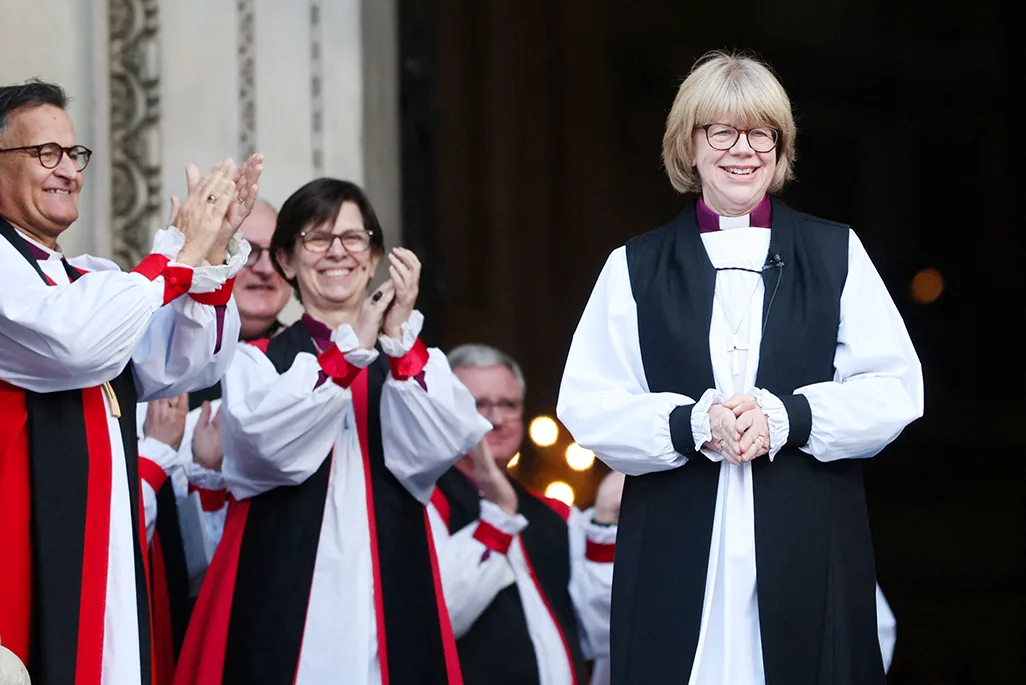
London, United Kingdom. Sarah Mullally was officially confirmed on Wednesday as the first woman to lead the Church of England as Archbishop of Canterbury during a traditional ceremony at St Paul’s Cathedral. The confirmation marked the moment the archbishop-elect legally assumed office.
Confirmation of Election held at St Paul’s Cathedral
The cathedral was converted into a court of law for the ancient Confirmation of Election, a legal ceremony set within a church service. The wording of the confirmation has changed over the centuries, moving from Latin to English in the 18th century while retaining its roots in medieval canon law.
Oath and royal authority
Mullally took an oath of allegiance as the 106th Archbishop of Canterbury before senior bishops acting as Royal Commissioners under the authority of King Charles. The British monarch has served as the Supreme Governor of the Church of England since Henry VIII split from the Roman Catholic Church in the 16th century.
Role in the Anglican Communion
Mullally will also serve as the spiritual head of 85 million Christians across 165 countries in the global Anglican Communion. The service brought together bishops and clergy alongside local schoolchildren and choirs, with participants from across the Church of England and the Anglican Communion.
Service reflects global diversity
The service included hymns and readings reflecting the diversity of the global Anglican Communion, with music ranging from an anthem by English composer Edward Elgar to a South African Xhosa chant, as well as a bilingual reading in English and Portuguese.
Appointment and criticism
Once England’s Chief Nursing Officer, Mullally was first named in October to replace Justin Welby as the Church’s most senior bishop. Her appointment drew immediate criticism from some conservatives in the global network of Anglicans who oppose women’s ordination and remain divided over LGBTQ+ relationships.
Enthronement planned for March
The 63-year-old also faces questions at home over past safeguarding failures in the Church. She will be enthroned at Canterbury Cathedral in March, when she will also preach her first sermon as Archbishop, marking the start of her public ministry.
What do you think the confirmation ceremony says about how the Church of England balances tradition and change?