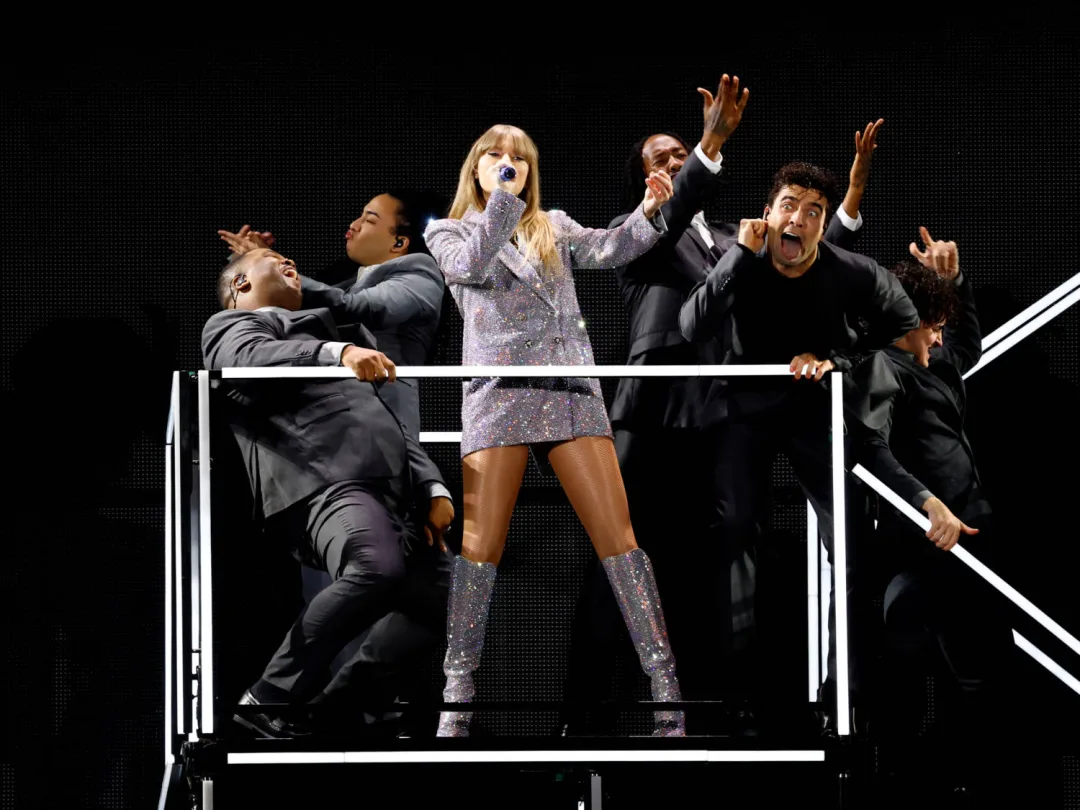
Washington, United States. Taylor Swift has filed a trademark application covering her voice and stage image, including a photo of her performing in her Eras Tour bodysuit and two voice recordings. The move raises questions about copyright law, artists’ rights and AI-generated impersonation.
Trademark application
The application includes a photograph of Swift in her distinctive bejewelled Eras Tour bodysuit, along with the recordings “Hey, it’s Taylor” and “Hey, it’s Taylor Swift.”
Legal and industry context
The filing is the latest example of Swift using her status to challenge industry norms and assert the rights of artists. Actor Matthew McConaughey previously trademarked some of his famous spoken lines of movie dialogue earlier this year, but Swift appears to be the first music artist of note to take a similar step.
In music, sound recordings and the songs they contain are protected by copyright law. Much of the industry’s income depends on the commercial exclusivity that this intellectual property provides.
All of Swift’s vocals are protected from copying if sampled without permission. However, whether a vocal performed or generated to sound like Swift, including by AI, amounts to copyright infringement is less clear.
Voice imitation and legal protection
In 1988, Bette Midler successfully sued Ford Motor Company for using an impersonator to perform her songs in television advertisements. The case suggested that deliberately copying a singer’s voice, style and tone can amount to passing off.
Under UK law, passing off is a common law tort involving misrepresentation that causes reputational or financial damage. In the United States, similar protection is provided under the Lanham Act, which also guards against misleading imitation.
Deepfakes and AI concerns
Swift has also faced the use of deepfakes, including fake pornographic images and AI-generated photos showing her wearing a “Swifties for Trump” T-shirt ahead of the last US presidential election.
Further legislation is being developed in the United States to address AI-generated impersonation more broadly. Swift’s trademark move suggests a desire to retain stronger legal control over her identity and may provide a basis for civil action under common law or intellectual property rights when objectionable AI-generated content appears.
Use of existing works by AI
A more complex issue for Swift and other artists is the use of existing works as data by AI systems to create new content. For example, an AI could be prompted to write a song in the style of Fearless-era Swift but performed by a voice combining elements of Norah Jones and Diana Krall.
In such cases, it may be difficult to prove that any specific piece of intellectual property has been infringed, because the AI would be synthesising many songs and performances to produce the result. However, new content would still have been created through the mining of existing IP.
A songwriter’s moral right of integrity protects against adaptation of their works without permission. Musicians and songwriters have increasingly said they are not being recompensed sufficiently, or consulted, when AI uses their work.