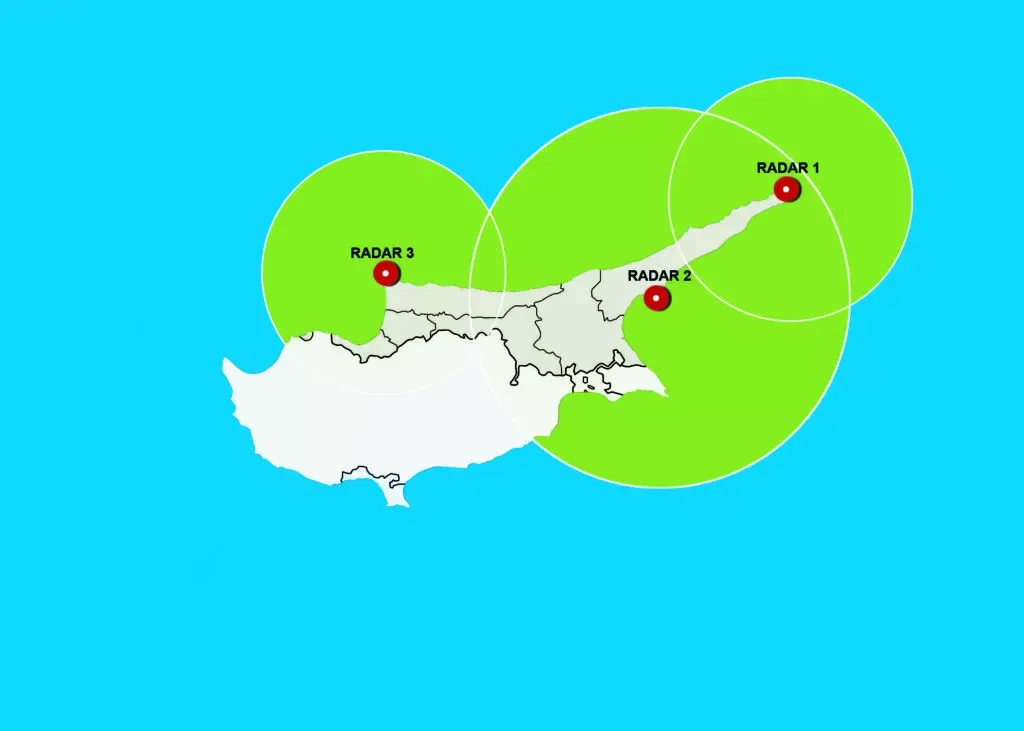
Nicosia, Cyprus. Authorities in the occupied areas said three radar stations are set to begin operating in July, a move described as strengthening Turkey’s monitoring and control over surrounding waters. The stations are part of broader infrastructure upgrades tied to Turkey’s stated aim of tighter oversight of the area from Cyprus.
Stations and readiness checks
The decision to construct and operate three stations is expected to enhance technological capacity to monitor the region. The stations are located at Livera, Cape Apostolos Andreas and Agios Theodoros.
Authorities in the occupied areas have confirmed that final checks are underway before the stations become operational. A delegation from Turkey’s Ministry of Transport and Infrastructure visited the occupied areas days ago to help ensure the project finishes on time and to address potential operational risks. The delegation was led by Director General of Maritime Affairs Ünal Baylan, and officials discussed final-stage details with the occupation regime before the stations go live.
Turkish officials cite strategic and security aims
Turkish officials said the project serves strategic needs in the Eastern Mediterranean. The so-called minister, Erhan Arıklı, described the region as an energy transit route with heavy LNG and oil tanker traffic and called it geopolitically critical.
Arıklı said the system is intended to manage civilian traffic and raise awareness of maritime activity. He said the plan will increase capacity to monitor sea traffic between the “TRNC” and Turkey, improve safety when approaching “TRNC” ports and reduce the transport of dangerous and illegal goods. Turkish sources also said the radars will enable “early detection of asymmetric maritime threats and monitoring of critical infrastructure”, including the subsea electricity transmission cable. An official of the occupying power said the project creates a situational awareness network that goes beyond passive radar surveillance.
Links to other infrastructure projects
The radar stations are described as linking directly to other projects run by the occupying power. They connect with the illegal military airport at Lefkoniko, which operates largely as a base for unmanned aerial vehicles, and with the planned naval base at Bogazi.
Turkey began upgrading the airport in September 2018, aiming to turn it into its first military base in the Eastern Mediterranean, with operations focused mainly on the area south of the island. Work on the naval base at Bogazi has not advanced significantly, though steps indicate plans to build it, as the Turkish navy requires such a facility. The Tasucu base on Turkey’s coast lies 40 nautical miles away.
The infrastructure network also includes the Ground Data Terminal (GDT) system in the occupied Pentadaktylos mountain range, which supports the operational deployment of Bayraktar TB2 unmanned aerial vehicles.
Timing and broader political context
The projects are described as deepening Turkey’s presence in the occupied areas and seeking to impose new faits accomplis. The planned July launch coincides with the anniversary of the invasion, when celebrations take place in the occupied areas and announcements of new projects often follow.
Turkey has long used Cyprus as a forward outpost and as an instrument in advancing its “Blue Homeland” doctrine, a strategy described as strengthening its military presence on the island and driving further militarisation. The text states that each new project reinforces Ankara’s narrative of strategic investment in infrastructure in Cyprus in order to remain, and that these plans reduce prospects for an agreement on the Cyprus issue unless a future settlement incorporates faits accomplis and strategic advantages gained through Turkey’s illegal presence.
Unrest over “Turkey–TRNC cooperation protocol”
Debate over a separate agreement has also triggered unrest in the occupied areas. The “Turkey–TRNC cooperation protocol” provides for the installation of fibre-optic network infrastructure to deliver internet access to 150,000 households and businesses.
The Turkish company Türk Telekom will implement and manage the project for 25 years. Marathon sessions in the so-called parliament, lasting up to 19 hours, have yet to conclude, and the issue could topple the so-called government, as some “MPs” from the ruling side align with the “opposition”.
What impact do you think the planned radar stations and related infrastructure projects could have on maritime activity around Cyprus?