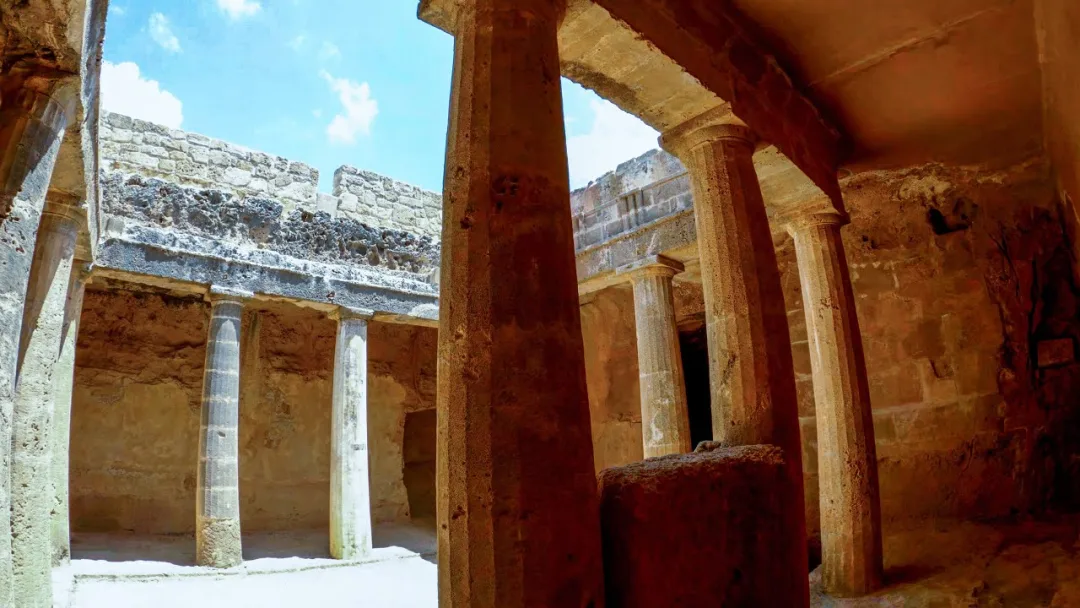
Paphos, Cyprus. The architecture of the Tombs of the Kings in Paphos combines Greek, Egyptian and Macedonian elements, the antiquities department said on Wednesday. It said the site reflects the multicultural character of the Hellenistic period.
Excavation book published
A book documenting the department’s excavations of the Tombs of the Kings is being published to mark the 35th anniversary of the completion of the excavations. The first volume, covering the years from 1977 to 1981, has now been published.
The department said the excavations opened a window into the previously unknown history of Hellenistic Paphos, with a total of 14 excavation periods carried out.
Funerary monuments and Tomb 8
It said the impressive funerary monuments, attributed to the Ptolemies, have their counterparts mainly in Alexandria and Macedonia. According to the department, they represent a mixture of elements from the two regions, and the study of the architecture and the findings in the monuments enriches the history of Paphos.
The department added that Tomb 8 is particularly impressive but has become the subject of misinterpretations and unfounded conclusions based on fabricated evidence. It said the book places particular emphasis on the tomb’s history for that reason.
Details of Tomb 8
Tomb 8 was first excavated in 1979, and archaeologists found it notable for its size and complex architecture.
The monument is carved into the natural rock and is organised around a central rocky cube and an open courtyard with four symmetrical wings. The entrance is via a monumental stepped road leading into the interior of the complex.
The excavations revealed 18 burials, and evidence of cremations was also found in the form of a lead urn. The department said cremation was a practice rare in Cyprus but known in the Macedonian world, suggesting possible cultural influences and contacts beyond the island.
It said the tomb’s architecture combines Greek, Egyptian and Macedonian elements, reflecting the multicultural character of the Hellenistic period. The central cube contained a particularly elaborate burial chamber with a Doric façade, which suggests it was intended for a person of high social or political status.