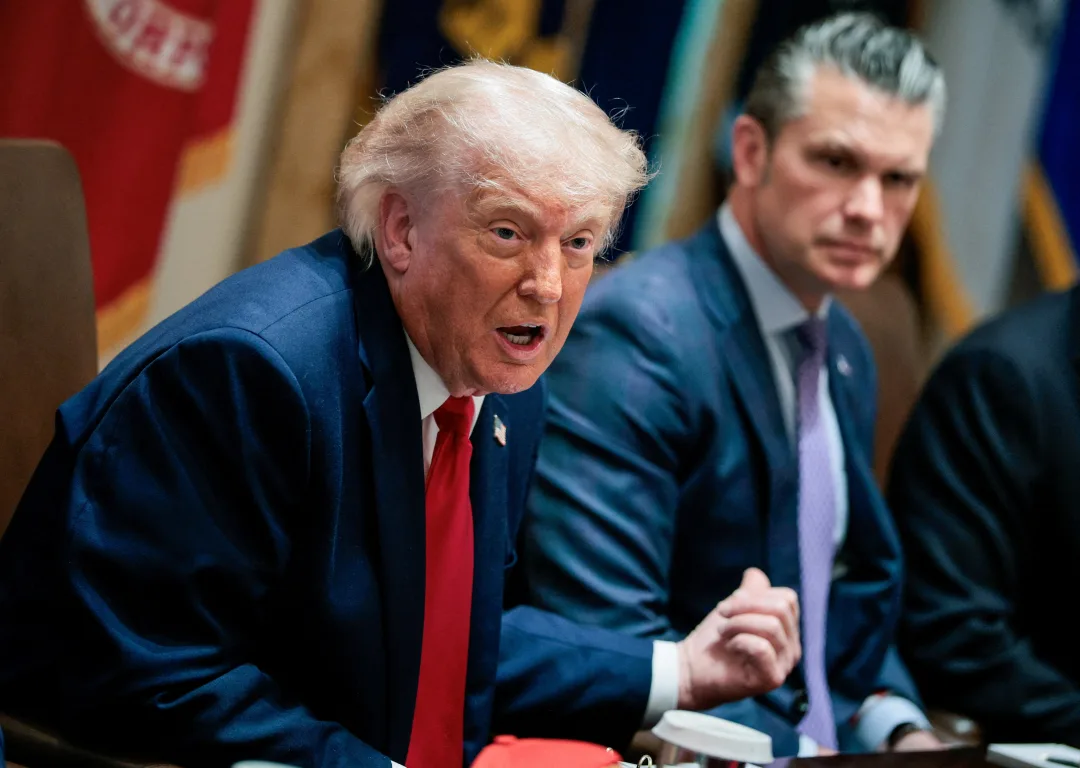
Paris, France. US President Donald Trump said on Monday that the United States and Iran had already signed a preliminary agreement to end the war in the Gulf, though key details have not yet been made public. He said Vice President JD Vance would attend a formal signing ceremony in Geneva on Friday.
Terms outlined by Trump
“The deal’s all signed,” Trump said after arriving in France for a G7 summit. According to Trump, the agreement would reopen the Strait of Hormuz and extend a ceasefire for 60 days, allowing negotiators time to address unresolved issues including Iran’s nuclear programme.
Market and conflict impact
Oil prices fell to their lowest level since March 10 following the announcement, after weeks of disruption that had cut off a significant share of global oil flows. The reported deal marks the most significant diplomatic development so far in efforts to end the conflict, which has killed at least 7,000 people, mainly in Iran and Lebanon, and triggered major instability in global energy markets.
Possible economic measures
US and Iranian officials said the agreement could eventually include sanctions relief for Iran, the unfreezing of foreign assets and the creation of a $300 billion reconstruction fund supported by Gulf states. US officials, speaking on condition of anonymity, said Iran would be required to meet US demands not to develop nuclear weapons and to end support for regional proxy groups such as Hezbollah in order to access any economic benefits.
Unresolved issues
Details of the agreement are expected to be released within the next two days, according to US officials. Despite the announcement, major disputes remain unresolved, with Iran maintaining that it does not seek nuclear weapons and resisting limits on its missile programme and regional alliances.
Questions over Hormuz and Lebanon
The agreement also leaves open questions over the Strait of Hormuz, with Iran suggesting it would share oversight of the waterway with Oman, while the United States said it should be fully open for transit without charges during the 60 day ceasefire period. Israeli Prime Minister Benjamin Netanyahu said Israel would not withdraw forces from southern Lebanon, stating, “Iran wanted us to withdraw from it, but I stood firm.”