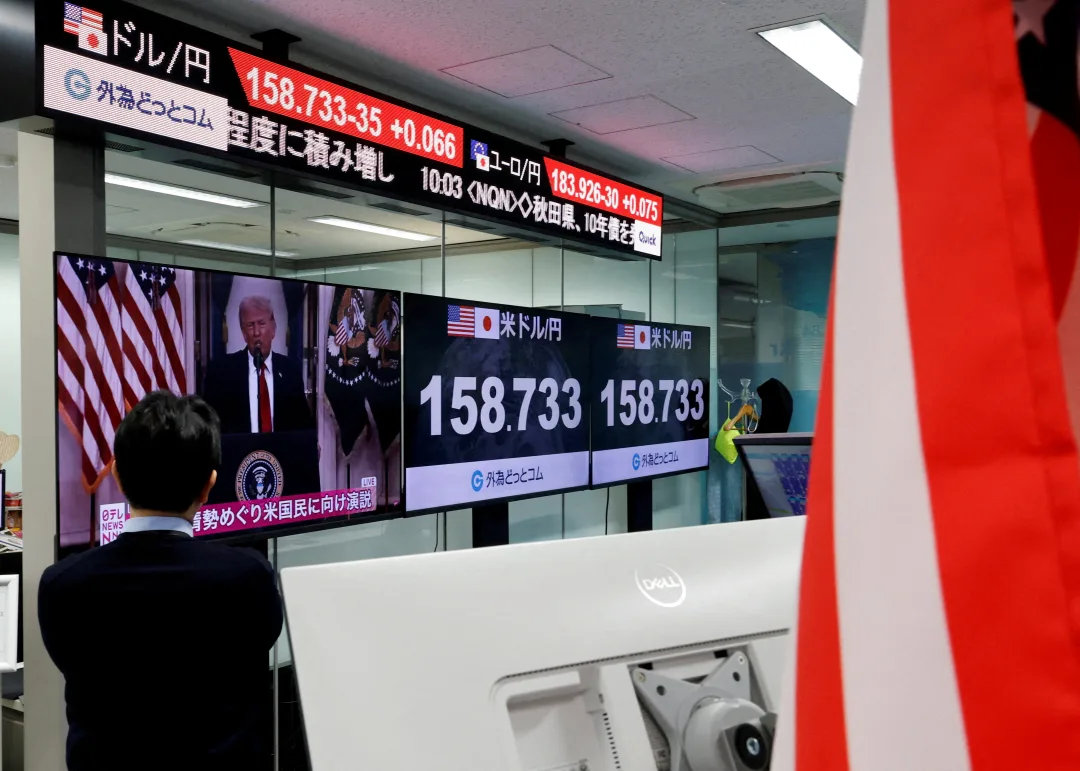
Washington, United States. Hopes for a swift end to the Middle East war faded on Thursday after U.S. President Donald Trump vowed more aggressive strikes on Iran, disappointing investors looking for clearer signals of a way out. Stocks fell and oil prices surged after Trump said military operations would be intensified over the next two to three weeks.
Trump outlines tougher approach
In a Wednesday evening prime-time speech, Trump said the United States was close to completing its military objectives. “I can say tonight that we are on track to complete all of America’s military objectives shortly, very shortly,” he said.
Trump said strikes would increase in the coming weeks. “We’re going to hit them extremely hard over the next two to three weeks. We’re going to bring them back to the Stone Ages where they belong,” he said.
He also suggested the war could escalate if Iranian leaders did not agree to U.S. terms during negotiations, with strikes on Iran’s energy and oil infrastructure possible.
Oil rises as uncertainty persists
Benchmark Brent crude prices jumped about 5% to $106.16 per barrel, with Trump’s address offering little reassurance about how the Strait of Hormuz energy conduit would reopen. Prices had fallen earlier on Thursday after settling lower in the previous session.
Stocks fall across regions
U.S. index futures were down 1% and European futures sank over 1.5%. Almost all Asian bourses were in the red, with Japan’s Nikkei down 1.8% and MSCI’s index of other Asia-Pacific shares down more than 1.5%.
“If he (Trump) was trying to inspire confidence in the markets, he has not done that. The key question in all investors’ minds is ‘When is this going to be over?’, that is what is creating the volatility,” said Russel Chesler, Head of Investments and Capital Markets at Vaneck Australia.
New launches reported after speech
Shortly after Trump’s speech, the Israeli military said it had identified missiles launched from Iran toward Israeli territory.
Conflict toll and regional expansion
Thousands of people have been killed across the Middle East since February 28, when the U.S. and Israel struck Iran, triggering Iranian attacks on Israel, U.S. bases and the Gulf states, while opening a new front in Lebanon.
What would you most like to know about how the conflict could affect energy supplies and global markets?