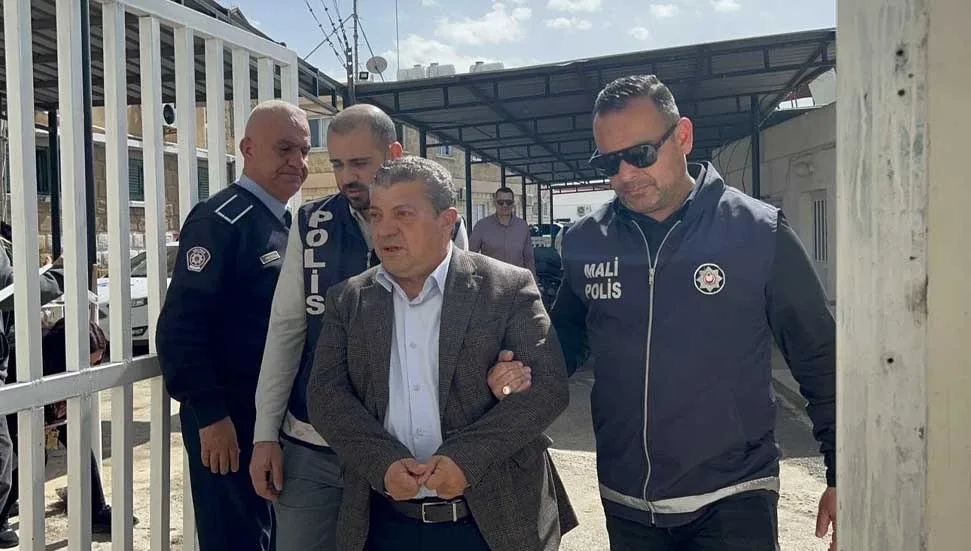
Nicosia, Cyprus. Political and legal figures weighed in on Tuesday over a law passed by the Turkish Cypriot legislature on Monday night which criminalised the naming of high-profile individuals who appear in court accused of crimes. Comments ranged from caution by current leadership to sharp criticism from former officials and opposition figures.
Erhurmane signals possible constitutional action
Turkish Cypriot leader Tufan Erhurmane said he is “closely following discussions” and that his office will “consult with all relevant parties and evaluate all opinions”. He added that, if deemed necessary, the presidency would not hesitate to exercise its constitutional powers, as in previous instances, indicating he may veto the law or send it to the north’s judiciary to question its adherence to the ‘TRNC’s’ constitution.
Akinci criticises impact on rights and press freedom
Former Turkish Cypriot leader Mustafa Akinci said “one cannot remain neutral on issues such as democracy, human rights, and freedom of the press and expression”. He said that not taking a stand “draws the colour out of matters and fuels an appetite for deep darkness”, adding that “a society where the press is silenced by fear cannot have a bright future”.
Reynar questions ruling coalition’s approach
Former judge Tacan Reynar, now a high-ranking member of opposition party the TDP, asked the north’s ruling coalition, “who are you to pass laws which run contrary to the universal ethics rules of reporting and writing?” He said, “The day will come when we repeal all these laws one by one in parliament, with great pleasure. They will all become null and void, just like you.”
Ozersay links law to corruption and public scrutiny
Former Turkish Cypriot chief negotiator for the Cyprus problem Kudret Ozersay said that, amid increased and exposed “corruption, fraud, bribery, and decay”, the law change aims to prevent journalists from writing about scandals and to stop the public from knowing the full names or seeing the photographs of those accused. He said it is “very clear” that the intent is to protect politicians who will be tried in the near future and to intimidate and silence those seeking to inform the public.
Media ethics board warns of weakened oversight
Earlier in the day, the Turkish Cypriot media ethics board warned that the stated reason for the law—protecting the presumption of innocence until proven guilty—has “become a tool which weakens public oversight”.
How do you think the new law will affect public access to information about court cases involving high-profile individuals?