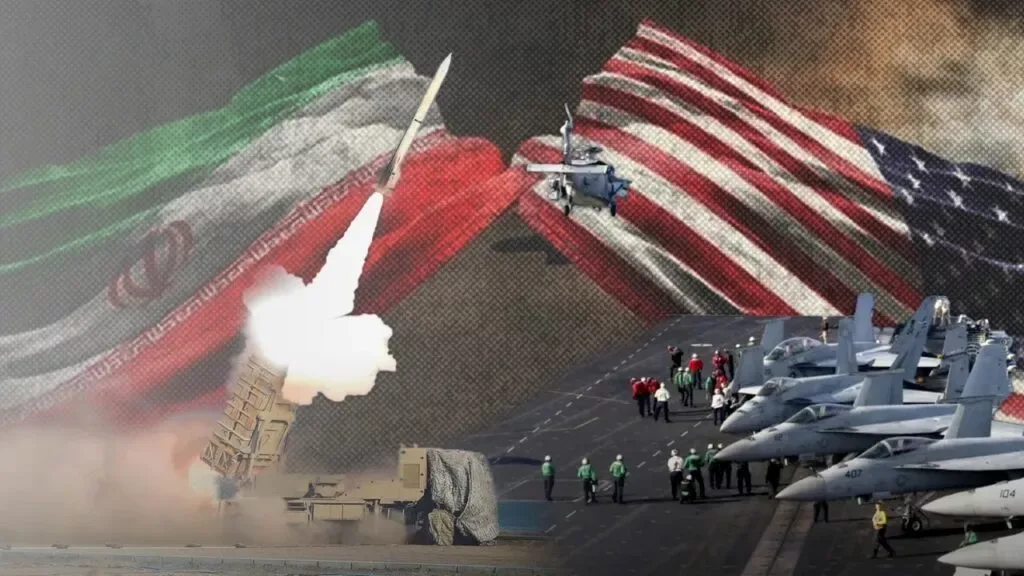
Geneva, Switzerland. The United States hopes talks with Iran in Geneva will produce an agreement to prevent Tehran acquiring nuclear weapons, as President Donald Trump has amassed forces in the Middle East to increase pressure on Iran to reach a deal.
Iran’s enrichment programme and stockpile
Iran has over decades developed an advanced and large-scale uranium enrichment programme. Enriched uranium can be used as fuel in power plants at various purity levels, but at high levels it can be used to make nuclear weapons.
Until Israel and the U.S. attacked its nuclear facilities last June, Iran was enriching uranium to up to 60% purity, a short step from the roughly 90% that is weapons grade.
It had enough material enriched to that level, if enriched further, for 10 nuclear weapons, according to an International Atomic Energy Agency yardstick, and more at lower levels.
IAEA access and verification
The IAEA, the U.N. nuclear watchdog, has not been able to verify how much of that uranium stock remains. Iran has yet to declare what happened to it or allow the agency to inspect its bombed nuclear facilities.
Iran’s enrichment plants were destroyed or badly damaged in the attacks, though their exact status, like that of the uranium stock, has yet to be verified.
Conflicting positions and potential frameworks
After the June bombings, the two sides expressed incompatible demands: the U.S. said it wanted Iran to give up enrichment, and Iran said it would never do that.
As a party to the nuclear Non-Proliferation Treaty, Iran has the right to enrich uranium as long as it does not use it to produce nuclear weapons, which it says it would never do.
While an agreement might include an initial phase in which Iran suspends enrichment, there are limited options in terms of what any deal might let it do with its enrichment programme.
In previous rounds of talks the idea was floated of a regional enrichment consortium, which would involve setting up a joint venture outside Iran with one or more other countries from the Middle East. Tehran has always rejected that as an alternative to enriching on its soil.
What outcome do you think the Geneva talks should prioritise to address concerns over Iran’s uranium stock and enrichment activities?