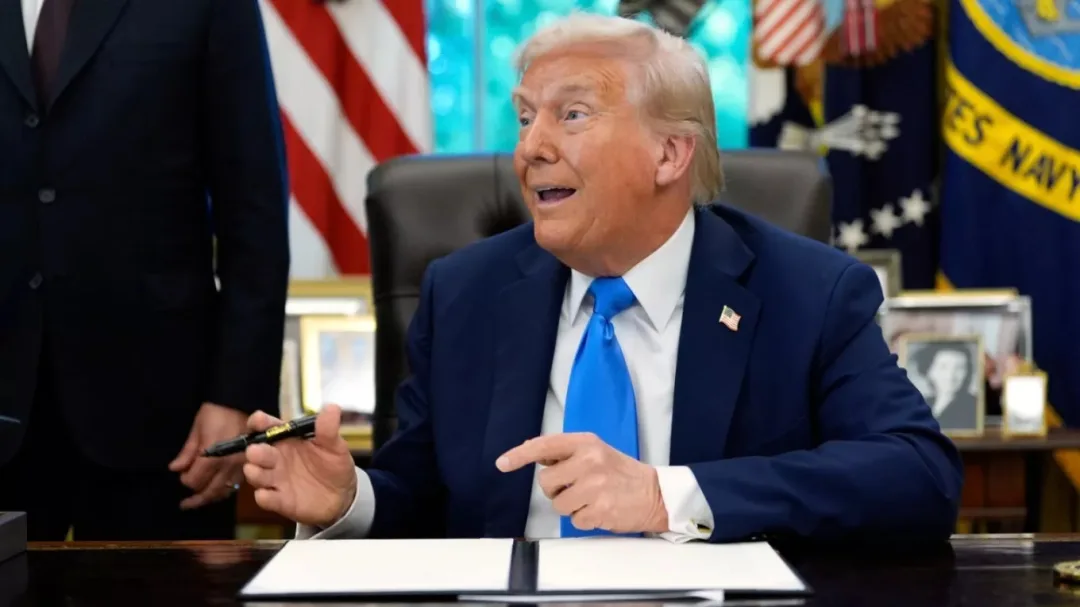
Paris, France. President Donald Trump said the United States and Iran had signed a preliminary agreement to end the war in the Gulf, though details have not been made public and both sides said a permanent truce still has to be negotiated.
Trump made the announcement after arriving in France for a G7 summit, saying Vice President JD Vance would attend a formal signing ceremony in Geneva on Friday.
Preliminary agreement announced
Trump said, “The deal’s all signed,” describing the agreement as a first step toward ending the conflict. Iranian President Masoud Pezeshkian said in a social media post that the memorandum of understanding was an “important step” toward stopping the fighting, but added that a final agreement for a lasting truce “has yet to take shape.”
Vance told CNN the signed memorandum was about one and a half pages and “a very general document.” US officials said further details would be released over the following two days.
Ceasefire extension and Strait of Hormuz
Under the agreement, the ceasefire announced in April would be extended by another 60 days. The deal would also reopen the Strait of Hormuz, which Iran has effectively blocked since the United States and Israel struck Iran in February.
Negotiators are expected to address more difficult issues in the next phase, including the future of Iran’s nuclear programme. Oil prices fell to their lowest level since 10 March shortly after the blockade of the strait had cut off a fifth of world oil trade.
While the agreement lifts Iran’s chokehold on the strait, shippers said traffic would resume only once safety is assured. Iran has suggested it will retain joint control over the strait with Oman, while the United States said it expects the waterway to remain toll-free for 60 days and wants that provision included in any final agreement.
Sanctions relief and conditions
Vance said the memorandum included “a very significant sanctions relief package” for Iran. US and Iranian officials said the deal could eventually provide substantial economic benefits to Tehran, including lifted sanctions, unfrozen assets and a $300 billion reconstruction fund financed by neighbouring Gulf states that host US military bases.
US officials, speaking anonymously, said Iran would need to meet demands never to build a nuclear weapon and to end support for militias such as Hezbollah in order to access those benefits.
Unresolved issues
The agreement is the most significant step so far toward resolving a conflict that has killed at least 7,000 people, mostly in Iran and Lebanon, and disrupted global energy markets.
The deal leaves unresolved the future of Iran’s stockpile of enriched uranium, which Trump has said he wants destroyed or removed. Iranian officials, who deny ever intending to build a nuclear weapon, said they had given up little by agreeing to resume nuclear talks that were interrupted by Trump’s decision to launch the war.
Trump’s stated objectives when launching strikes on Iran alongside Israel on 28 February also remain unmet, including demands that Tehran dismantle its ballistic missile programme and end support for regional militias. Iran’s government remains in place.
Lebanon remains a sticking point
Fighting between Israel and the Iran-allied Hezbollah militia in Lebanon remains a major point of contention. The conflict there has displaced 1.2 million people.
Iran said the deal requires a full cessation of hostilities in Lebanon, but Israeli Prime Minister Benjamin Netanyahu said Israel would keep its forces in southern Lebanon and retain the right to respond to Hezbollah attacks.
Netanyahu said, “Iran wanted us to withdraw from it, but I stood firm,” while acknowledging differences with Trump over the conflict. Israel has not directly participated in the US-Iran talks. A US official said Israeli withdrawal from Lebanon was not a condition of the deal, an issue that also complicated the April ceasefire.
Continued violence after announcement
Security sources said fighting in Lebanon had eased after the announcement but had not stopped entirely. Lebanese state media reported that an Israeli drone strike killed a driver in the southern town of Kfar Tebnit.
Netanyahu said Israeli forces had killed four “militants.” Iranian Foreign Minister Abbas Araqchi said Israeli attacks must stop immediately.