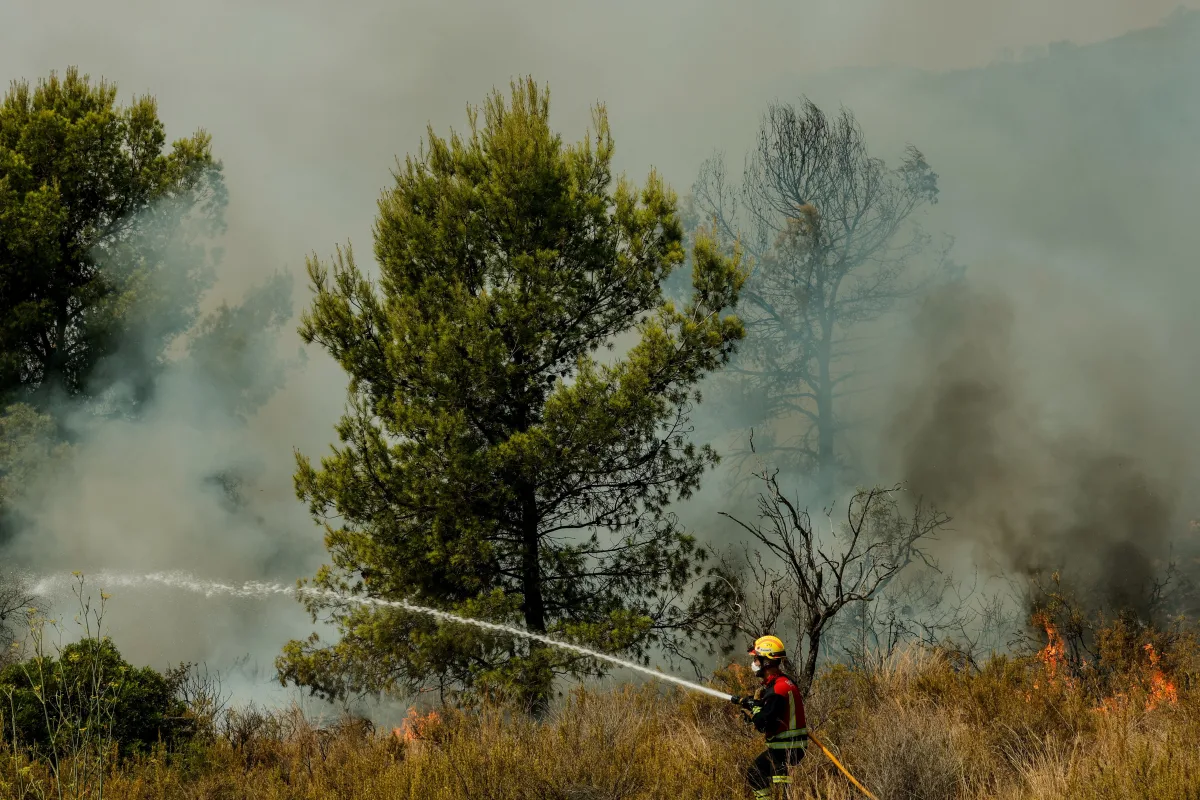
Bordeaux, France. Firefighters sought on Monday to use more favourable weather conditions to contain major wildfires threatening the French city and tourist region of Bordeaux, as well as several areas in neighbouring Spain. Another heatwave is expected to affect both countries later this week after an exceptionally hot and dry summer across Western Europe.
Evacuations and injuries in France
Authorities have evacuated about 220,000 people in France, including holidaymakers and local residents. The fires, which broke out near the Atlantic coast last week, were within 15 kilometres of entry points to the Bordeaux metropolitan area.
Eighty firefighters were injured while tackling the fires, according to local officials.
French President Emmanuel Macron thanked firefighters during a visit to Bordeaux and said the coming weeks would remain difficult.
“We must hold on. We are going to win this battle together. The whole nation is behind you,” he said.
Prime Minister Sebastien Lecornu said France was experiencing an unprecedented wildfire season, with the area burned already exceeding the previous record set in 2022.
“The fight against wildfires begins with prevention. Nine out of 10 fires are human-caused and most arise from carelessness: a cigarette butt, a barbecue, work carried out without precaution,” he wrote on X.
Fires continue in Spain
Around 100,000 people in Spain have been told to leave their homes or seek shelter. Authorities said the spread of large fires converging in central Spain slowed overnight.
However, a fire in Vall d’Uixo, in the eastern province of Castellon, remained out of control. Firefighters there faced additional risks because the ground contains unexploded ordnance from the Spanish Civil War, which detonates when reached by flames.
Chevi Bolumar, fire chief of the Valencian regional government, told public broadcaster TVE that the situation was especially dangerous.
Spain’s weather agency warned of another possible heatwave this week.
Prime Minister Pedro Sanchez said the fires and heatwaves reflected a climate emergency that was increasing the severity of wildfires and the vulnerability of the country’s territory.