Cyprus scientists test traps to curb invasive lionfish spread
Scientists in Cyprus are testing selective traps as warming waters and the Suez Canal accelerate the spread of invasive Mediterranean species.
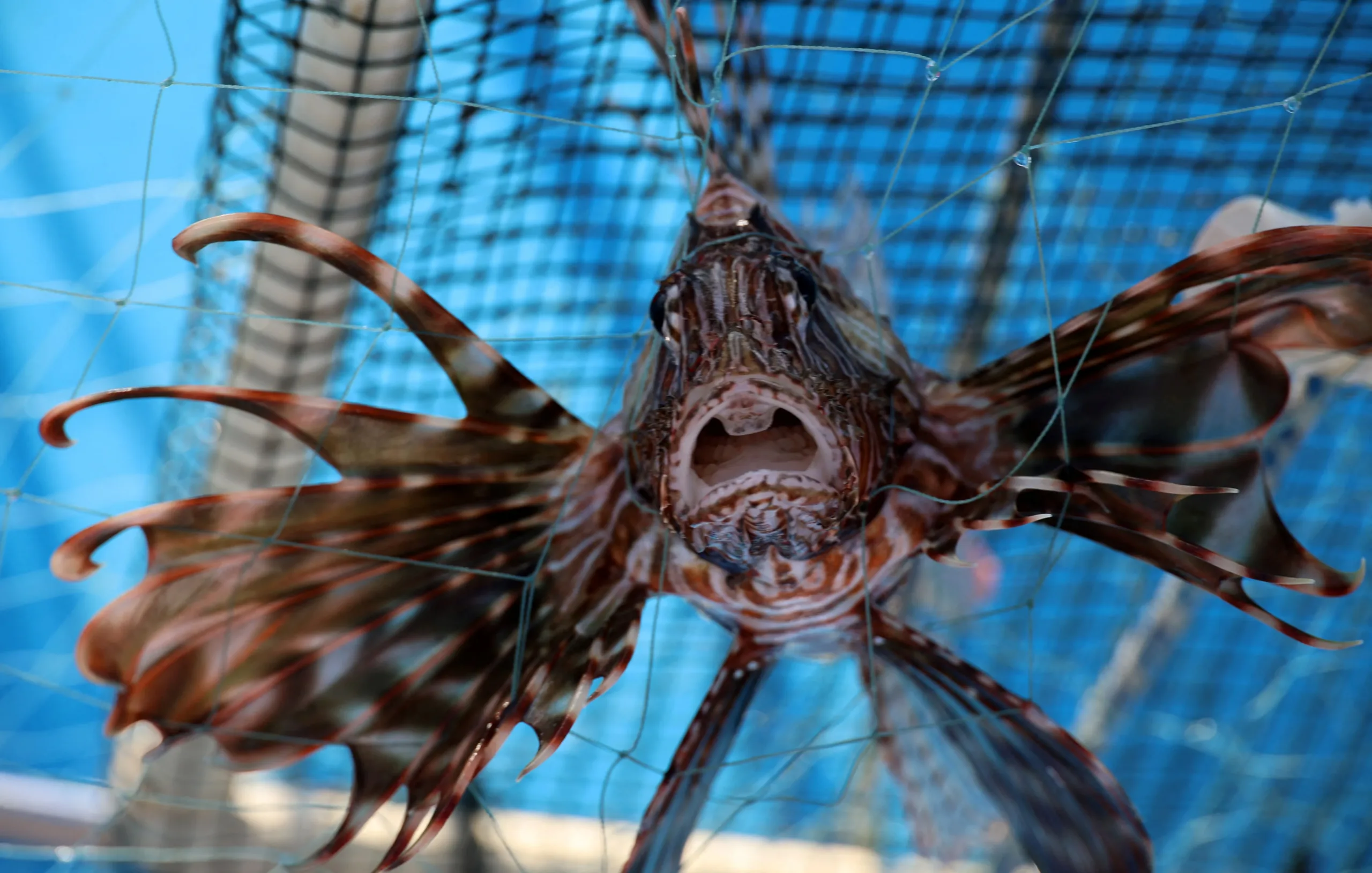
Nicosia, Cyprus. Scientists in Cyprus are monitoring and seeking to limit the spread of invasive species, including lionfish, as warming Mediterranean waters and the Suez Canal bring increasing numbers of tropical fish into the region.
Experimental traps
Pepis, the bearded skipper of a small fishing boat, removes venomous spines from lionfish caught in experimental traps off the coast of Cyprus before gutting the fish and placing them in a bucket.
The work forms part of research by scientists tracking invasive species and testing methods to reduce their impact on Mediterranean ecosystems.
Growing numbers of non-indigenous species
A survey collated by the Cyprus Academy of Sciences, Letters and Arts, based on research by scientists in 11 countries, estimated that a new species enters the Mediterranean every two weeks.
The report said there are now more than 1,000 non-indigenous species in the Mediterranean, compared with fewer than 800 recorded in a European Environment Agency study covering 2012 to 2017.
Experts said tropical species arriving from the Red Sea and beyond are displacing native species, reshaping food chains and threatening fisheries.
Climate change concerns
The changes are linked to rising sea temperatures and the Suez Canal, which has facilitated access to the Mediterranean for fish from more tropical climates.
Despite accounting for 0.8% of the global ocean area, the Mediterranean supports a share of global marine species estimated by some sources at up to 18%.
Periklis Kleitou, a marine scientist at the Cyprus-based Marine and Environmental Research lab, said the changes had been particularly significant since 2000.
“We see more and more non-indigenous species proliferating and dominating the marine environment and, unfortunately, fewer native species,” he said.
Lionfish and blue crabs
Scientists say lionfish have no known predator in the Mediterranean and consume native fish and crustaceans.
Around Cyprus, the Marine and Environmental Research lab is testing selective traps intended to attract lionfish and blue crabs while allowing other species to escape.
This news item was generated automatically by Cyprus Inform from publicly available materials. Report an error →