Former gang leader sentenced to 40 years to life for organising Tupac Shakur’s killing
Duane “Keffe D” Davis received consecutive sentences for murder and a weapons offence in the 1996 Las Vegas shooting of Tupac Shakur and said he would appeal.
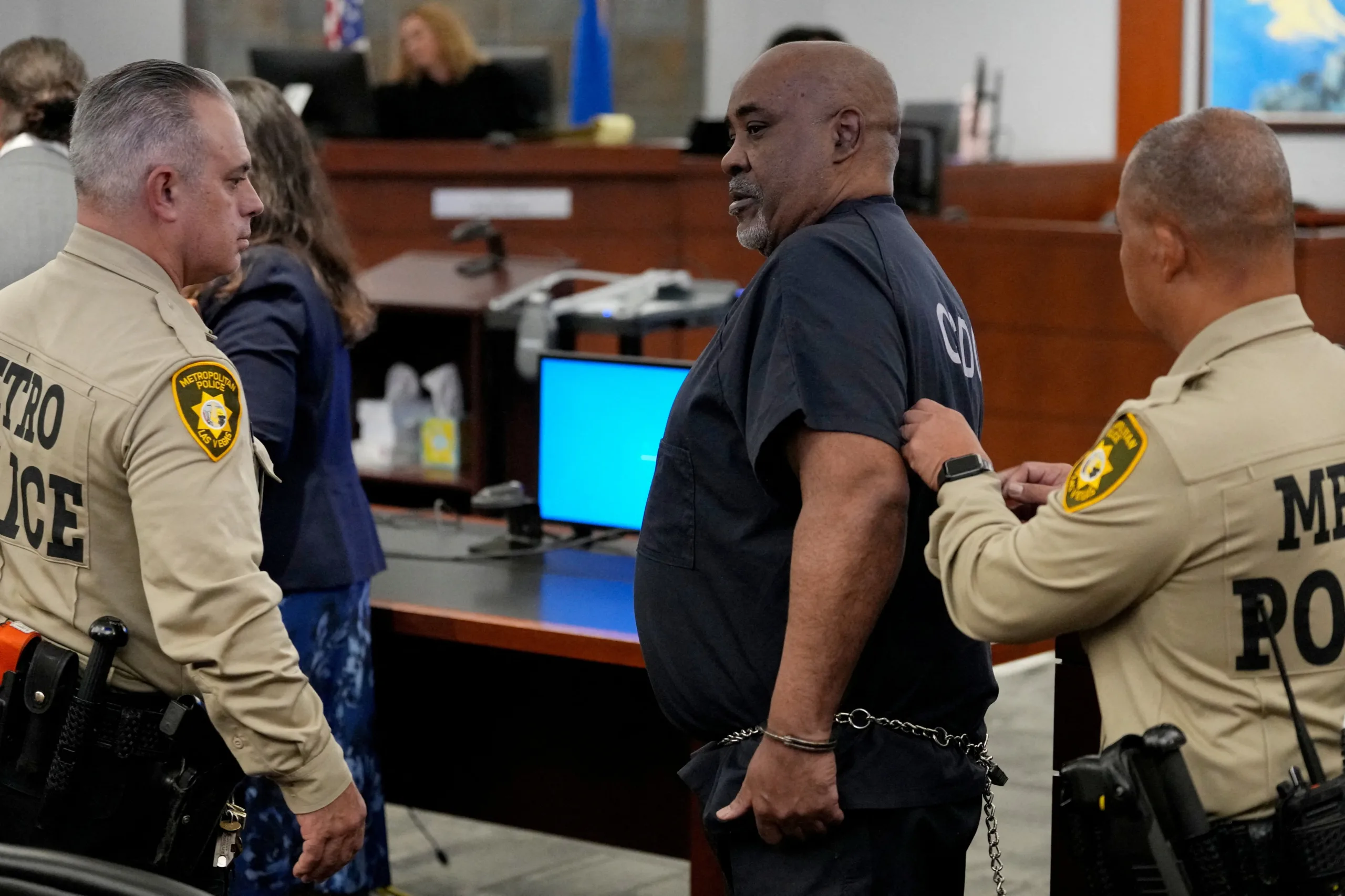
Las Vegas, United States. Former gang leader Duane “Keffe D” Davis was sentenced on Tuesday to a combined 40 years to life for organising the drive-by killing of Tupac Shakur in 1996. The sentencing concluded the prosecution over a murder that remained unresolved for decades and helped define rap music’s golden era.
Consecutive sentences and planned appeal
Davis, 63, received two consecutive prison terms, each carrying 20 years to life: one for murder and another for using a deadly weapon. A jury convicted him of first-degree murder in August.
During the hour-long Las Vegas hearing, Davis wore blue prison clothing and waist restraints. He displayed no emotion when sentenced and spoke little, apart from a brief disagreement with the judge about credit for time he had already spent in custody.
Offered a final opportunity to address the court, Davis requested the return of evidence investigators had taken from his home. He said: “I just want my stuff back that they took out of my house,”
When Judge Carli Kierny asked whether he wished to say anything further before sentencing, he replied: “I’m good. I’m going to appeal this case, for sure.” His lawyer, Michael Sanft, likewise said an appeal would follow.
A long-unresolved killing
Before Davis was arrested in 2023, Shakur’s death had remained among the United States’ most notorious unsolved murders for almost three decades. The rapper was shot while sitting in an SUV’s passenger seat, with his record executive, Marion “Suge” Knight, driving.
Davis remains the sole person charged over the killing. Despite his conviction, the identity of the person who fired the fatal shots has not been conclusively established.
Shakur was 25 when he died. His murder deprived rap of one of its most influential and commercially successful performers, reinforced perceptions of violence within 1990s hip-hop and intensified the era’s notorious rivalry between East Coast and West Coast gangsta rap.
Shakur’s legacy and his sister’s statement
Shakur’s popularity arguably grew after his death. He was known for unvarnished accounts of ghetto life, with lyrics incorporating violence, sex and profanity.
His fourth studio album, All Eyez on Me, came out months before the killing and embraced his outlaw persona. In 2017, he was inducted into the Rock and Roll Hall of Fame.
In a tearful statement to the court on Tuesday about the impact of the murder, his sister, Sekyiwa Shakur, 51, said their mother had brought him up to become a human rights activist. She said their mother had sought to teach him that he could make the world better.
This news item was generated automatically by Cyprus Inform from publicly available materials. Report an error →