Governor’s Beach in Cyprus: coves, access and safety
About the place
Checked: 13 September 2026.
What exactly is meant by Governor’s Beach
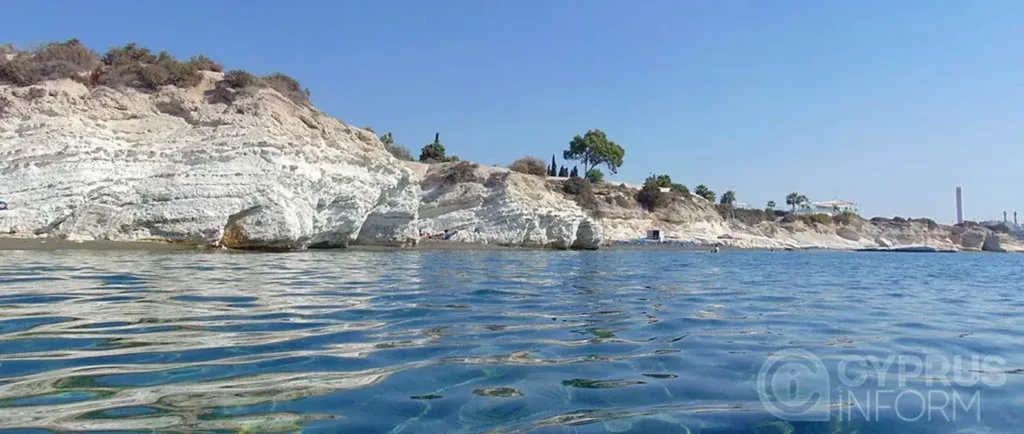
Governor’s Beach is not a single continuous urban promenade, but rather a coastal area near Pentakomo between Limassol and Larnaca. Here, small coves, light-coloured chalk cliffs and stretches of flatter shoreline alternate. The neighbouring Kalymnos is officially described as part of this popular area, but has its own character and infrastructure.
The white rock formations create a distinctive landscape, though access to the water varies from cove to cove. In some places there is sand and a gentler entry, whilst in others there are steps, rocks and an uneven surface. Do not choose a spot based solely on a photograph: the map must match the actual access route, your group’s capabilities and sea conditions on the day of your visit.
The official Blue Flag 2025 materials list Governor’s Beach in Pentakomo and highlight its accessibility. This status applies to a specific equipped section and season, not to the entire coastline. Once there, look out for the beach name, the information board, the flags and the boundaries of the lifeguard zone.
How to choose a cove
For families with children, a gentle slope, a spot close to the water and the presence of lifeguards are important. Photography enthusiasts may find the white cliffs more interesting, but these feature crumbling edges, slippery surfaces and awkward descents. People with reduced mobility need a specific accessible section, rather than the general address of Governor’s Beach.
First, decide on your main priority: swimming, a quiet lunch, a short walk or access to the water. Then check a satellite map and the official list, but make your final decision once you’re there. If the cove you’re after is overcrowded, the car park is chaotic or the sea is choppy, a neighbouring equipped section may be safer.
Do not walk between coves along the edge of the cliffs unless there is an obvious public path. A short line on the map may turn out to be a steep edge or private property. When changing locations, it is sometimes wiser to return to your car and drive over rather than carry your belongings in the heat across uneven terrain.
Roads, parking and public transport
The most reliable way to get there is by car or taxi, with a pre-selected drop-off point. There are local turn-offs from the A1 motorway, but your sat-nav may direct you to a restaurant or cove other than the accessible area you are looking for. Save your parking location and do not leave your car where it blocks access for the emergency services.
You cannot assume there will be a direct city bus to every bay. Routes and seasonal stops change, and the walk along the road may be unsafe. If you’re relying on public transport, check with the operator on the day of your trip, note both stops and the last return service, then assess the walk from the stop to the shore.
When booking a taxi, agree on the exact name of the pick-up point, the time for the return journey and whether you’ll have mobile coverage. It’s helpful to send the driver a geotag. Do not rely on hailing a taxi after sunset or once the restaurant has closed: this area is not like the city centre, and demand and mobile coverage vary from one bay to another.
Facilities and season
At developed beaches, you’ll find toilets, changing rooms, sun loungers, parasols, cafés or restaurants; the official Kalymnos website also lists a children’s playground and a campsite. The availability of specific facilities depends on the bay and the season. Do not assume that the description of one area applies to the whole of Governor’s Beach.
Lifeguards and first-aid services operate seasonally and during set hours. Even if the lifeguard post was open on your last visit, check the notice board today. Swimming outside lifeguard hours means that professional assistance may not be nearby. The colour of the flag and the lifeguard’s instructions are more important than the calm appearance of the water as seen from the car park.
In summer, shade is scarce, and the light-coloured rocks make the sun feel even stronger. Bring water, a hat and sun protection, but do not block service access routes with large sunshades. Out of season, some facilities and toilet blocks may be closed, so it’s particularly important to bring a supply of water and have a plan for an alternative beach.
Accessibility for people with reduced mobility
The official Accessible Cyprus 2025 guide lists Governor’s Beach among accessible beaches and mentions a floating chair. Before your trip, confirm exactly where the equipment is located, the times it is available, whether an attendant is required, and whether it is suitable for the specific user. Its inclusion in the directory does not guarantee availability at any given time.
Check the entire route: a designated parking space, kerbs, gradients, the surface leading to the toilets and changing rooms, the path to the water and the route back. Partial accessibility may end at the upper landing. A photograph of a ramp does not show its width, gradient, handrails or condition following winter weather.
Describe the necessary conditions to the operator or local representative without giving unnecessary medical details. If assistance is not confirmed, choose a beach with a self-access system or more comprehensive facilities. A safe alternative is preferable to attempting to navigate stairs, sand or rocks with unsuitable equipment.
Swimming and safety near rocks
Only enter the water where the seabed is visible and there is a convenient exit. Rocks can be covered in seaweed and a slippery film, and even a small wave can make it difficult to get back out. Water shoes reduce the risk of cuts, but do not make the rocks safe. Do not jump from ledges unless the depth and underwater terrain have been officially surveyed.
Keep well clear of the edge and base of loose cliffs; do not climb up just to take a photo, and do not leave a child beneath an overhang. The surface may change after wind and rain. If a passage looks crumbling or is cordoned off with tape, do not try to find a way round – choose a different spot.
Keep an eye on the flag, the current and any boats; do not swim beyond the boundaries of the designated area. If the weather deteriorates, get out of the water before the swell becomes too strong. In an emergency, call a lifeguard and dial 112; first state your exact location or GPS coordinates, as the general name of the beach covers several bays.
Plan your visit to avoid unpleasant surprises
The day before, choose a specific section, check the weather, access, seasonal services and return transport. Save the geotag and one neighbouring alternative. For your family, divide up the water, towels and footwear so that you don’t have to walk back to the car in the heat to fetch anything you need.
Once there, first check the path to the water and the information board, then unpack your things. Locate the lifeguard, the toilet and the meeting point. If conditions do not match your expectations – for example, the necessary equipment is unavailable, the access path is closed or the waves are stronger than expected – changing to a different cove is a perfectly reasonable solution, rather than a wasted trip.
After your visit, do not treat the opening hours as set in stone. For the next season, double-check the details using official sources. Governor’s Beach is valued for its diversity, but that is precisely why a general description is insufficient: practical decisions always depend on the specific cove, date and group composition.
Continue planning
- Cyprus beaches: how to choose a coast
- Public transport in Cyprus
- Cyprus news: weather and coastal access