Public transport in Cyprus
How urban, intercity, rural and airport buses work in Cyprus and where to check current routes.
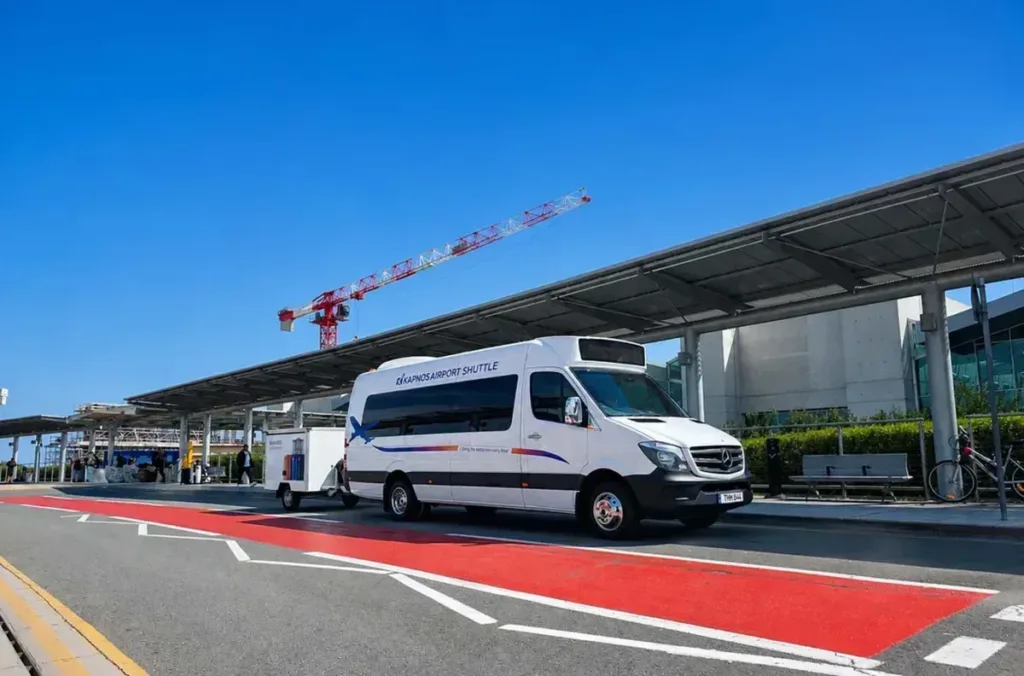
In brief: Cyprus has no passenger railway or metro. Urban, intercity, rural and airport buses form the public transport network and are run by different operators. A car-free trip is possible, but every leg needs checking.
Four types of bus connection
Urban buses serve an urban area, intercity services link the main cities, rural routes run less frequently and airport routes or shuttles have their own stops and fares.
One ticket or website does not automatically cover the whole journey. Moving between systems may require another ticket and timetable.
How to build a route
Split the journey into airport to city, city to city and city to accommodation. Record the operator, stops in both directions and the last suitable departure for each leg.
Maps help locate a stop, but confirm operational changes with the carrier and allow a transfer margin.
Tickets and payment
Fares and payment methods change. Open the current ticket page for the relevant operator and check whether cash, bank card or a transport card is accepted.
Do not assume one city’s rules apply elsewhere. Child, student and concession fares may require evidence.
Limits of a car-free trip
Main-city journeys are easier than remote beaches, villages or trailheads. Evening and weekend options can be thinner.
For one difficult day, combine buses with a taxi, organised trip or short car hire rather than changing the whole holiday.
Practical checklist
- split the journey by operator;
- save stop names and the last service;
- check payment and concession evidence;
- keep a fallback for a late return.
How to read the bus network
First, identify the type of route: city, intercity, airport or regional. An identical number or similar name does not necessarily mean the same operator or a single ticket. Plan your journey in separate sections and, for each one, make a note of the official website, the bus stop, the timetable and the payment rules.
A map shows the layout, but does not guarantee a convenient change. Check whether the sides of the street match up, how far you have to walk between stops, and whether there is a safe crossing. The standard ten minutes may not be enough if you have luggage, it’s hot, you’re travelling with a child, or the first bus is delayed.
It’s best to check the stop name against a photograph, its coordinates and the direction of travel. Similar names can be found within the same neighbourhood, and the return stop may not be directly opposite. Keep an offline map and a landmark nearby so you don’t have to rely on mobile coverage when you board.
Planning your day without a car
Start with the return journey. Choose the last suitable bus and one earlier than that, then schedule your activities between the arrival time and the earlier departure. This approach prevents a situation where a visit to a museum, a trip to the beach or an evening meal finishes after the last suitable service has departed.
Don’t try to cover several remote areas in a single day just because they’re all accessible by bus. Waiting times and changes add up, and services can become less frequent in the evening. A single, connected area with sections you can walk usually gives you more time at your destination and fewer points where you might get stuck.
For a remote beach, village or trail, check in advance the distance from the bus stop to your destination, the road surface, shade and mobile coverage. The bus may follow the main road, leaving a long, unsafe stretch to walk. If the final stretch isn’t suitable, opt for an organised tour, a taxi or another option.
Tickets, luggage and accessibility
Check with the specific operator regarding payment methods and transfer rules. The fact that a day ticket is valid in one city does not mean it is valid on an intercity bus. Have an acceptable method of payment ready before boarding and do not assume that the driver will be able to give change for a large note.
If you’re travelling with a suitcase, check the luggage restrictions and how boarding works. Airport or intercity buses may have a separate luggage compartment, whilst city buses are designed for a different passenger flow. Keep your documents, medication and valuables with you, and label your luggage so that it isn’t mixed up at any stops along the way.
If you are travelling with a pushchair or wheelchair, enquire about accessibility on the specific route and at stops. A low-floor bus does not solve the problem of high kerbs, steps at the entrance or a lack of space. For a crucial journey, confirm the conditions with the operator and have a backup plan.
Check before setting off
On the day of your journey, check the operator’s notifications for service changes, roadworks and public holiday arrangements. Search results and third-party journey planners may show out-of-date timetables. If sources differ, rely on the transport operator’s latest announcement and the information displayed at the stop.
Arrive in good time and check the direction on the display or sign. Don’t board a bus based on the number alone: check the final destination. Once on board, note down your stop offline and do not rely solely on the on-board announcement – it may be missing or unclear.
If the service hasn’t arrived, don’t wait until all your options have run out. Set a cut-off time for switching to your backup plan. For the return journey, this could be an earlier bus, an official taxi or cutting your plans short. A predictable return is more important than reaching one more stop on your route.
Official sources
Information checked on 9 September 2026. Recheck timetables, fares, opening hours and temporary notices before travelling.