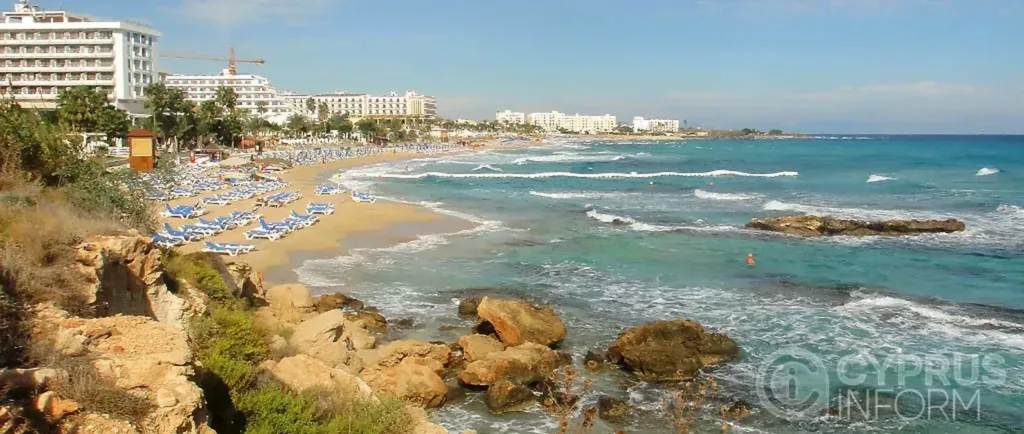
Cyprus beaches: how to choose a coast
About the place
In brief: for pale sand and sheltered coves, travellers often choose the east coast around Ayia Napa and Protaras; for an urban beach and services, Larnaka or Limassol; for a more varied, sometimes rocky and exposed shore, Pafos and the Akamas area. The best beach is defined by water entry, wind, access and the facilities you need, not by a universal ranking.
Cyprus coasts at a glance
| Area | Typical features | Often suits |
|---|---|---|
| Ayia Napa and Protaras | Pale sand, clear coves and many organised beaches | Families, swimming and holidays near resort services |
| Larnaka | Urban beaches, gently shelving sections and airport proximity | Short trips without a long transfer |
| Limassol | Long urban shoreline with a mix of sand and pebbles | Combining city life, promenades and the sea |
| Pafos and the west | Coves, rocky sections and a more exposed sea | Varied routes, scenery and snorkelling in suitable conditions |
The official Visit Cyprus beach portal links to descriptions of individual sites and facilities. Check the actual beach: neighbouring coves can be quite different.
Sand, water entry and waves
A photograph does not show depth, submerged rocks or wind. For small children, a gently shelving entry and sheltered cove often matter more than sand colour. Rocky terrain can be interesting for snorkelling, but only with a calm sea and safe entry point. Waves and currents on the open western coast may be stronger than in a protected eastern bay.
Always follow flags, lifeguard instructions and the conditions you see. Do not enter the water when swimming is prohibited, even if other people do.
What Blue Flag means
Blue Flag is an environmental award for beaches and marinas that meet programme criteria for water quality, environmental management, safety and services. It applies to a specific site and season; it does not give every neighbouring stretch of coast the same status. Lists change, so this guide does not freeze a count of awarded beaches.
The EU bathing-water system describes the monitoring and classification of official bathing sites. The method and current reports are available on the European Commission bathing-water page. Good water quality does not remove local hazards from waves, rocks or heat.
Facilities and accessibility
An “organised beach” may offer sunbeds, showers, toilets, food, lifeguards or water sports, but the exact services and hours change. For step-free access, confirm parking, the route to the water, equipment and its operating season in advance. Remote sections require drinking water, sun protection and a clear return plan.
Choose in five steps
- Set your accommodation area and acceptable travel time.
- Choose the priority: gentle entry, snorkelling, quiet or services.
- Check wind and sea state on the day.
- Confirm parking, accessibility and lifeguard hours.
- Read warnings and assess actual conditions on arrival.
For the east coast, use our guide to Paralimni and Protaras. If you are still selecting an arrival point, compare Larnaka and Pafos airports.
Choose your beach day activity
For a small child, a gentle slope into the water, shade and a short walk are important; for a confident swimmer, the swimming area and water conditions are key; for snorkelling, visibility and the seabed’s topography are crucial. One beach is rarely the best choice for all these activities. Decide on your priorities before choosing a beach.
Sand doesn’t guarantee a gentle entry, and rocks don’t necessarily mean poor water quality. Study photos of the shoreline and seabed, but make your final assessment on site. After a storm, the seabed and depth near the water’s edge may have changed.
If you’re with a mixed group, choose a basic, safe spot and a separate, additional activity. Don’t make everyone trek to a remote cove just for the sake of one person’s interest if there’s no shade, no lifeguard or no easy way out.
Wind, waves and flags
The orientation of the shore affects the wind, but a forecast is no substitute for a first-hand assessment. Check the flags, listen to the lifeguard and watch the current. If swimming is prohibited, a nearby spot or a walk is safer than trying to find an unmonitored area.
Inflatable rings and air mattresses can be carried away by the wind and are not life-saving devices. Children must remain under direct supervision at the water’s edge. Adults must not combine supervision with using a mobile phone, sleeping or drinking alcohol.
Rocky shores and sea caves require particularly calm seas. A wave could block the exit. Do not go into the water alone just to take a photograph, and do not jump in without confirming the depth.
Access, parking and facilities
Check the route from the bus stop or car park to the water: gradient, steps, surface and shade. Accessibility symbols must be backed up by the actual facilities and their operating season. If you have specific needs, contact the beach operator in advance.
Lifeguards, toilets, showers, cafés and hire facilities may operate seasonally and at specific times. The Blue Flag designation outlines a set of criteria but does not guarantee a 24-hour service. You’ll need water, food, medication and sun protection regardless of the facilities available.
Do not leave valuables in your car and do not block emergency access routes. Remote car parks mean a longer walk in the heat, which you should factor in when planning your water supply and return time.
Plan B on the same coast
Before setting off, choose a second beach facing a different direction and one activity that doesn’t involve the sea. Don’t cross the entire island in search of perfect water after lunch. A short alternative preserves your holiday and reduces the risk of driving whilst tired.
In the morning, check the wind, warnings and access, but reassess the situation when you arrive. Conditions change throughout the day. Set a time to leave before it gets too hot and before the car park or roads become congested.
After your visit, distinguish between permanent features and the conditions of a single day. For a consistent description, note the type of shoreline and access, and do not treat temporary flags as a permanent characteristic of the beach.
Official sources
Information checked on 8 September 2026. Check sea conditions, lifeguard coverage and services on the day of your visit.