Easter in Cyprus: the calendar, traditions and etiquette
How to check the Orthodox Easter calendar and parish programme in Cyprus. Flaounes, red eggs, services and respectful participation in the celebrations.
Checked: 3 October 2026.
When and how is Easter celebrated?
In the Greek Orthodox tradition of Cyprus, Easter is a movable feast: its date varies from year to year. When planning a trip, be sure to check the Orthodox calendar for the relevant year, and then the schedule for the specific parish and community. An entry for ‘Easter’ in a foreign calendar does not guarantee that it will coincide with the local celebration.
Cultural programmes and church services are linked to the festive season, but serve different purposes. A church service is not a concert, and a village event is no substitute for a church service. Choose which events you would like to attend and check the details of how to take part: this helps you to plan your day and manage your expectations thoughtfully.
People of various faiths live in Cyprus, and family customs also vary. The guidelines described here are based on the Greek Orthodox tradition; they do not constitute a single set of rules applicable to every resident. You shouldn’t judge a family by the dishes on the table or the events they have chosen to skip.
Holy Week and the parish
Holy Week precedes Easter Sunday. For visitors, it is most important to obtain the current service timetable, rather than planning their visit based on an out-of-date guidebook. Start times and access arrangements may vary between neighbouring churches; parish information is essential even when there is a common calendar.
On Good Friday, a significant part of the tradition centres on the epitaphios and its procession. As this is a religious ceremony, onlookers should keep the way clear and be mindful of the congregation’s movements. If you are unsure where to stand, ask in advance, rather than waiting until the procession begins.
The Easter service on the evening of Holy Saturday and throughout the night is regarded by the faithful as the highlight of the festival. Do not expect it to be a brief event on a tourist itinerary. Check with the parish to find out the start time, duration and a suitable place for visitors, especially if you are bringing children.
A candle, a greeting and the guest’s behaviour
Candles and festive greetings form part of the Easter service. If you wish to take part, ask your guide how candles are traditionally handled in this church. The flame requires you to be mindful of your clothing, hair and those around you; your own photography should not obstruct movement or distract from the service.
The familiar greeting ‘Christos anesti’ means ‘Christ is risen’, whilst the reply ‘Alithos anesti’ means ‘He is truly risen’. These words are part of a religious tradition. A guest of a different faith need not pretend to participate in something that is not close to their heart: a respectful greeting and quiet observation are also appropriate.
Please seek separate permission for photography inside the church and for portraits of participants. Do not use a flash, and do not take up space in the hope of getting a good shot if this disturbs those at prayer. A street procession does not automatically imply that every person consents to having their image captured in close-up or published online.
Flaounes and Easter bakes
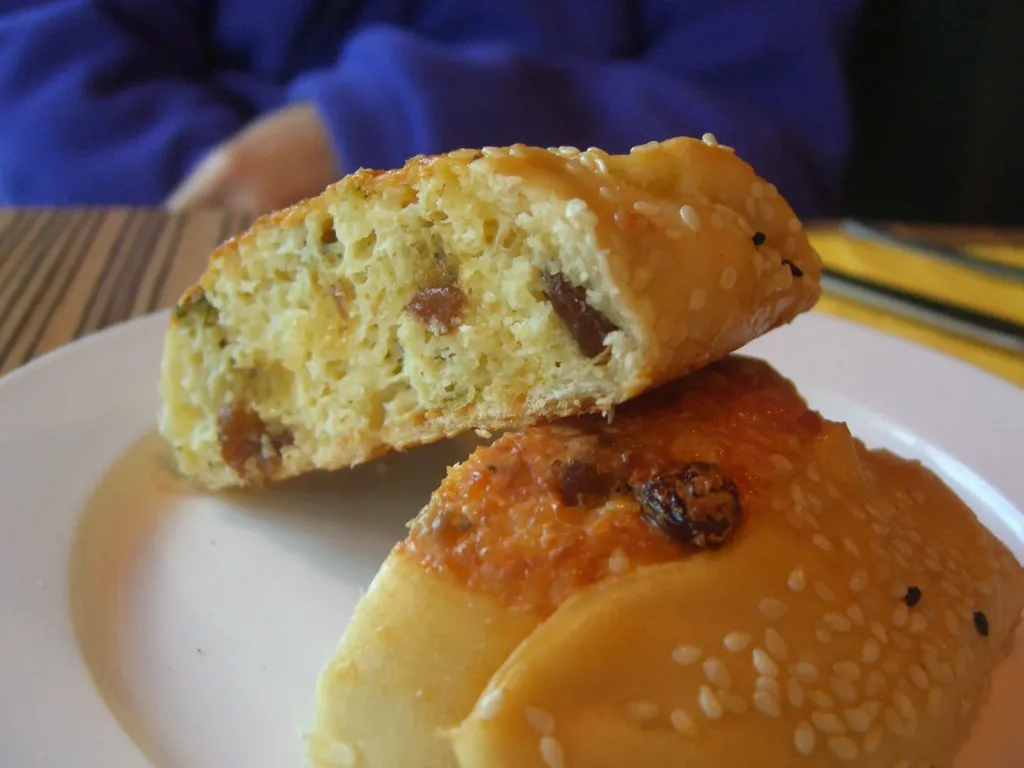
Flaounes are a traditional Easter pastry filled with cheese; variations on the recipe include eggs, mint and raisins. Making them is often a joint family effort. To familiarise yourself with the product, simply ask for the name and ingredients of a specific item, without expecting every bakery to provide a single standard recipe.
Flaounes are traditionally prepared towards the end of Lent, though baking times and household customs vary. The fact that it has festive origins does not mean that the product cannot be bought at other times of the year. Do not regard year-round availability as evidence that the tradition has been lost: home baking and the work of modern bakeries coexist.
When purchasing, check for the presence of raisins and other additives, as well as the size and storage recommendations. A cheese filling does not mean that all baked goods are suitable for every dietary restriction. If the ingredients are important to you, ask for details about the ingredients and allergens; the product’s generic name is no substitute for a clear answer from the shop assistant.
Red eggs and the family dinner table
Coloured eggs are a familiar part of the festive scene; families may play a game involving tapping them together. It is best to join in after the hosts have explained the rules, without trying to determine a universal winner based on rules from another country. For children, it is particularly helpful to keep the game separate from mealtimes and calmly demonstrate the procedure.
The festive spread depends on the family, the number of guests and personal preferences. Don’t assume that one restaurant’s set menu represents the entire island’s tradition, and don’t regard the absence of a particular dish as a breach of custom. Ask what has been prepared and how it is traditionally served if you wish to understand the connection between the meal and family memories.
When accepting an invitation, please let the host know in advance if you have any significant dietary restrictions. It is best to check beforehand if you are welcome to bring something to the table, so as not to create extra work. Even if you do not try a particular dish, you can still join in the conversation and offer your best wishes, without letting your refusal come across as a criticism of someone else’s celebration.
Village games and social programme
During public holidays, communities may organise games, music and gatherings in the square or near a public building. Traditional Easter games are described separately in the Cypriot Register of Intangible Cultural Heritage. The programme today depends on the organiser: the description in the register does not guarantee that a competition will be taking place on the day of your visit.
In some places, you’ll find large festive bonfires known as ‘lambratzia’. This is not an invitation to light your own fire or to approach them just to take a photo. Please respect the barriers and follow the organisers’ instructions; if you are attending an event with children, find out in advance what facilities are available at the venue.
Bonfires, loud noises and any use of fireworks should not be regarded as an essential part of every visit. Choose an event that suits your group and stay outside the restricted area. The history of the custom does not supersede the organisation’s current rules, nor does it justify unauthorised participation.
A journey without any scheduling errors
First, check the year and date of Orthodox Easter, then check the opening hours of the relevant venues over the holiday period. Easter Monday and other calendar-related factors may affect the timetable. General information about the holiday does not confirm the opening hours of museums, shops, restaurants or transport services.
If you’re attending a service, contact the parish; if it is a game or a concert, contact the local community and the organiser. Check the address, time and the latest update. Following this procedure helps to ensure you don’t turn up at a closed venue by confusing the religious calendar with the programme for a specific public event.
There is no fixed annual date or confirmed programme for the coming season. Information about traditions has been verified against the sources cited, whilst the calendar and timetable are checked before the visit. This preserves what matters most: the opportunity to experience the local festival fully, without confusion over different dates or unfamiliar family customs.
Continue planning
- Public holidays and opening hours in Cyprus
- Cypriot cuisine: dishes, ingredients and seasonality
- A leisurely 3-, 7- and 10-day itinerary around Cyprus
Official sources
- Cyprus National Commission for UNESCO — Easter customs
- Visit Cyprus — flaouna
- Visit Cyprus — holidays and working hours
- Cyprus National Commission for UNESCO — Easter games
Flaounes with cheese filling · Photo: Alpha · CC BY-SA 2.0 · converted to WebP and resized.
