A leisurely 3-, 7- and 10-day itinerary around Cyprus
Three ready-made itineraries for a trip around Cyprus, including the logic behind the itinerary, seasonal considerations and a time buffer for each day of the journey.
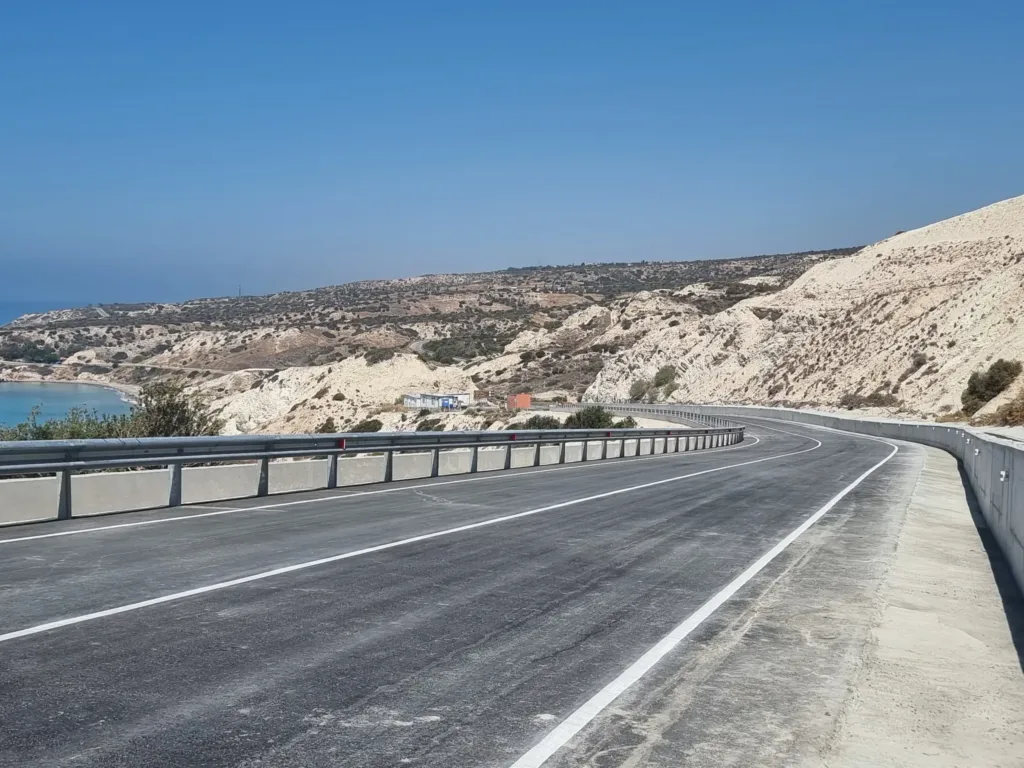
Checked: 17 September 2026.
Why a framework rather than a list of places
Cyprus is compact, and this creates an illusion: it seems as though you could tour the entire coastline in 3 days and pop into the mountains at the same time. In practice, a whole day is taken up by travelling between locations, the midday lull, searching for parking and getting used to driving on the left. A framework is needed so that you can decide in advance what to prioritise, rather than making these decisions in a rush.
This guide doesn’t cover what makes Larnaca, Limassol, Paphos or Ayia Napa interesting: there’s a separate page for each place. What you’ll find here is an overview – the order of the journeys, how much time is left for the town itself, what you can manage in a day, and where to allow for the weather and tiredness.
It will be useful both for first-time visitors hiring a car and for those planning to get about by bus, taxi and on foot. Places where the car-free option falls apart are highlighted separately: the transport network is district-based, with each district having its own operator, and sources provide no confirmation that a single ticket covers travel throughout the south.
Three days – one base, short travel distances
For a three-day trip, one rule applies: choose your base according to your arrival airport. You can only legally enter the Republic of Cyprus by air via Larnaca or Paphos: arriving via any other airport is a criminal offence under the laws of the Republic, punishable by up to twelve months’ imprisonment or a fine of up to 1,700 euros. Set aside the first evening for the journey and dinner.
The rest of the day is structured around one major destination and one short stop. You can fit two cities into your sat-nav in a day, but you’ll almost certainly hit rush hour travelling between them: rush hours occur in the morning, midday and evening, and their start and end times vary with the season. Estimate your journey time based on the worst-case scenario, not the map.
You need more of a buffer for a short journey than for a long one, and this should be measured in parts of a day rather than in minutes. A single traffic jam or a single closed road can take up half a day, and there’s no way to make up for it. A three-day mountain crossing either takes up a whole day or isn’t attempted at all: winding mountain roads don’t go well with a day at the beach to round off the trip.
Seven days following the official itinerary
The official tourist guide, in its January 2026 edition, publishes a ready-made itinerary for a week: Nicosia, Limassol, Paphos, Polis with Akamas, Larnaca, Troodos and the Ammochostos area. All the key areas are listed, but this is a thematic list rather than an optimised itinerary: Akamas and Larnaca are scheduled on consecutive days.
You’ll need to rearrange the order to suit your needs and limit your overnight stays to two or three bases — west, centre, east — with trips out from there. We estimate that travelling between bases, including packing up and checking in, takes up about half a day; no one publishes official journey time tables for Cyprus – it all depends on traffic and winding roads.
There’s still time for the seaside during the week. Boat trips along the coast run roughly from May to October and are weather-dependent, so it’s risky to book them for a specific day: it’s best to have a backup plan to hand. The island’s beaches are public and free of charge; sun loungers, parasols and other services may incur a charge.
Ten days, plus a buffer for the unexpected
Ten days isn’t just seven plus three new towns, but seven plus some breathing space. It’s more useful to add breaks rather than specific stops: a day with no plans in the middle, a second day in an area you unexpectedly enjoyed, and one spare day to allow for the weather, tiredness or bringing forward your trip to the mountains to an earlier, cooler morning the following day.
It’s worth distinguishing between the city of Paphos and the Paphos region. Polis, Latchi and Akamas involve separate logistics with unpaved sections, and a day trip there from Limassol or Larnaca almost always turns into a race against time. If you have 10 days to spend in the west, it’s easier to set aside two nights’ accommodation and not return to the coast every evening.
Another good option for spending the night away is the mountains. The Troodos Mountains live to their own rhythm: a winding road leads up; it gets dark earlier in the gorges than on the coast; and the hiking season is set by the Department of Forests, with its boundaries clarified before setting off. You can’t really get to know this area in just one quick visit whilst you’re out and about.
Cars, buses and money on the road
A car covers the entire route, and it has its own rules. Traffic drives on the left; on motorways, both a maximum speed limit of 100 km/h and a minimum of 65 km/h are posted: because of the minimum speed, a hire scooter or quad bike is unsuitable for inter-city journeys. Check the current limits on road signs and at the source.
Hired cars can be recognised by their red number plates, which usually begin with the letter Z. Insurance is valid only within the territory under the control of the Republic of Cyprus: beyond the line of demarcation, a hired car is not covered. The official portal states that the blood alcohol limit is 50 mg per 100 ml of blood; using a mobile phone whilst driving is prohibited.
The car-free option relies on local transport operators and taxis, and the figures here are subject to change: Cyprus Public Transport fares were updated in August 2026, whilst taxi fares are regulated and also reviewed periodically. Please check any figures quoted in other people’s reviews with the transport operator on the date of your journey.
Heat, winding roads and closed doors
In summer, the route is heavily influenced by the temperature. From June to September, daytime temperatures range from 30 to 40 degrees, with the highest temperatures in the island’s inland areas. The mountains offer no respite: at Prodromos station, at an altitude of 1,376 metres, a red alert is issued when the maximum temperature exceeds 35 degrees, and the station’s record high is 38.4 degrees.
Fuel is a separate consideration. There are few petrol stations in the mountains and villages, and the official website advises filling up your tank with enough fuel for the round journey. As of September 2026, on Sundays and the afternoon of Tuesdays—and on Wednesdays in the Nicosia area—there are no attendants at petrol stations; only self-service machines accepting banknotes and cards are in operation.
Some secondary and forest roads are unpaved; forest roads are generally maintained from around May to November, and some may be closed due to fire risk – this is indicated by road signs. Snowfall in the Troodos Mountains is possible in January and February, and occasionally from December to March, though it is not guaranteed.
What to check before departure
The planning process is straightforward. First, you set the dates and arrival airport, then decide on the number of base camps for your chosen duration, and only then do you fill in the specific destinations for each day. The reverse sequence – starting with a list of attractions and working backwards to the calendar – results in plans that fall apart on the very first day of the trip.
Before setting off, check everything that is subject to change directly with the original sources: current carrier and taxi fares, opening hours of the Department of Antiquities’ sites along with the calendar of public holidays, petrol station opening hours and current restrictions on forest roads. These are just a few quick checks, and it’s best to do them the day before.
One final point – allow for a margin of safety. Make sure you have at least one free hour each day, don’t plan a long drive straight after a flight, and remember the single emergency number: 112. A route that allows for some flexibility can cope with traffic jams, a closed museum, or an extra hour lost on a winding mountain road.
Continue planning
- Paphos: archaeology, neighbourhoods, beaches and itineraries
- Troodos: villages, trails and routes through the mountains
- Protaras: beaches, neighbourhoods and routes in eastern Cyprus
Official sources
- Visit Cyprus (Deputy Ministry of Tourism) — Useful Info / Transportation
- Visit Cyprus — Guide to Cyprus booklet (English, January 2026 edition)
- Department of Forests, Cyprus Ministry of Agriculture — official Troodos National Forest Park booklet
- Hermes Airports — public transportation at Larnaka and Pafos airports
- Cyprus Public Transport — current ticket fares
- Gov.cy — Department of Meteorology announcement on extreme heat in August 2023