Paphos: archaeology, neighbourhoods, beaches and itineraries
About the place
Checked: 13 September 2026.
Paphos’s two centres and choosing a base
Paphos is not centred around a single square. The Lower Town, Kato Paphos, encompasses the harbour, the promenade, the archaeological park and a significant proportion of the tourist accommodation. The Upper Town, often referred to as Ktima, is home to the administrative centre, the market and the residential neighbourhoods. You can travel between them by public transport, but walking isn’t always convenient in the heat.
For a first short visit, Kato Pafos is a practical choice if your priorities are archaeology and an evening stroll by the sea. Ktima offers a different pace and feels less like a resort area. Accommodation further north or along the coast may be quiet and spacious, but will require a bus or car. Check the actual address, the slope of the road and the nearest bus stop.
Paphos takes time to explore. You cannot see the mosaics, the necropolis and the town in a single visit. It is better to choose the archaeological area, the town centre and a separate nature excursion, without combining the region with a stroll around the harbour.
Archaeological Park and Harbour
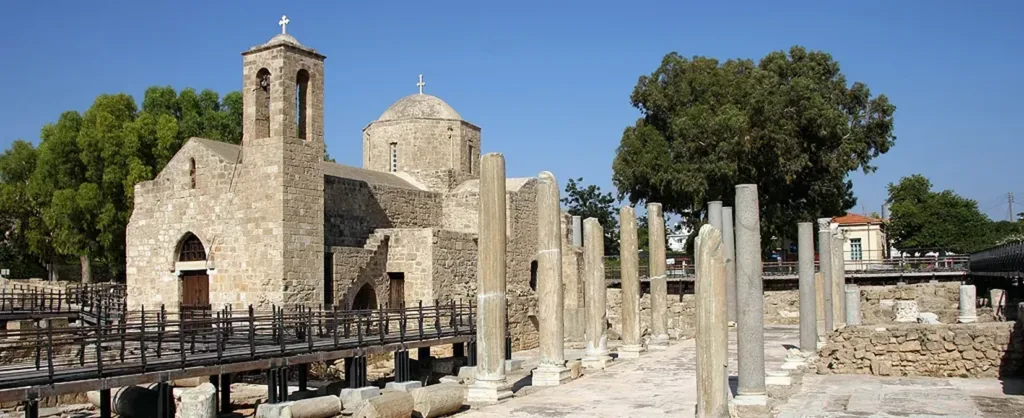
The archaeological sites of Paphos are part of a UNESCO World Heritage Site. Near the harbour is a large park featuring Roman villas and mosaics, an odeon and other sites. This is not a small museum room: the site is open-air and requires comfortable footwear, water and sun protection. First, check the opening hours, your ticket and which entrances are open.
Don’t rush from one mosaic to the next. The on-site descriptions help you understand the connections between the houses and the scenes depicted, and you’ll need to allow plenty of time to navigate the uneven terrain. Some areas may be temporarily closed for restoration work. Visitors with reduced mobility should enquire about the current accessible route: the site’s general accessibility status does not mean that every archaeological feature can be reached without steps.
After visiting the park, leave the harbour, the castle and the promenade for later. Boat trips require a separate assessment of conditions. Do not plan a boat trip immediately before your flight without allowing for a buffer: the wind can disrupt the timetable. For sunset, choose a spot with a safe route back.
The Tombs of the Kings and other ancient sites
The Tombs of the Kings are situated north of the harbour and also form part of the heritage of ancient Paphos. The name does not imply that kings were buried here: the complex’s significance lies in its monumental carved structures. The site is open, rocky and extensive. Do not include it in the archaeological park itinerary as a quick stop if the group tires easily.
Do not go beyond the fencing at the edges of the excavations; access to the underground areas is permitted only via the designated route. The stone can be slippery after rain and becomes very hot in summer. Children must stay close to an adult. Water and closed-toe shoes are more important than a photogenic shot; shade and rest areas may be unevenly distributed.
In the wider area, you’ll find the Sanctuary of Aphrodite at Kouklia and other monuments, but these require separate trips. Check the official name of the site against its location on the map: ‘Paphos’ may refer to the city, a district or an ancient complex. Before your trip, check the opening hours for each place, and do not assume that one museum’s timetable applies to another.
Ktima, the market and a stroll through the town
The Upper Town offers views of Paphos beyond the harbour. You can plan a walk around the municipal market, squares and viewpoints, referring to the official map. The market should not be taken for granted as having a set number of stalls at any given time: individual traders’ opening hours vary, and Sundays and public holidays require separate checking.
There is a significant difference in elevation between the Upper and Lower Towns. In cool weather, a fit person may walk between the two, but in summer this walk is rarely worthwhile in the middle of the day. A bus or a short taxi ride will save your energy for the walk itself. For people with pushchairs, it is important to check the gradient, kerbs and the route to a specific entrance.
Don’t try to find ‘the one and only old town’: the historic areas are spread out more widely. Choose a few streets and leave time for a café or a museum. If you’re out for a shop, check the origin of the item and the price before paying; a ‘tourist’ sign alone does not guarantee local production or that the item is handmade.
Beaches, the sea and coastal areas
The Paphos coastline alternates between sandy and rocky stretches, breakwaters and small coves. A sea view from your hotel does not guarantee convenient access for swimming. Before booking, find the nearest public access point, check the type of shoreline and plan a route that avoids private property. For regular beach holidays, compare several areas rather than lumping the whole of Paphos together under one label.
Once there, follow the flags and instructions of the lifeguards. Waves and currents near rocks differ from those in a sheltered cove, and wet slabs can be slippery. Keep a close eye on your child at all times. If facilities such as a boardwalk, a floating chair or accessible toilets are important to you, check the latest official list to confirm what’s available at a specific beach and during the season.
Sunset does not eliminate coastal risks: return via a well-lit path and do not stand at the edge of cliffs. Do not enter a sea cave or an undeveloped area simply because there are other people there. In the event of an incident, call 112, state the name of the beach or nearest landmark, and send a geotag.
Transport, the airport and Akamas
Paphos Airport is located outside the city centre. Bus and taxi services depend on your arrival time and accommodation address, so check the route before your flight. The city’s public transport network connects the main areas, but stops at archaeological sites and beaches may be served at varying intervals. Always make sure you have a backup plan for your return journey.
A car gives you greater choice of villages and natural sites, but remember that they drive on the left. The condition of secondary roads is more important than the journey time estimated by your sat-nav. Rental terms may restrict off-road driving; breaching these could result in your trip being excluded from insurance cover. Do not venture onto remote tracks without permission and a clear plan for your return journey.
Akamas deserves a whole day and a dedicated guide. From Paphos, you first make your way to your chosen entry point, and then follow only the most suitable route. The peninsula cannot be reduced to a single ‘lagoon’: the heat, lack of mobile coverage, unpaved roads and restrictions within the protected area all require careful preparation. For a first visit, it is safer to choose an official trail or an organised tour.
A plan for several days and seasonal considerations
Spend the first day exploring the harbour and the archaeological park, without undertaking any long-distance trips. The second day can be split between the Tombs of the Kings and Ktima, using transport to move between the areas. Set aside the third day for the beach, Kouklia, Akamas or Troodos – choose just one destination. You’ll need a backup plan for the town in case of wind, heat or a closed trail.
In summer, visit open archaeological sites in the morning and spend the midday heat indoors or at a safe beach. In spring, there is a wider range of nature-based activities, but the weather and the condition of the trails need to be checked. In winter, there are fewer beach facilities and the days are shorter; after rain, rocks and ground become slippery, and boat trips are more often dependent on the wind.
Before setting out, check the opening times of key attractions, transport links, the weather forecast and the condition of your chosen route. Use prices and timetables from older publications only as a guide. A good plan for Paphos ties each day together with a coherent theme and allows time for each attraction, rather than judging the trip by the number of ticked-off items.
Continue planning
- Akamas: nature routes and preparation
- Limassol: city route on the south coast
- Troodos: villages, trails and seasons