A light-hearted look at serious matters: the fundamentals of the universe in a thrilling demonstration
Explorer Dome in Cypriot English schools I hear and I forget. I see and I remember. I do and I understand: this quote from Confucius formed the basis of an idea brought to life in 1998 by the British educators Shaaron Leverment and Ben Brown. These young scientists created a unique educational project that helps […]

 Explorer Dome in Cypriot English schools
I hear and I forget. I see and I remember. I do and I understand: this quote from Confucius formed the basis of an idea brought to life in 1998 by the British educators Shaaron Leverment and Ben Brown. These young scientists created a unique educational project that helps schoolchildren understand and retain the fundamentals of the natural sciences through engaging lectures. Using a mobile planetarium and chemistry and physics laboratories, the Explorer Dome team deliver over 10 lecture-shows for primary school pupils on a wide variety of topics – from hypotheses about the origin of our world to the structure of the human body.
Today at The International School of Paphos, Jim Bell is talking to Year 3 and Year 4 pupils (aged 8–9) about the structure of matter. I had a few minutes before the start of the next lesson to have a chat with the cheerful Englishman. Jim told me that he loves Cyprus very much and enjoys coming here. During a single business trip, he visits several English schools in different towns – spending two to three days at each one. Lectures for the children are organised during school hours, and after lunch, the Explorer Dome welcomes pupils and their parents. Ticket prices for schoolchildren are more than reasonable – €5.
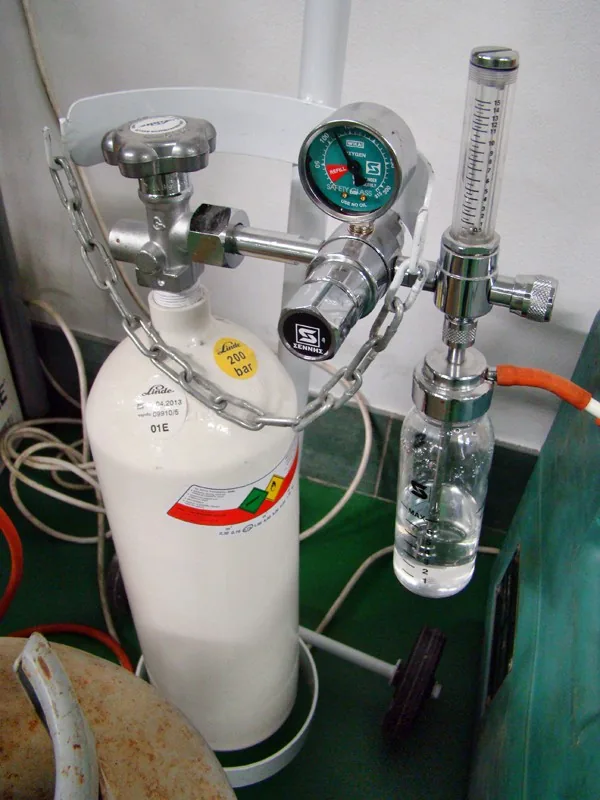
Everything is ready for the lesson: an oxygen cylinder, a flask of liquid nitrogen, and tubes filled with air and oxygen are placed in test tubes, which are then lowered into the liquid nitrogen; soon the gas condenses, filling the test tubes. The bell rings, and the girls and boys – who look surprisingly grown-up in their smart school uniforms – take their seats in the hall. Jim gets the show started!
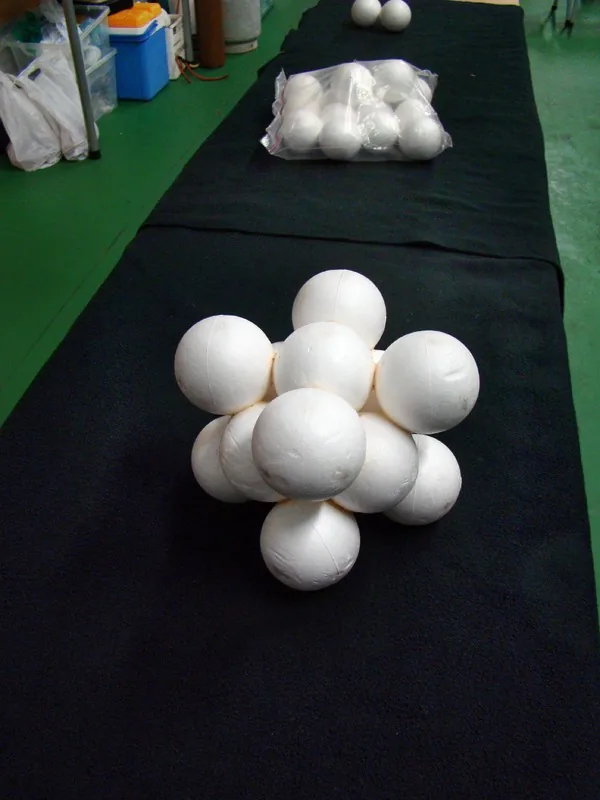
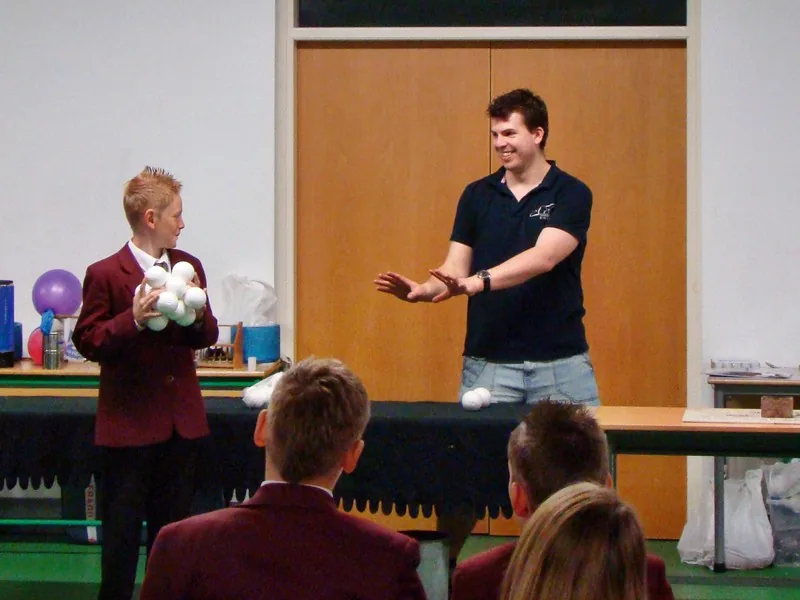 ‘What types of matter do you know?’ asks Jim, drawing the pupils into a conversation. The pupils raise their hands, and a relaxed atmosphere of lively discussion fills the hall. These white balls are molecules of matter. A cube made of balls – what is it? It’s a solid! You can pick it up, and it won’t change shape – volunteers are invited onto the makeshift stage. And these balls in a soft net are nothing other than a liquid; it can take the shape of the container into which it is poured. And finally, a third volunteer clutches the balls in his hands and swirls them about chaotically – this is a gas! Laughter fills the hall as our friends on stage artistically depict the very foundation of the universe!
‘We’ll have to call the cleaner now!’ warns Jim, pouring a little liquid nitrogen onto the floor. But the liquid boils, instantly turning into vapour.
Liquid nitrogen can be dangerous to humans; its temperature is far too low: a rubber tube placed in nitrogen becomes solid, and a fresh flower…
 ‘How many balls do you think will fit into this container?’ – The lecturer smiles mischievously, and the children realise it’s a trick question. My attention is torn between the demonstration itself and the audience – what a joy it is to see so many happy children’s faces!
As soon as a little liquid nitrogen is added, the balloon shrinks; a second balloon ‘disappears’ into the container, then a third… The frozen balloon is passed down the rows – the children squeal with delight as they pass the cold balloon from hand to hand and – a miracle! Having made its way down the entire row and warmed by the children’s hands, the ball swells up again. Jim gives brief, tireless explanations.
Suddenly, the hall turns into a proper stage! Jim pours boiling water over dry ice, and thick smoke billows up at the children’s feet. Yes, normally a substance changes through the three main states in turn – gas, liquid, solid – but sometimes a solid turns straight into a gas.
‘Look at this!’ – the mischievous lecturer places a piece of dry ice into each plastic film canister and closes the lids. After a few seconds of agonising anticipation, a series of pops begins, and the lids fly up towards the ceiling.
And finally, it’s the turn of liquid oxygen. Hold an ordinary cigarette in liquid oxygen for just a few seconds, and it burns brighter than a sparkler. A smouldering splint bursts into a bright flame in the oxygen. And to finish off… Cotton wool, metal filings and liquid oxygen produce a bright flash, just like fireworks!
A few questions at the end of the lesson, and the delighted children head off for their break. I have no doubt that the knowledge they’ve gained during this magical lesson will stay with them forever. They didn’t just hear about it – they saw it for themselves…