Jobs in Cyprus: is it really possible to find one?
We often receive questions like this from our readers in Russia and the post-Soviet republics. Let’s try to get to the bottom of this complex issue. Illegal immigrants Firstly, a few words must be said about the ‘hard’ route taken by those working illegally. Unfortunately, it is not uncommon for our compatriots, traditionally relying on […]

We often receive questions like this from our readers in Russia and the post-Soviet republics. Let’s try to get to the bottom of this complex issue.
Illegal immigrants
 Firstly, a few words must be said about the ‘hard’ route taken by those working illegally. Unfortunately, it is not uncommon for our compatriots, traditionally relying on the Russian ‘let’s see how it goes’ attitude, to arrive on the island on a tourist visa and try to find work in Cyprus ‘for cash’.
I cannot say that this is impossible, but it must be understood that this will most likely be the least prestigious work, with pay (at best) at half the market rate for similar work. If caught by immigration officials, an undocumented worker faces deportation and a ban on re-entering Cyprus. The employer, meanwhile, will face a hefty fine at the very least, if they manage to avoid a prison sentence.
Our strong advice, therefore, is: do not flout the law, lest the fairy tale called ‘Cyprus’ come to a swift end. But what about the official route to employment?
Beyond the crisis
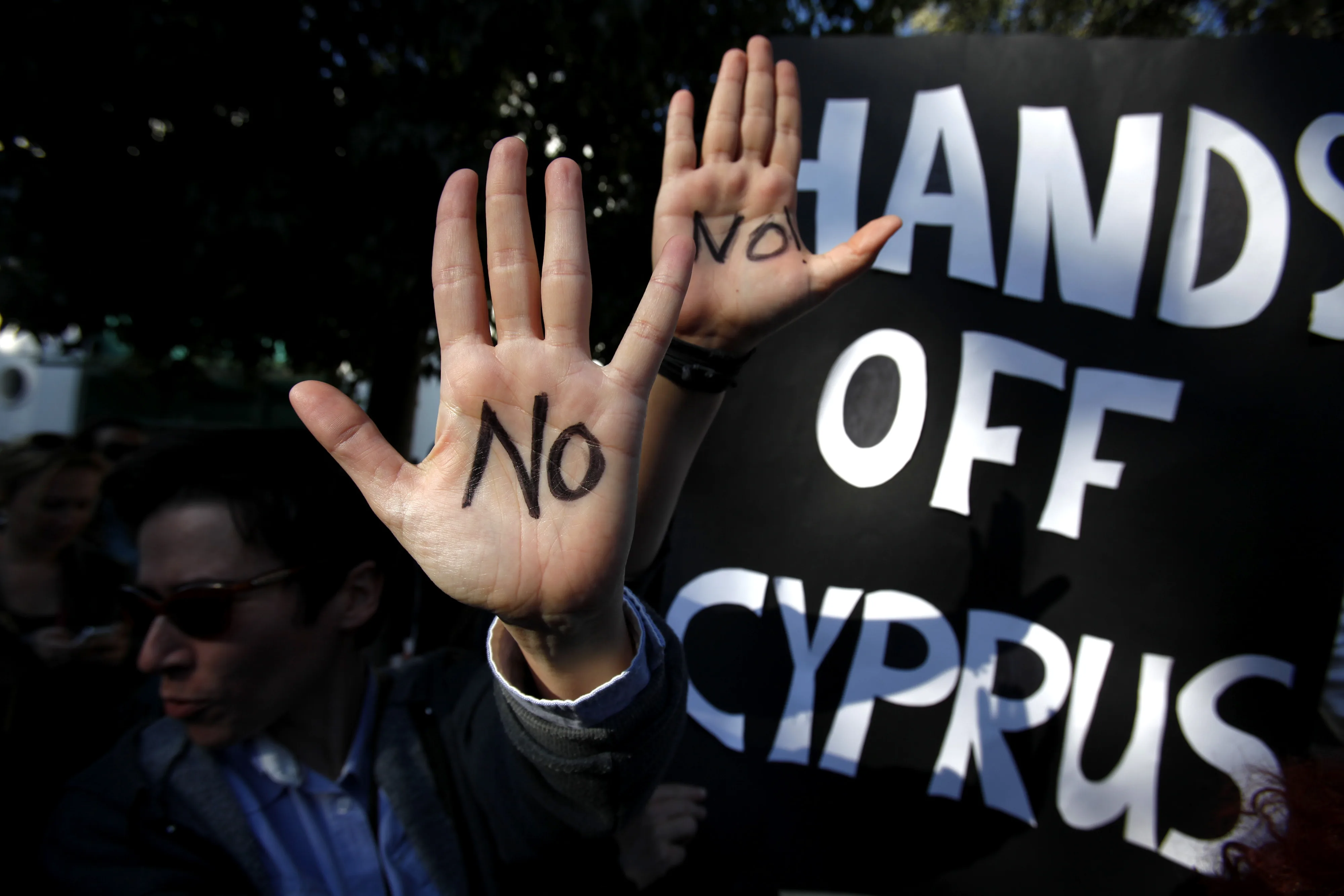 The banking crisis on the island, followed by the write-off of up to 90 per cent of retail deposits, not only completely undermined the confidence of foreign depositors but also destroyed the island republic’s model of a ‘‘safe financial haven’ of the island republic, which had been built up over several decades.
It is known that the two largest Cypriot banks – the Bank of Cyprus and Laiki – held deposits totalling around €90 billion, which is almost five times the country’s annual budget.
Laiki Bank has now been wound up and incorporated into the Bank of Cyprus. As a result of this ‘merger’, around 3,000 Cypriots lost their jobs.
It is important to note that Cypriot banks, like other strategically important companies in the country—not to mention state institutions—employ predominantly Cypriots. Moreover, these are native Cypriots – as the saying goes, the ‘blood of the blood, flesh of the flesh’ of the nation. Russian-speaking Cypriots — those who came to Cyprus from the former republics of the Soviet Union and obtained citizenship after 7–10 years of residence on the island — are not Cypriots in the full sense of the word. In any case, when hiring staff, employers do take into account the nuance of recently acquired citizenship.
Pontic Greeks, who also originate from the post-Soviet republics (primarily Georgia), fall into the same category of ‘strangers amongst their own’. Although they hold Greek citizenship, they enjoy all the rights of Cypriots, with the exception of the right to vote.
… but with a piece of paper, a person
 Until March 2013, the outlook for finding employment in Cyprus was fairly optimistic. Even holders of Russian passports, provided they were willing and possessed professional skills in demand in Cyprus (programmers, experienced web designers, process engineers, food industry technologists, etc.), could find work.
A Cypriot employer would, within a short period (usually within two months), obtain permission to hire a worker from Russia (or CIS countries) due to a shortage of workers in certain specialisms on the local labour market.
It should be noted that a Cypriot employer (even if it is a foreign company), before obtaining permission from the immigration authorities to employ a foreign national (non-EU citizen), must publish a vacancy advertisement in the local media for several weeks, inviting Cypriot nationals to apply for the post. Only if no Cypriot applicant is found will permission be granted to employ a foreign national.
Over the past six months, the job market in Cyprus has undergone a radical change.
 I have already mentioned the job losses in the banking sector. Furthermore, due to widespread pay cuts, the population’s purchasing power is declining. Whilst in 2010 the average salary for men in Cyprus was just over 2,000 euros, this figure has now fallen to 1,500 euros.
Cypriots have started to cut back: buying less, eating out less often, and transferring their children from fee-paying private schools to state-funded Greek schools. This is partly why catering establishments are closing and shops are going out of business. As they lose their jobs, Cypriots are turning to the state for help, which in turn is increasing the burden on the social spending side of the budget. Overall, for Cyprus, which has an extremely high level of public debt, this is an extremely negative scenario.
In view of these circumstances, the government has taken a number of additional measures designed to mitigate the negative consequences of the financial crisis. One of the first steps was to tighten the requirements for employing foreign nationals. A lawyer I know told me a few days ago that, over the past two months, he had received rejections for all applications for work permits for foreign nationals submitted through his agency.
The reality of the situation today
From my own observations: the upmarket Aphrodite Hills residential complex, home mainly to British golf enthusiasts, has completely changed its security staff. Just two months ago, the security staff (around 15 people in total) consisted of polite and efficient British and Irish nationals. Now the security team has changed completely, and the complex is guarded exclusively by Cypriots.
The Alliance de Franceas French language school chain, which has branches in every town on the island, used to employ several dozen professional native-speaking language teachers. French teachers are now being replaced by Cypriot teachers. I have deliberately cited examples where the presence of foreign staff has a dramatic impact on the quality of services provided, as well as on the company’s image.
And yet, what are Cypriot employers currently offering to non-EU foreign nationals wishing to find work in Cyprus? To answer this, let’s look at a list of job vacancies in Cyprus published by the local media:
- ‘A Russian investment company is seeking an administrative assistant/secretary with knowledge of Russian and Greek; salary: €1,200 per month; no visa issues.’ Unfortunately, the company does not arrange work permits; this may be due to the latest restrictions imposed by the immigration authorities.
- “A forex dealer is required with knowledge of Russian and English; salary plus commission. A work visa may be arranged; interview in Moscow.” The outlook here is more optimistic.
- “An accountant is required for a foreign company with knowledge of Russian. Salary: 1,300 + a 13th month’s salary. A work visa may be obtained.”
- “Manager required for an investment company, with knowledge of Russian. High salary plus commission. No visa issues.” This role requires Cypriot citizenship or a work visa, which you will need to obtain yourself.
- “Promoter required with knowledge of two languages – English and Russian. Pay: 4 euros per hour. A work visa may be arranged, subject to the outcome of the interview.”
- “A trader with knowledge of Russian is required for an investment company; shift work with night-time hours. Salary plus commission to be agreed following an interview. A work visa may be arranged.”
- “An SEO specialist is required with knowledge of Russian and English. Knowledge of Greek is considered an advantage. Salary: €2,000. No visa issues.”
In conclusion, it should be noted that there are opportunities on the Cypriot labour market for Russians, and with sufficient determination, it is possible to find work. However, if you are considering working on the island over the next 2–3 years, we advise you to take the current situation into account, bearing in mind that an employer’s willingness to hire you does not guarantee that you will be granted the right to do so by the immigration authorities.