(based on an analysis of the Russian business and socio-political media) At the end of February, the President of Cyprus, Nicos Anastasiades, paid a visit to Russia. The visit coincided with the 55th anniversary of the establishment of diplomatic relations between Cyprus and Russia (the USSR). Since April 1992, when the Republic of Cyprus recognised Russia as the successor state to the USSR, Cypriot presidents have visited the Russian Federation seven times. N. Anastasiades’ visit was the eighth. The visit took place against a backdrop of two complicating factors. The first concerned the economic sphere, and the second the military-political sphere.
Challenges and new opportunities for cooperation between Cyprus and Russia
Economy and trade
Economic relations between the two countries are not at their best. According to available data, the volume of trade between Russia and Cyprus fell by 66.8 per cent in 2014 compared with the previous year, amounting to $653.3 million. At the same time, the imbalance in bilateral trade persisted. Although Russian exports fell by almost 70 per cent to $609.7 million, they still exceeded imports of $43.6 million by a factor of almost 14 (a 2.2 per cent increase compared with 2013). The decline in exports from Russia was a consequence of mutual economic sanctions between Russia and the EU, the devaluation of the Russian rouble, and the crisis-stricken state of the two countries’ economies. Nevertheless, within the structure of Cyprus’s exports and imports amongst non-EU European countries, Russia ranks first (36.1 per cent and 33.3 per cent respectively). According to Russian experts, trade cooperation between the two countries, against the backdrop of a de facto ‘sanctions war’, is unlikely to develop actively through the efforts of political and business circles in either country. Rather, one can expect the imbalance to grow. This is determined by the structure of foreign trade.
Russian exports to Cyprus consist predominantly of raw materials (78.8 per cent – oil; 3.2 per cent – metals and metal products), and these goods are not subject to sanctions. Cyprus exports to Russia largely agricultural products and raw materials (28.2 per cent), most of which are subject to the retaliatory sanctions imposed by Russia against EU countries. Cyprus also sells chemical products and rubber (23.6 per cent), machinery, equipment and vehicles (45.2 per cent), and other goods to Russia. The prospects for increasing exports to Russia are rather uncertain due to the low competitiveness of Cypriot goods. One possible avenue for developing exports to Russia could be the re-export of goods from third countries, primarily high-tech products and a wide range of manufacturing equipment, the supply of which to Russia is refused on political grounds (in particular, this concerns the Wassenaar Arrangements, the interpretation of whose requirements may be subject to considerable subjectivity). Another area for developing cooperation between the two countries is allowing Russian gas and oil production companies to operate within Cyprus’s exclusive economic zone. Undoubtedly, this step requires thorough legal analysis; nevertheless, following the talks, Russian President Vladimir Putin noted that the Russian side is interested in this matter.
Finance and investment
 The two countries enjoy active relations in the area of capital flows. Despite its debt crisis, Cyprus ranks among the top five investors in the Russian economy. The total volume of accumulated Cypriot investments stood at $69.1 billion at the end of 2013. According to many private and government experts in Russia, these investments often represent the reinvestment of capital previously taken out of Russia and legally registered in Cyprus. As measures to combat offshore activities are tightened, both in Russia and in the EU, and globally, this flow of capital is expected to decline. At the same time, Russia accounts for 80 per cent of all foreign investment flowing into Cyprus, which confirms the view that Cypriot cross-border investments originate in Russia. In 2013, the total volume of investment from Russia accumulated in Cyprus amounted to $33.1 billion. Cyprus attracts investors from Russia due to the fact that the country is a member of the EU. In this regard, investment in the Cypriot economy allows Russian businesspeople to look forward to further business development within the EU. In this regard, it would seem sensible to offer additional incentives to attract investors from Russia, as well as reliable legal safeguards for their investments, which fell sharply during the financial crisis in Cyprus in 2012–2013. Should these conditions not be met, Cyprus’s appeal as a favourable jurisdiction for Russian capital will steadily decline. For its part, Russia is committed to productive economic cooperation with Cyprus. On the eve of N. Anastasiades’ visit, the parliament (the State Duma) ratified a protocol on the restructuring of Cyprus’s debt under a Russian loan of 2.5 billion roubles. The interest rate on the loan to Cyprus has been reduced to 2.5 per cent, and the repayment period has been extended to 2018–2021. This loan was granted to Cyprus in 2011. Under the original agreement, the debt was to be repaid in a single instalment on 1 July 2016, and the interest rate stood at 4.5 per cent per annum. As can be seen, Russia has made significant concessions to Cyprus. Russian business and political circles are expecting reciprocal steps from the Cypriot leadership.
Tourism
Tourism is also a promising area for mutual cooperation. Cyprus possesses significant recreational resources, and tourism plays a major role in its economy (over 10 per cent of GDP). In the 2000s, Russia ranked second (after the UK) in terms of the number of tourists visiting Cyprus. In 2014, due to a significant depreciation of the rouble against the euro, the number of Russian tourists fell sharply; however, Cyprus remains among the top ten most popular destinations for Russians (Table 1).
Top 10 countries for outbound tourism from Russia in the first nine months of 2014
| Rank | Country | Number of outbound travellers, persons |
| 1 | Turkey | 3,056,149 |
| 2 | Egypt | 1,892,211 |
| 3 | Greece | 976,594 |
| 4 | Spain | 882,541 |
| 5 | Thailand | 648,691 |
| 6 | Italy | 635,396 |
| 7 | Germany | 632,357 |
| 8 | China | 609,919 |
| 9 | Cyprus | 491,595 |
| 10 | Bulgaria | 481,209 |
Source: official data from Rostourism.
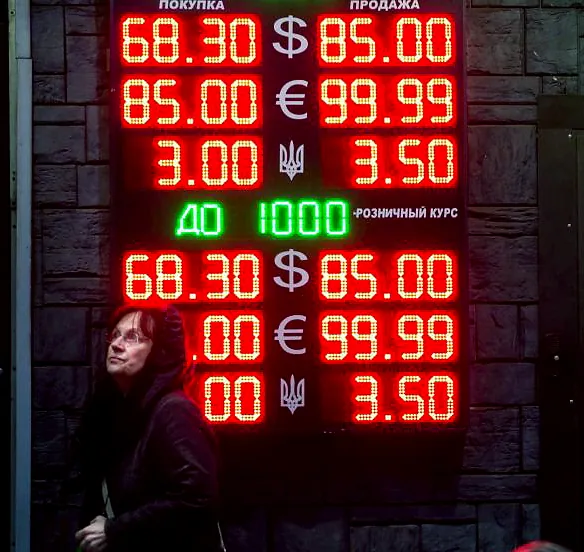 The depreciation of the rouble against the euro by more than 1.5 times in 2014 led to a sharp decline in Cyprus’s price competitiveness as a tourist destination for Russians. This not only has a negative impact on Cyprus’s GDP, but also casts doubt on the prospects for Russian investment in the tourism sector, whilst the profitability of projects already underway is called into question. One consequence of this could be the bankruptcy of companies serving the Russian tourist market in Cyprus. In this situation (bearing in mind that Cyprus has, de facto, ceased to be a full member of the eurozone following the ‘freeze’ of the banking system during the acute phase of the crisis in 2013, as restrictions were imposed on the movement of ‘Cypriot euros’) it would seem advisable to conclude an agreement with Russia on the (partial) use of Russian roubles as a means of payment in mutual settlements and when providing services to Russian tourists. Egypt has taken similar steps and, despite internal instability, remains the second most attractive destination for Russian tourists. Another promising avenue for boosting Russian tourist flows to Cyprus is attracting organised groups of tourists from Russia. In previous years, for example, large-scale organised trips to Cyprus were undertaken by Russian military personnel. Generating similar organised tourist flows from Russia – comprising school-age children, students, summer language schools, socially vulnerable groups, law enforcement officers and military personnel — provided there are reliable guarantees for their safety during their stay — etc.) appears to be a promising avenue for developing mutual ties in the tourism sector.
Military-technical cooperation
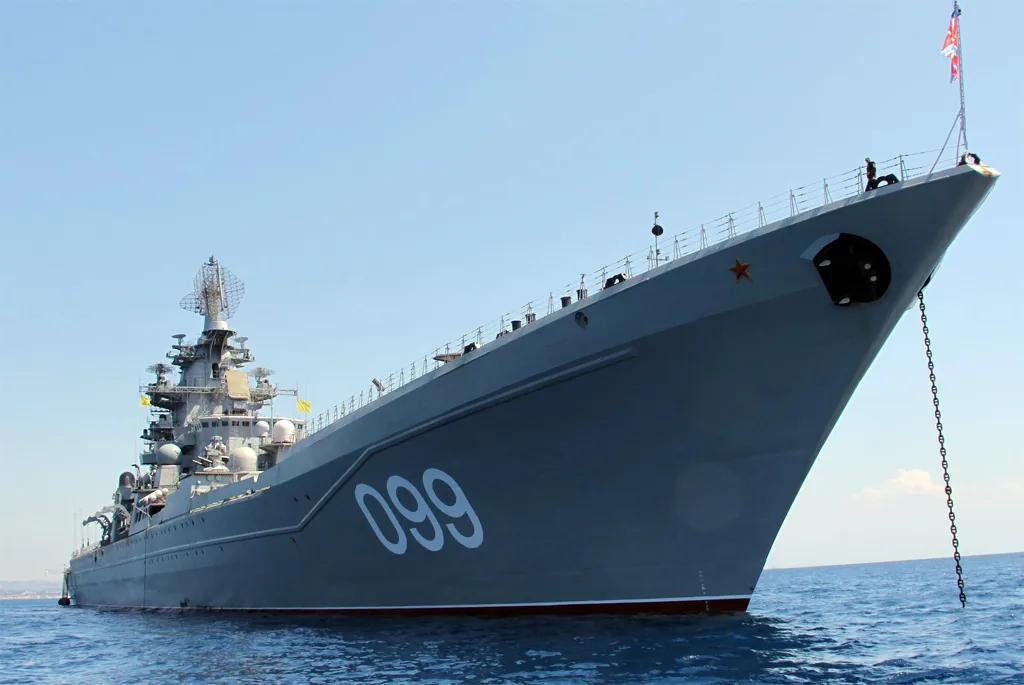
Russia and Cyprus are linked by long-standing traditions of military-technical cooperation. These date back to the supply by the USSR in 1965 of 32 T-34-85 tanks, together with repair kits and ammunition. Since then, various Soviet (Russian) weapons have been supplied to Cyprus on numerous occasions and modernised. This cooperation is not welcomed by the US, the UK and a number of other European countries. It is all the more strongly condemned in statements by officials against the backdrop of the sanctions pressure against Russia that has been in place since 2014. Nevertheless, despite this pressure, during talks between Vladimir Putin and Nicos Anastasiades, an agreement was reached on the temporary stationing of Russian warships on the island, which are participating in international counter-terrorism and anti-piracy operations. There are plans to station Russian aircraft at a Cypriot airbase under similar conditions in the future. These arrangements have drawn sharp criticism from the US.
Mutual respect for interests in international and business relations
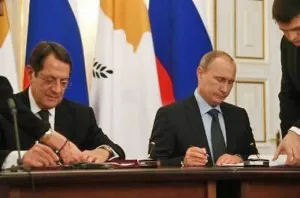 Overall, following the Russian-Cypriot talks on 25 February 2015, the presidents of the two countries signed a Joint Action Programme between the Russian Federation and the Republic of Cyprus for 2015–2017. In addition, a number of documents were signed, including: a Memorandum of Understanding between the Russian investment agency ‘Invest in Russia’ and the Cyprus Investment Promotion Agency; a Memorandum of Understanding between the Bank of Russia and the Securities and Exchange Commission of the Republic of Cyprus; a Memorandum of Understanding between the Ministry of Education and Science of the Russian Federation and the Ministry of Finance of the Republic of Cyprus on scientific and technical cooperation; The minutes of the eighth meeting of the Russian–Cypriot Intergovernmental Commission on Economic Cooperation; A Memorandum of Cooperation in the field of naval affairs between the Ministry of Defence of the Russian Federation and the Ministry of Defence of the Republic of Cyprus; Programme of Cooperation between the Russian Federation and the Republic of Cyprus in the Fields of Science, Education and Culture for 2015–2018; Agreement between the Government of the Russian Federation and the Government of the Republic of Cyprus on Military Cooperation; Agreement between the Government of the Russian Federation and the Government of the Republic of Cyprus on cooperation in combating the illicit trafficking of and abuse of narcotic drugs and psychotropic substances; Agreement between the Government of the Russian Federation and the Government of the Republic of Cyprus on cooperation in the fight against terrorism. Although Cyprus does not play a decisive role in Russia’s economy or politics, N. Anastasiades’s visit was received positively in Russia. It opens up prospects for new cooperation and also demonstrates that a commitment to the principles of mutual respect for interests in international relations is bearing fruit. It is expected that the agreements reached will soon bear fruit not only in relations between the two states, but also between individual companies and citizens of both countries, who will be able to enhance their well-being through productive cooperation.